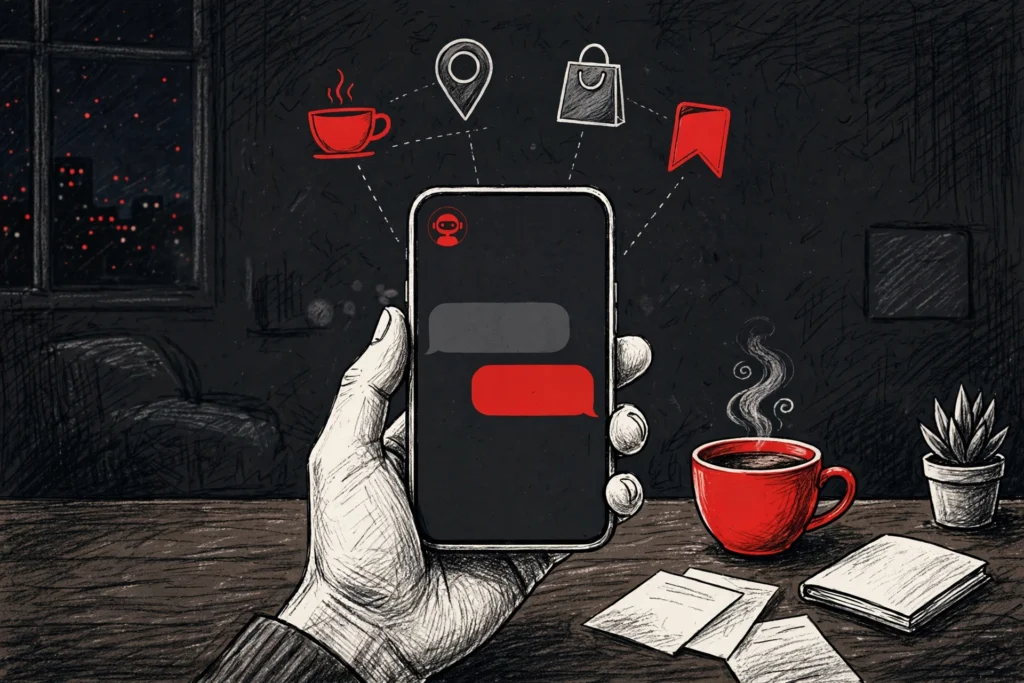
It is past midnight, and you are deep in an Instagram scroll — the same feed where Meta Muse Instagram DMs will soon be waiting. A Reel shows a tiny coffee shop tucked into a Mexico City side street. You tap save, promising yourself you will remember it — and you know you will not.
Three weeks later, when the trip finally happens, that saved post will be buried under two hundred others. The coffee shop will be gone.
Meta thinks it has an answer. On Tuesday, November 24, the company announced that Muse, its personal AI agent, is moving into Instagram direct messages — so a saved post can turn into a plan without leaving the app.
Meta Muse Instagram DMs are now rolling out on iOS and Android in the United States, Canada, Mexico, Japan and Singapore, according to TechCrunch. It is the latest step in Meta’s push to put its agent everywhere its users already spend their time.
Meta Muse Instagram DMs: What Actually Launched
Muse is not new. Meta introduced it as a personal AI agent that can complete tasks, remember context and act on a user’s behalf. That is a step beyond the Meta AI chatbot that has lived inside its apps for years. What is new is where it now works.
From this week, Instagram users in the five launch countries can open a dedicated Muse conversation inside their DMs. It shows up as a standard chat thread, just like a conversation with a friend. There is no separate app to open and no tab to switch to.
That matters more than it sounds. Until now, using Muse meant leaving Instagram and opening a separate app. Each hop was a small reason to give up. By placing the agent inside the DM inbox, Meta has removed the friction between seeing something and doing something about it.
Conversations started on Instagram also appear as a side chat inside the main Muse app. A plan you start while scrolling can be picked up later on your phone or desktop.
What You Can Ask Muse to Do in Your DMs
What does chatting with an AI agent inside Instagram actually look like? Share a post with Muse and ask what the place in the photo is, or what the product in the Reel costs.
Ask it to add that Mexico City coffee shop to your trip itinerary. Ask it to hunt down a Black Friday deal on the pair of shoes in the video you just watched.
Missed messages are another use case. If your inbox is full after a few hours away, ask Muse to catch you up instead of scrolling through every thread.
The point is that Muse is meant to act, not just answer. It can turn a shared post into a next step: a place added to a plan, a price checked, a list started.
Your Saved Posts Just Got a Brain
The DM integration arrives with a second change that may matter even more: Muse can now work with content you have already saved on Instagram.
Anyone who uses the save button as a personal filing cabinet knows the problem. Recipes, travel ideas, products, outfits — hundreds of saved posts, no folders, and no memory of why each one mattered.
Muse can now organise those saved posts and Reels into custom Collections, turning a chaotic pile of bookmarks into something searchable. It can take travel content you have saved and shape it into an itinerary. It can find a saved Reel with a recipe and turn it into a grocery list.
Meta has been adding AI tools for creators all year, including Dream Render, which turns a single product photo into a video ad.
When users in the United States and Canada save a post, Instagram will now prompt them and ask whether they want Muse to organise it for them. The saved-content tools are initially limited to those two countries, while the DM chat reaches all five launch markets.
Muse Is Not Meta AI — Do Not Confuse the Two
There is an easy mix-up to avoid here. Instagram already has Meta AI, the chatbot that answers questions in a one-to-one chat, or can be invoked in group chats by typing @MetaAI. Muse is a different thing, and Meta is keen for users to understand the difference.
Meta AI is a conversational assistant: you ask, it answers. Muse is a personal agent: it remembers what you have saved, it can take actions on your behalf, and it works across your content rather than inside a single chat.
The older chatbot was built for conversation. Muse is built to get things done.
That distinction is also why the privacy rules are different. Meta says Muse will not send, share or publish anything unless the user approves it first. Users can also ask Muse to forget information it has stored, or undo an action it has taken.
Where It Is Rolling Out — and Where It Is Not
The rollout is deliberately narrow at first. Muse in Instagram DMs is reaching iOS and Android users in the five launch countries, and even there it is arriving gradually. Some users will see it before others over the coming days.
The saved-content features are narrower still, starting only in the United States and Canada. India, one of Instagram’s biggest markets, is not in the first wave at all, though reports suggest Muse is expected to arrive there soon.
That staggered approach is familiar from Meta’s other AI launches. The company tends to start in a handful of markets, watch how people actually use the feature, and then widen the net.
The Privacy Question Hanging Over Your Inbox
Putting an AI agent inside your direct messages is a bigger step than it looks. DMs are where people talk to their closest friends, share things they would never post publicly, and organise their private lives.
An agent that can read those threads — even one that promises to act only with permission — is going to attract scrutiny. Meta’s answer, for now, is control. Nothing is sent, shared or published without the user’s go-ahead, and users can delete saved information or reverse what Muse has done.
But the details matter: exactly what Muse can see and how long it remembers are questions users will keep asking as the feature spreads.
There is also the question of trust. An agent that summarises your missed messages has to read them first. An agent that organises your saves has to understand them. Convenience and privacy pull in opposite directions here, and Meta will have to keep proving that the balance it struck is the right one.
Why This Move Matters for Meta
Step back, and the Instagram launch looks like one piece of a much larger strategy. Meta has spent 2026 pushing Muse into every surface it owns: the standalone app, the UK launch earlier this month, the Apple Watch, and now Instagram’s inbox.
The timing is not accidental either. OpenAI and Anthropic have both been moving their own assistants toward doing real work — booking, buying, organising — rather than just answering questions. Claude, for example, can now turn chat artifacts into desktop apps.
Meta’s answer is to lean on its distribution: more than two billion people use Instagram, and none of them need to download anything new to meet Muse.
There is a business angle too. Instagram is where product discovery already happens for millions of shoppers. If Muse can turn a saved Reel into a shopping comparison or a deal alert, Meta gets a share of the journey from inspiration to purchase.
What Happens Next
For now, the feature is small: five countries, a gradual rollout, a handful of tasks. But the direction is clear. If Muse works well inside Instagram DMs, expect it to show up in more places — WhatsApp and Facebook Messenger are the obvious next candidates.
It will also take on more ambitious jobs, from booking the restaurant in the Reel to buying the shoes in the post. The test will be whether people actually use it. An agent inside your inbox is only useful if you trust it enough to let it act.
Meta has built the plumbing. Now it has to prove that the assistant is worth talking to.
If you are in one of the five launch countries, you may already see Muse waiting in your DMs. Tap it, share a post you saved months ago, and ask what it can do with it.
The answer might be the first sign of what Instagram becomes when the app stops being a feed you scroll — and starts being an assistant that remembers.


