
Internet & Apps

Amazon Credit Card Points Scam
Internet & Apps, News

Shop on Amazon? Beware of the Sneaky Amazon Credit Card Points Scam

Understanding the Amazon Credit Card Points Scam Amazon offers many conveniences, but the “Shop with Points” feature has a hidden risk. This feature allows users to use credit card rewards points for purchases. Unfortunately, some scammers exploit this system to steal points without your immediate knowledge. Understanding this Amazon credit card points scam can help you protect your rewards. How the Scam Works The scam targets users with premium credit cards that accumulate points. Fraudsters acquire stolen card details and link them to their Amazon account. By enabling Shop with Points, they make purchases while you remain unaware. The attack is subtle, often showing only small incremental deductions from your rewards balance. Real-Life Examples Jason Rabinowitz experienced a massive loss in December when his Chase Ultimate Rewards points were drained. Dozens of Amazon purchases were made using his points, and he didn’t receive any alerts. Similar reports are found on Reddit forums for American Express, Capital One, and other reward programs. The attackers exploit the lack of notification for card enrollments. Why Notifications Fail Amazon notifies the rewards partner, not the cardholder. This means the bank may catch suspicious activity but not always in real time. Individual banks have their own policies, and some, like Chase in this case, may not alert you immediately. Scammers rely on this delay to quickly use points before detection. Preventing the Amazon Credit Card Points Scam Monitoring your points regularly is essential to avoid being caught off guard. Avoid saving credit card details on multiple websites. Enable two-factor authentication wherever possible. Check your reward account for suspicious transactions frequently, especially if you have high-value points accumulated. Best Practices for Credit Card Security Use alerts and notifications offered by your bank. If your card supports fraud alerts on points, enable them immediately. Limit the number of accounts that can access your rewards. Ensure you only use trusted devices to log into Amazon and your credit card portal. Recovery After Fraud In Rabinowitz’s case, the bank quickly restored the points after he reported the fraud. Most banks will investigate points fraud and return stolen rewards. Acting fast increases the likelihood of full recovery. Keeping detailed records of point activity helps when disputing unauthorized transactions. Understanding the Risks of Shop with Points While convenient, the Shop with Points feature comes with security risks. Since Amazon cannot always verify the primary cardholder, unauthorized point usage is possible. Reward points may not trigger typical cash fraud protections, leaving users vulnerable. Awareness of this risk is crucial for all cardholders. Why Scammers Target Rewards Points Unlike cash transactions, points often escape immediate detection. Fraud detection algorithms focus more on large cash transfers than small point deductions. Premium card points are valuable, making them attractive for attackers. Subtle transactions are ideal for fraudsters, allowing them to accumulate large rewards quickly. Key Takeaways Always monitor your points, not just your cash accounts. Enable two-factor authentication on Amazon and your card portal. Contact your bank immediately if points disappear. Avoid linking multiple cards unnecessarily to online accounts. Knowledge is the most effective defense against the Amazon credit card points scam. Conclusion The Amazon credit card points scam is a reminder that even digital rewards need vigilance. Users must stay alert, monitor points, and act quickly if fraud occurs. While the Shop with Points feature is convenient, it can be exploited by fraudsters. Awareness, monitoring, and quick action are key to safeguarding your rewards points.

Shop on Amazon? Beware of the Sneaky Amazon Credit Card Points Scam Read Post »
Pomodoro Technique Apps
How-To, How-To Guides, Internet & Apps

Want to Reach Flow State Faster? These Apps Amplify the Pomodoro Technique Apps

How Pomodoro Technique Apps Help You Enter Flow State The Pomodoro technique apps are designed to break work into focused intervals that guide the brain toward deep concentration. Many people struggle to reach flow state because distractions interrupt mental rhythm before it fully forms. By using structured timers, users can train their attention to stay locked on a single task. This method reduces decision fatigue and creates a predictable pattern for the mind to follow. Flow state apps combine science and simplicity to improve daily productivity. Instead of relying only on willpower, these tools create an environment where focus becomes automatic. The best pomodoro apps for deep work include sound cues, analytics, and goal tracking features. Such elements gently push the brain into a productive mode without feeling forced. Why Reaching Flow State Feels Difficult Modern digital life constantly fights against concentration and calm thinking. Notifications, emails, and social media fragment attention into tiny pieces throughout the day. Even when a person wants to focus, the brain remains in alert mode searching for the next stimulus. This is why many people search for how to reach flow state faster apps online. The Pomodoro technique offers a practical solution to this problem. Instead of demanding hours of discipline, it asks only for twenty-five minutes of commitment. Short sessions feel manageable and reduce mental resistance to starting work. Over time the brain learns that focus is safe and even enjoyable. Short-Tail and Long-Tail Keywords in Productivity Common short-tail keywords include pomodoro technique, productivity apps, focus timer, and flow state. Long-tail keywords such as best apps to reach flow state faster and pomodoro apps for students describe specific user intent. These phrases reflect what people type when they need real solutions. Using them naturally in content helps readers find helpful guidance. Search behavior shows that users want tools rather than theories. They look for apps that amplify the pomodoro technique and make deep work easier. Articles built around these terms answer practical questions. This approach connects technology with everyday human challenges. Features That Make Pomodoro Apps Powerful Not every timer qualifies as a true focus tool. Effective pomodoro technique apps include task lists, progress charts, and gentle reminders. Some provide ambient music to block background noise and keep attention steady. Others integrate with calendars to plan sessions around real deadlines. Customization also matters for long-term use. Users should be able to adjust session length and break duration. Flexibility allows the method to fit different personalities and professions. When an app adapts to the user, flow state becomes more accessible. Digital Psychology Behind the Method The brain loves clear beginnings and endings. A ticking timer signals that one small mission has started. During those minutes the mind stops worrying about the entire workload ahead. This psychological boundary is why pomodoro apps for deep work feel comforting. Breaks play an equally important role in the system. Short rests prevent mental exhaustion and refresh creativity. Instead of pushing until burnout, the user cycles between effort and recovery. This rhythm mirrors natural human energy patterns. Popular Apps That Amplify the Pomodoro Technique Many modern applications translate the classic method into engaging digital experiences. Some focus on minimal design with only a timer and a bell. Others transform productivity into a game with rewards and virtual trees. Each style appeals to different types of workers. Students often prefer apps with statistics and study streaks. Professionals usually choose tools that sync across devices and teams. Freelancers look for simple interfaces that start instantly. All these options aim at the same goal of faster flow state entry. Building a Daily Focus Ritual Technology works best when paired with routine. Opening a pomodoro technique app at the same hour trains the brain to expect concentration. After several days the mind begins to switch modes automatically. This habit is stronger than motivation alone. A good ritual includes preparing tasks before the timer starts. Writing three priorities prevents confusion during the session. Clearing the desk and closing extra tabs also reduces friction. Small preparations multiply the power of the method. Mistakes That Block Flow State Many beginners misuse focus timers by multitasking within sessions. Switching between emails and writing breaks the neurological pattern the method tries to build. Another mistake is skipping breaks to finish faster. This usually backfires with tiredness and slower thinking. Choosing unrealistic goals also harms the process. Expecting to complete huge projects in one pomodoro creates stress. The technique works when tasks are divided into tiny steps. Progress should feel light rather than heavy. Who Benefits Most From These Apps Remote workers rely on pomodoro apps to separate home life from job duties. Creators use them to overcome procrastination and creative blocks. Programmers and writers appreciate the silent structure around complex thinking. Even teenagers use these tools for exam preparation. Anyone who battles distraction can gain from this approach. The method does not require special skills or expensive equipment. A simple smartphone becomes a personal focus coach. Consistency matters more than talent. Combining Pomodoro With Other Methods Flow state apps can be paired with time blocking or goal setting systems. Some users connect them with habit trackers to measure weekly progress. Others add breathing exercises during breaks to calm the nervous system. These combinations deepen the effect. The technique also fits well with minimalist productivity philosophies. By limiting work to short sessions, people learn to value quality over quantity. The day becomes a series of meaningful moments. Stress gradually loses its power. Future of Focus Technology Developers are adding artificial intelligence to pomodoro technique apps. Smart systems analyze when the user loses attention and suggest breaks. Voice assistants can start sessions without touching the phone. Wearable devices may soon detect real flow state signals. Despite new features, the core idea remains simple and human. Concentration grows through gentle repetition and respect for mental limits. Technology only amplifies what the brain already needs. The future will likely make focus more personalized. Final Thoughts on Reaching Flow State Faster Learning […]

Want to Reach Flow State Faster? These Apps Amplify the Pomodoro Technique Apps Read Post »

Starlink Satellites Overhead
Future Tech, Internet & Apps, News

Starlink Satellites Overhead: How Many Are Flying Above You Right Now?

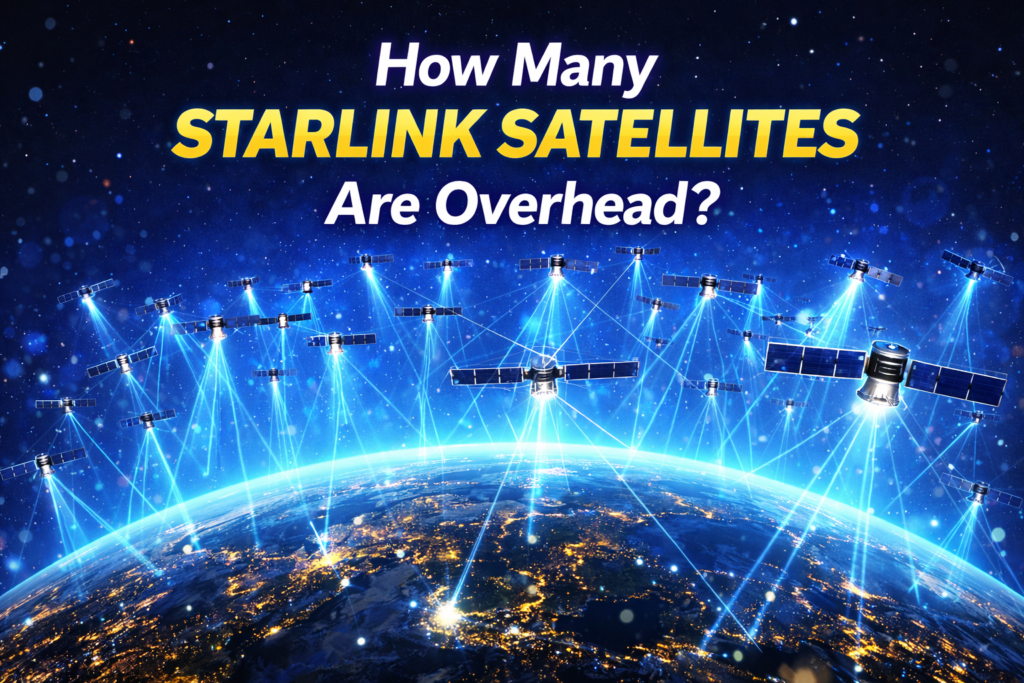
Starlink has become one of the most talked-about satellite constellations in the world. With thousands of satellites orbiting the Earth, the network promises high-speed internet access even in the most remote regions. For consumers and enthusiasts, a common question arises: how many Starlink satellites are overhead at any given time? The answer depends on your location, time of day, and the orbital paths of the satellites. The current Starlink constellation comprises nearly 10,000 satellites, with around 8,300 operational in orbit. SpaceX plans to expand this number dramatically, potentially reaching a million satellites in the future. This ambitious expansion aims to enhance global connectivity, enable satellite-to-phone communication, and provide internet access to underserved regions worldwide. Understanding Starlink Satellite Coverage The visibility of Starlink satellites depends heavily on your geographic location. For example, in Redmond, Washington, simulations show that between 24 and 42 satellites regularly pass overhead. In lower-latitude regions like Fort Lauderdale, Florida, this number may range from 17 to 36 satellites. These satellites beam high-speed internet signals to users on the ground, even in areas where traditional broadband is unavailable. SpaceX’s Starlink satellites orbit at altitudes ranging from 340 kilometers to over 550 kilometers. Each satellite can be visible for a short window of time, typically lasting between 1.6 to 4 minutes, depending on elevation and orbit. The number of satellites in view can also increase as SpaceX deploys additional satellites approved by the US Federal Communications Commission (FCC). How Starlink Satellites Provide Internet Access Each Starlink satellite functions as a relay, transmitting data between users and ground stations. By creating a dense network of satellites, SpaceX ensures overlapping coverage, allowing for continuous internet access even when individual satellites move out of sight. Currently, Starlink offers internet service to rural and remote areas, as well as critical locations in war zones like Ukraine. SpaceX has also introduced direct-to-cell satellite designs, which can connect directly to smartphones without traditional ground hardware. These satellites are particularly useful for emergency communications, disaster relief, and regions with limited infrastructure. The evolving constellation highlights how satellite internet is transforming global connectivity. Tracking Starlink Satellites Overhead For enthusiasts and users, tracking the Starlink constellation has become an intriguing activity. Tools like NCAT and Satellitemap.space provide real-time visualization of satellites above your location. Using these platforms, users can simulate the movement of satellites across the sky, giving insight into when they are in view and how long they remain observable. Observing Starlink satellites can be challenging, as they are often dim compared to brighter celestial objects like the International Space Station. Some newer satellite models use reflective coatings or mirror films to reduce brightness, minimizing light pollution for astronomers while maintaining visibility for users. The Starlink Satellite Mega-Constellation SpaceX has regulatory approval to launch an additional 7,500 Starlink satellites, which would bring the total operational satellites to nearly 19,400. Beyond that, the company plans a futuristic orbiting data center system, deploying up to one million satellites. These satellites are designed to run AI applications, connect via laser links, and route data globally. The expansion will improve internet speeds, reduce latency, and increase coverage, particularly in areas with limited terrestrial internet infrastructure. However, the growth of the constellation also raises concerns about orbital congestion, potential collisions, and space debris management. Starlink Satellites and Night Sky Observations Astronomers and astrophotographers have raised concerns regarding the impact of Starlink satellites on night sky observations. While the satellites provide significant connectivity benefits, they can interfere with astronomical imaging due to their reflective surfaces. SpaceX has taken steps to mitigate these effects by darkening satellite exteriors and adjusting orbits to reduce visibility during critical observation times. Night sky enthusiasts note that Starlink satellites are usually more visible to camera lenses than to the naked eye. The “Starlink train,” a series of satellites moving in a line during deployment, is often the most noticeable phenomenon. Despite these challenges, satellite tracking apps allow users to enjoy observing Starlink satellites without compromising scientific or recreational activities. Starlink Satellites in Action: Real-World Use Cases Starlink satellites have become vital in areas where conventional internet is unreliable. In Ukraine, they have supported communication during wartime. In Iran, citizens use the service to bypass government restrictions and remain online. The number of satellites passing overhead at any given time can vary, with some regions seeing up to 55 satellites in view. Beyond emergency scenarios, Starlink enables remote work, online education, and digital nomad lifestyles. With consistent in-orbit coverage, users can maintain connectivity in remote forests, deserts, and mountainous regions, effectively bridging the digital divide. Safety and Collision Concerns The rapid expansion of Starlink satellites has prompted discussions about orbital safety. As more private and government-operated mega-constellations are launched, the risk of collisions grows. SpaceX has equipped its satellites with thrusters to maneuver away from potential collisions, and they perform thousands of propulsive maneuvers annually to maintain safe orbits. Experts warn that with a million satellites in low Earth orbit, even a low failure rate could generate thousands of defunct satellites, adding to the space debris problem. To address this, SpaceX is developing Stargaze, a space traffic management system to monitor and avoid collisions. The Future of Starlink Satellites The future of Starlink promises a blend of technological innovation and operational challenges. As SpaceX continues to expand its constellation, internet speeds will improve, connectivity will reach new frontiers, and AI applications will become more integrated. Simultaneously, regulatory oversight, collision mitigation, and light pollution concerns will require careful management. For users tracking Starlink satellites overhead, the expanding constellation represents both a marvel of engineering and a glimpse into a connected future. Satellite internet is no longer a novelty; it is an integral component of global digital infrastructure. Conclusion: Starlink Satellites Overhead and Global Connectivity Starlink satellites overhead are reshaping the way we connect to the internet. With thousands of satellites currently in orbit and plans for a mega-constellation of up to one million, SpaceX is bridging gaps in connectivity, supporting emergency communications, and offering unprecedented access to high-speed internet. […]

Starlink Satellites Overhead: How Many Are Flying Above You Right Now? Read Post »

Scroll to Top