What Is Meta Dream Render?
It is Saturday morning in a small shop in Singapore. The owner has a shelf of handmade candles, a phone full of product photos, and a problem. Her customers scroll straight past still images, but a proper video shoot would cost more than a week of profit.
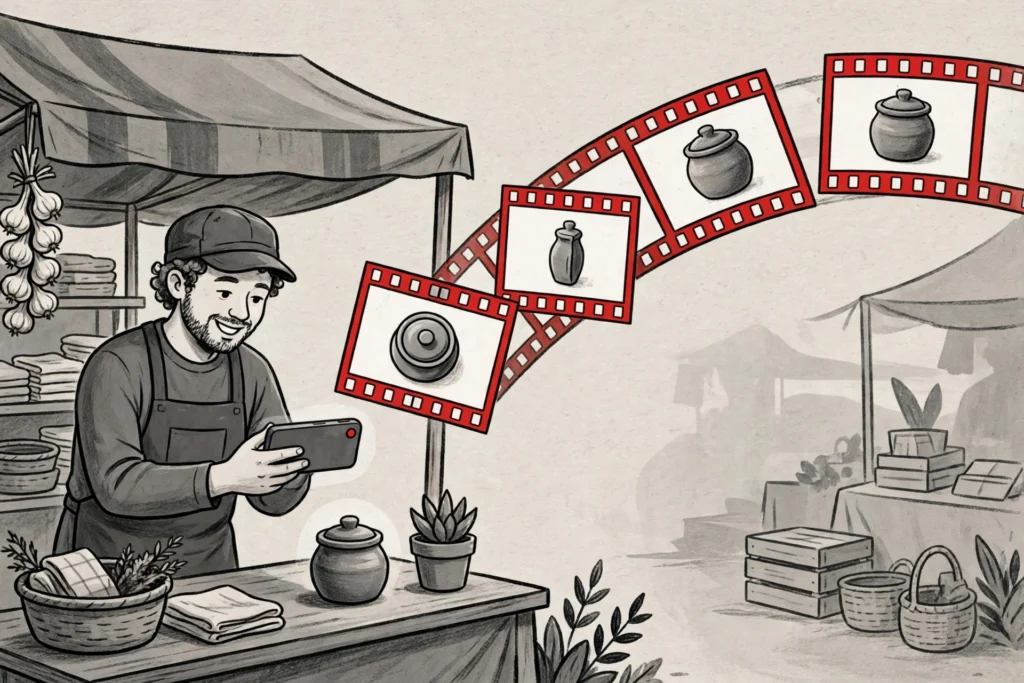
That shop owner is exactly who Meta had in mind this week. The company has introduced Dream Render, a web-based tool that turns a single product photo, or even a short written description, into a finished-looking product video. No camera crew, no editing software, no studio time.
Meta unveiled the tool at its Upskill Day 2026 event in Singapore on November 15, as part of its Small Business Growth Academy. The announcement followed days later, and the tool is already live at dreamrender.com, free to use at launch.
Meta Dream Render is built for the smallest businesses. It targets the shop owners, market-stall traders and creator-entrepreneurs who need video ads every week but cannot afford to make them the old way. The pitch is simple: start with what you already have, and let the AI do the rest.
How Meta Dream Render Turns a Photo Into a Video
Using the tool starts with a choice. You upload one photo of your product, or you type a short description of it. Dream Render then assembles a first video draft in a matter of minutes, according to Meta.
The draft comes with shots, a voiceover and on-screen text already in place. Nothing is final at that point. You can adjust the framing of each shot, change the pacing, swap the voiceover and rewrite the text on screen before the video is produced.
Only when you are happy with the preview do you approve it. The finished video downloads with a label showing it was made with AI, ready to post as a social media clip or an ad.
Everything runs in the browser. There is no software to install and nothing to update. You sign in with an existing Facebook page or Instagram professional account, so there is no new password to remember.
The 94% Problem Behind the Launch
Dream Render did not appear out of nowhere. Meta commissioned a YouGov survey of small business owners in Singapore, and the numbers explain why the company built this tool now.
According to the survey, 94% of the small business owners questioned said they need more guidance to get the full benefit of artificial intelligence. Almost half, 46%, said training in AI marketing and content creation would specifically help their business.
Yet the businesses already using AI are seeing results. The survey found that 82% of small business owners who have used AI reported productivity gains over the past year. Of those, 62% said they use the hours they save to raise the quality of their work.
Customer conversations are another gap. About 52% of respondents have used, or want to use, AI to handle customer responses. Meta’s Upskill Day event tackled that side too, with hands-on training for automated messaging on WhatsApp and Messenger.
More than 180 local merchants, creator-entrepreneurs and heartland business owners attended the event. One of them, SpeakEasy Lab, a two-person communications training firm, already uses Meta Business Agent to answer basic customer questions.
The firm says the tool cut its response time from over an hour to near-instant replies, saving an estimated 10 to 15 hours every week. That is the result Meta wants Dream Render to repeat on the content side.
What Dream Render Cannot Do Yet
For all its promise, Dream Render has clear limits. The tool is still in beta, and it works from static input only. It does not connect to your Shopify store, it does not pull live stock or pricing, and it will not update a video when a price changes.
That means every video is a snapshot. If you change a price or a product sells out, the old video stays wrong until you make a new one. Distribution is manual too: you download the file and upload it wherever you want it to appear.
The tool also offers outfit try-ons, inviting photos of the product or of the person you want to feature. But its FAQ carries a catch for resellers: Dream Render may swap out clothing that carries another brand’s logo. If you sell branded fashion, the video might not show the logo your customer expects.
Meta also warns that the final video will differ from the preview. That matters if you approve a draft expecting pixel-for-pixel accuracy. And the AI-made label travels with the file: Meta has given no option to remove the disclosure.
Finally, Dream Render does not check your claims. It will not verify a product promise, flag a restricted category or add the legal disclaimers your product needs. If your item requires an age gate or a health warning, adding it is your job, not the AI’s.
Why Small Businesses Should Care
Video has become the default language of social media, and that is a problem for small sellers. A polished video ad used to need a camera, lights, an editor and a budget. A still photo was the cheap option, and it increasingly gets ignored.
Dream Render attacks that gap directly. It turns the asset every small business already owns, a product photo, into the asset every feed now demands, a short video. For a business adding twenty new products, that could mean twenty video drafts in an afternoon instead of a week of shoots.
Seasonal campaigns are the obvious test. A Valentine’s gift guide or a holiday bundle needs fresh creative on a tight calendar. Feeding Dream Render a hero image and a few selling points could produce a publishable video the same day, instead of booking a videographer weeks ahead.
There is a trade-off, and it is control. Auto-generated framing, pacing and voiceover may not match your brand’s tone, and the result will lack the polish of a custom shoot. The tool gives you adjustment controls, but how far they stretch for complex products is still unclear.
It is also worth asking what Meta gets out of this. Every Dream Render video is a piece of content made to run on Facebook and Instagram, and every one of them is a potential ad. Helping small businesses make videos more cheaply also means more ads flowing through Meta’s own platforms.
That does not make the tool less useful. It does mean its real test will be whether the videos actually sell products, not just whether they are easy to make. Early users will decide that quickly, one campaign at a time.
What Happens Next
Dream Render is already spreading beyond Singapore. Meta has also introduced the tool in Thailand, alongside new retail ad measurement features, where it remains in beta and takes a few minutes per creation, according to its FAQ.
Meta has not said which countries come next, or whether access will roll out gradually. It has also published no pricing for future tiers. For now the tool is free, but businesses building it into their weekly routine should watch for changes.
The bigger question is how far Meta takes this idea. If Dream Render can already turn a photo into a video, a future version could plausibly pull live product data, match a brand’s voice, or build whole campaigns from a catalogue. None of that exists yet, and Meta has announced none of it.
For now, the tool does one thing: it lowers the cost of making a product video to almost nothing. For the shop owner with a shelf of candles and a phone full of photos, that might be exactly enough.
Meta’s announcement, reported by techblog.news, puts Dream Render at the centre of the company’s small-business push. The tool is live now at dreamrender.com.
Related reading: OpenAI is pushing AI into sales teams too, with ChatGPT for Sales, while Anthropic’s Claude office suite takes on Microsoft and Google in the workplace. And if you want to see what AI can do with physical products, Tripo H3.5 turns an idea into a 3D-printed object.