How the Siri AI Usage Limits Work
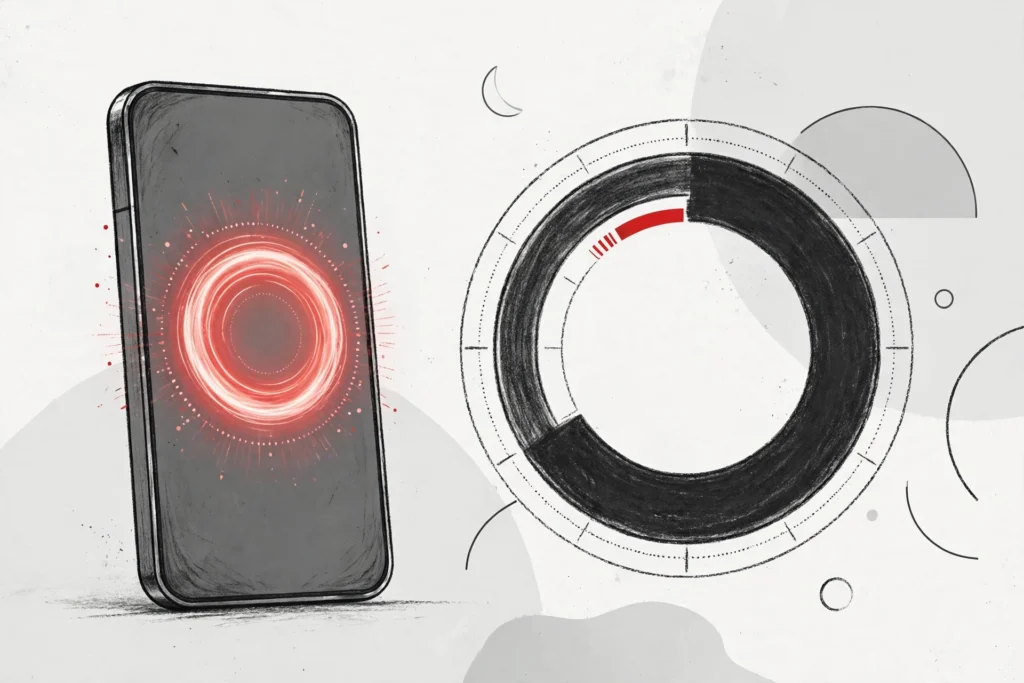
Ben asked Siri to turn off his Lounge TV, and instead of the usual quiet confirmation he got a sales pitch. The iOS developer had run into Apple’s new Siri AI usage limits — a daily cap on the smartest Siri requests, now live in the iOS 27.3 beta.
The moment came after 40 requests “in the whole day”, as Ben put it in his post on X. He was not on the free tier. He pays $9.99 a month for the 2TB iCloud+ plan, which Apple says should give him five times the standard allowance.
That is the detail that made the story travel. If a paying customer can hit the ceiling before dinner, the free allowance must be smaller than most iPhone owners would guess. Apple has not said how large the standard limit actually is.
The limits arrived with the second developer beta of iOS 27.3, seeded on November 16, 2026, alongside a new Apple support document that explains the system in writing. The same beta also covers iPadOS 27.3 and macOS 27.3.
Here is the basic shape of it. Siri AI and other Apple Intelligence features that need Apple’s cloud models now carry a daily limit on each device. When you reach it, the advanced requests pause until the allowance resets or you upgrade to an eligible iCloud+ plan.
Simple requests keep working. Apple says everyday commands such as setting a three-minute timer or sending a plain text are not counted at all. Ben’s own experience backs that up: according to Gadgets 360, Siri still answered simple queries even after he hit the threshold.
The iCloud+ Tier Table: Pay More, Ask More
Your storage plan now decides how much AI you get. The free tier and the 50GB iCloud+ plan, at $0.99 a month, stay at the standard limit. Every step above that multiplies it.
The 200GB plan, at $2.99 a month, raises the limit to up to twice the standard allowance. The 2TB plan, at $9.99 a month, goes up to five times. The 6TB plan, at $29.99 a month, goes up to ten times. The top 12TB plan, at $59.99 a month, goes up to twenty times.
Apple describes each step as “up to” the stated multiplier, not a guaranteed number of extra requests. The exact allowance varies by feature, by how complex each request is, and by demand on Apple’s servers at the time.
The standard allowance is per device and per feature category. But the extra allowance bought with iCloud+ is shared. If several of your devices draw on the same plan, they drink from the same pool — and on a Family plan, everyone in the group shares it too.
Limits reset around midnight in your local time zone, and they do not roll over. Unused requests from Monday do not carry into Tuesday. For families, the clock runs on the plan buyer’s time zone.
What Counts Against Your Cap — and What Doesn’t
The cap does not cover everything Siri does. It applies to the heavier work that runs on Apple’s cloud models, and Apple lists four categories of feature that count against it.
First, Siri AI requests themselves — the complex, conversational asks that need server-side models rather than the ones your iPhone handles on-device. Second, Image Playground and some Photos tools, including features such as Clean Up. Third, Shortcuts that call on Apple’s cloud models. Fourth, other developers’ apps that use Apple’s servers for AI features.
What stays free is the everyday stuff. A timer, a phone call, a quick text to a friend — these run locally and are not counted. Apple’s support document is explicit that you will be notified when you reach a limit, and that the ordinary commands keep working afterwards.
The line between the two is where the friction lives. A request such as “text Mark the address for Annika’s party, and tell him what time we need to leave” is an advanced request, because it chains several pieces of information together. A plain “text Mark” is not.
That distinction is also why Ben’s 40-request day is hard to interpret. Forty complex requests is a heavy day for most people, but a light one for a developer testing a beta. The number is his experience on his plan, on one day — not an official figure.
Where the Higher Limits Don’t Apply
The paid tiers do not work everywhere. According to Apple’s support document, increased Siri AI access is not available in Brazil, the European Union, the United Kingdom or South Korea. Higher limits for the other capped features are not available there, or in China.
That leaves some users with the standard cap and no way to pay their way past it. In the UK and South Korea, where Siri AI does run on iPhones, the cap applies but the upgrade path does not exist yet. Apple has not said when — or whether — that will change.
India is not on the exclusion list. Apple’s India price page puts the 200GB plan at Rs 219 a month, so Indian iPhone owners who want a bigger allowance will be able to buy one when iOS 27.3 ships.
Why Apple Is Putting a Meter on Siri
Apple did not invent the metered assistant. ChatGPT, Gemini and Claude all cap free usage and sell more capacity to subscribers. What is new is Apple joining them — and tying the price to a storage plan rather than a separate AI subscription.
The timing is not an accident. Siri AI arrived with iOS 27 on September 14, 2026, as a rebuilt, more conversational assistant that can reach into your apps, your calendar and your messages. Every one of those smarter requests costs Apple server time, and the heaviest users cost the most.
Apple has already tested the same logic elsewhere. Earlier this month it began selling Apple Intelligence usage packs — one-time $49.99 top-ups for Creator Studio subscribers who run out of their monthly AI allowance. The Siri cap extends that pay-when-you-run-out model to the assistant on every iPhone.
There is also a quieter motive. A daily allowance nudges the most demanding work onto Apple’s paid tiers, and it gives the company a lever it can adjust over time.
Apple says the standard allowance and plan features “may change over time”, which is another way of saying the numbers in the beta are not final.
The same beta that introduced the limits also opened Siri AI to third-party apps through App Intents and added Skills for multi-step actions.
It also showed signs that Siri AI could soon read your sleep, workouts and medication logs. The assistant is getting more capable and more personal at the same time as it gets a meter.
What Happens Next
The final version of iOS 27.3 is expected in December 2026, though Apple has announced no date and one report points to December 14. Because this is a beta, the 40-request figure, the tier multipliers and even the regional exclusions could all still change before release.
What is unlikely to shift is the direction of travel: the free, unlimited Siri is over, and the assistant’s smartest work now comes with a daily budget.
For most iPhone owners, the cap may never bite. Timers, calls and simple texts are untouched, and a handful of complex requests a day will sit comfortably inside the free allowance.
The people who will feel it first are the power users — the ones who ask Siri to plan, summarise, draft and organise all day long.
They now have a choice to make, and it is the same one Apple has been steering them toward all year: wait for midnight, or pay for more. Apple is betting that, for the users who lean on Siri hardest, the second option will start to look like the obvious one.
The question is whether the allowance Apple sets for free users is generous enough that the choice feels fair — or tight enough that it feels like a bill for something that used to be free. Apple has not commented beyond its support document.
If you are running iOS 27.3 beta 2, your Siri already has a daily budget. The only thing left to find out is how big it is.
Source: Gadgets 360, reporting on iOS developer Ben (@idocode01) and Apple’s support document.


