It is 7:40 on a Tuesday morning, and Maya is already running late. She is walking fast, phone in one hand, coffee in the other, dictating a message to her running group while mentally booking a ride to the office.
Halfway down the street, her phone buzzes. It is not a notification she asked for. It is her Pixel, quietly offering to share her arrival time with the friend who just asked where she is.
That small moment is the whole point of Google’s latest update. The November Pixel Drop, announced on November 10, is not about a new phone. It is about the phone you already own learning to do more of the thinking for you.
According to Google, the update starts rolling out now and will reach Pixel devices over the next several weeks. The headline features are Gemini Intelligence on the Pixel 10, a smarter Call Screen on the Pixel 11 series, and a brand-new piece of hardware: the Pixel Tag, a slim tracker that goes on sale November 11 for $29.99.
What the November Pixel Drop Brings to Pixel 10
The centrepiece of the November Pixel Drop is Gemini Intelligence, now available on Pixel 10 devices. It is Google’s push to make its AI assistant less of a chatbot you summon and more of a helper that works in the background of everyday life.
The most eye-catching piece is Rambler, a reworked voice typing feature. Speak naturally, filler words and all, and Rambler strips out the ums and ahs, then formats your rambling thoughts into clear, polished text. You review it, you send it.
Gemini can also take on multi-step jobs that used to mean juggling several apps. Ordering groceries, booking a ride, finding a table at a favourite restaurant — the assistant handles the logistics while you get on with your day. That capability is now available in Japan, the UK and India as well.
Then there are the proactive suggestions. Your Pixel notices when someone asks for your arrival time and offers to share your ETA with a single tap. It suggests a dinner spot before you have even asked. The phone is not waiting for instructions any more. It is anticipating them.
That shift is part of a bigger pattern. Just last week, questions about how much of our personal data AI systems can see made headlines when Google’s Gemini privacy changes put Gmail and Drive files in front of human reviewers.
The convenience of an assistant that knows your calendar, your messages and your location comes with a trade-off. It is one users should keep weighing as these features get smarter.
Pixel Tag: Google’s $29.99 Answer to Lost Keys
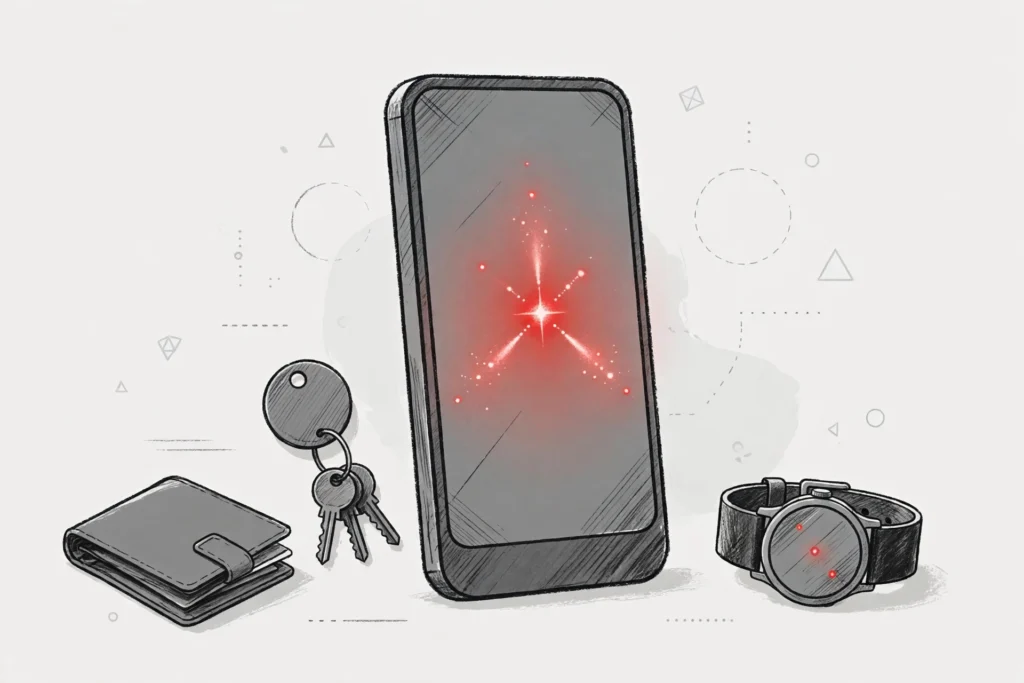
The most tangible new product in the November Pixel Drop is not software at all. It is the Pixel Tag, a small tracker that goes on sale November 11 for $29.99, or $99.99 for a four-pack.
Google says the tag is slim enough to slip into a wallet and tough enough to clip onto a bag or a set of keys. Its battery lasts more than a year, so there is no monthly charging ritual to forget.
Finding a lost item works on two levels. Far away, the Find Hub network — more than a billion Android devices — helps pinpoint the tag’s location. Up close, ultra-wideband gives visual direction and distance guidance, pointing you toward the couch cushion where your keys actually went.
It is a late entry into a crowded market, but Google is betting that the size of the Android network is the advantage. A tracker is only as good as the crowd of devices looking for it, and on that measure, few rivals can match a billion phones.
Call Screen Gets More Conversational on Pixel 11
Spam calls are the chore nobody asked for, and the November Pixel Drop gives the Pixel 11 series a better way to handle them. Call Screen, the feature that answers unknown numbers on your behalf, now holds a much more natural conversation with the caller.
When an unknown number rings, Gemini asks why the caller is reaching out, in a tone that sounds like a real person rather than a robot reading a script. A live transcript appears on your screen, so you can follow the exchange in real time and decide exactly when to jump in or end the call.
The feature is also coming to the Pixel Watch 4 and Pixel Watch 5 soon, which means the screening could soon happen from your wrist. It is a small change, but for anyone who has ever stared at an unknown number wondering whether to answer, it removes a daily friction.
Smaller Upgrades Across the Pixel Family
As with every Pixel Drop, the headline features sit alongside smaller improvements touching almost every Pixel device still in use.
Custom icons, introduced earlier this year, gain new styles for more home-screen personalisation. Pixel search, now available on Pixel 6 and newer devices, can dig through photos, emails, messages, calendar events and device settings from one place.
Google Messages gets a quiet upgrade too: HiLight now works with the messaging app, so when your phone is face down, it glows if a favourite contact messages you.
On the wrist, the Pixel Watch gains step-by-step workouts for the Watch 3 and newer models, with instructions and live metrics. And when your phone is unlocked nearby, the watch unlocks itself, sparing you the PIN dance.
Google Fi subscribers get something as well. The carrier’s new super network, which automatically switches between two of America’s top 5G networks and millions of secure Wi-Fi networks, starts rolling out to eligible Pixels today.
Why This November Pixel Drop Matters
Looked at one feature at a time, the November Pixel Drop is a familiar mix of polish and small delights. Looked at as a whole, it shows where Google thinks the smartphone is heading.
The phone is becoming less of a tool you operate and more of an assistant that operates alongside you. It writes your messages, books your rides, screens your calls, and suggests your dinner. The $29.99 Pixel Tag extends that logic beyond the screen, turning the phone into a finder for everything you own.
There is a cost to that convenience, and it is not measured in dollars. An assistant that anticipates your needs has to know a lot about your life.
The same week Google ships these features, the industry is converging on a model where AI is metered, personal, and always on. Apple, for instance, now sells $49.99 Apple Intelligence usage packs for users who run out of monthly AI allowance.
That makes the question for Pixel owners less about whether the new features are useful — they clearly are — and more about how much of their daily life they are comfortable handing over.
For now, the answer for most people will be: quite a lot, especially when it saves them from an awkward phone call or a lost set of keys.
What Happens Next
The rollout begins now, but not everything arrives at once. Google says updates will continue over the next several weeks, with some features still expanding to more languages and devices.
The Pixel Tag goes on sale November 11, and the first real test will be how quickly people buy into Google’s tracker. The Find Hub network is its biggest selling point, but it only proves itself the first time someone’s luggage goes missing at an airport.
Meanwhile, the AI race is not slowing down. While Google polishes the Pixel experience, rivals are building their own self-improving systems — Hedra’s Model Factory, for example, aims to build and improve AI models with almost no human input.
The November Pixel Drop is Google’s answer to that race, delivered not in a keynote but in a quiet software update to the phone in your pocket. Check your Pixel’s settings over the coming days. The update may already be waiting, and with it, a phone that does a little more of the thinking before you even ask.