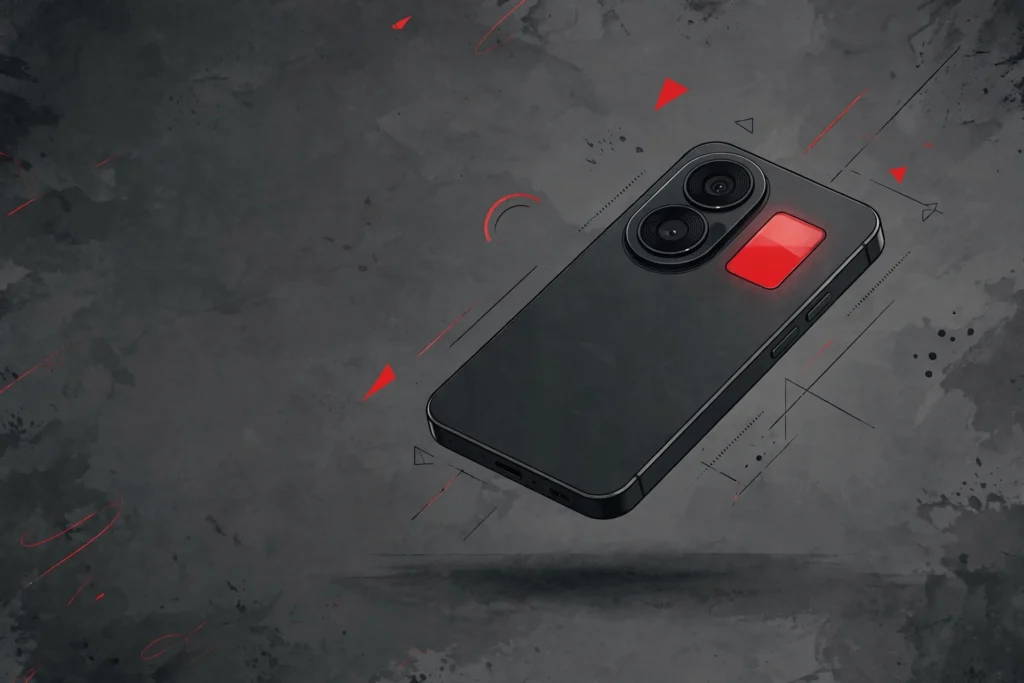
It is late afternoon in Paris, and a crowd of photographers is doing something unusual. Instead of pointing their cameras at the stage, they are turning the new phone around in their hands, staring at its back. There, beside the camera module, a small second screen is glowing.
That is the moment Xiaomi chose to introduce the Xiaomi 18 Pro to the rest of the world. On November 17, the company took its flagship out of China for the first time and launched it globally at an event in Paris, alongside the larger Xiaomi 18 Pro Max.
The Xiaomi 18 Pro is not a quiet upgrade. It pairs two 200-megapixel Leica cameras with a rear display, a 2-nanometre Snapdragon chip and a silicon-carbon battery, and it starts at €1,399 in Europe. Xiaomi is clearly aiming at the very top of the Android market.
Two 200MP cameras, both with Leica glass
The camera system is the headline, and Xiaomi has gone further than most rivals dare. Both the main camera and the periscope telephoto camera use 200-megapixel sensors, a combination no other mainstream flagship currently offers.
The main camera sits behind a Leica Summilux lens with a bright f/1.67 aperture and optical image stabilisation. The sensor is Xiaomi’s Light Fusion 960, a large 1/1.28-inch unit, while the Pro Max gets the Light Fusion 960L version with LOFIC technology.
LOFIC is the detail photographers will care about. Xiaomi claims the Pro Max sensor delivers 16.2 stops of dynamic range, which should mean far more detail in the brightest and darkest parts of a scene. It is the kind of figure usually quoted for dedicated cameras, not phones.
The telephoto camera is just as ambitious. It uses a 200-megapixel Samsung HP5 sensor behind a stabilised 75mm-equivalent lens, giving 3.2x optical zoom, and it doubles as a telemacro camera for close-up shots. A 50-megapixel ultrawide camera with a 102-degree field of view completes the rear trio.
On the front, there is a 50-megapixel selfie camera. The whole system records 8K video, and the Pro Max’s camera hardware is, on paper at least, the most powerful Xiaomi has ever shipped.
The rear display is more than a gimmick
The second screen on the back is the feature everyone at the Paris event kept picking up the phone to try. The Xiaomi 18 Pro has a 2.7-inch AMOLED touchscreen set into the camera module, while the Pro Max gets a slightly larger 2.9-inch version.
It is a proper display, not a status strip. It runs at up to 120Hz and can be used as a viewfinder for the rear cameras, so the person being photographed can see themselves in the frame. That alone makes the dual 200-megapixel cameras far more useful for selfies and vlogging.
It can also show notifications, the time and quick controls without waking the main screen. Xiaomi has not yet shown how deep the software support goes, but the hardware is clearly built to be used every day, not just admired once.
The idea is not entirely new. Other brands have experimented with rear screens over the years, and most of them quietly dropped the idea. Xiaomi is betting that a bigger, brighter, touch-enabled panel, paired with cameras worth using it for, will make the difference this time.
A screen built to disappear at the edges
The front of the Xiaomi 18 Pro is almost all screen. The 6.4-inch LTPO AMOLED panel runs at up to 120Hz and peaks at 4,000 nits of brightness, so it stays readable in harsh sunlight. The Pro Max stretches the same technology across a 6.9-inch panel.
Xiaomi says the bezels around the display are just 0.99mm wide, the thinnest in the industry so far. The panels also carry TÜV Rheinland Triple Eye Care certification and use 2,160Hz PWM dimming, which should reduce eye strain during long sessions at night.
There is another trick hidden in the display. Xiaomi calls it a privacy display, and it narrows the viewing angle so people sitting beside you cannot easily read what is on your screen. For a phone that costs this much, it is a small touch that makes daily life noticeably easier.
Snapdragon 8 Elite Gen 6 and a silicon-carbon battery
Inside, the Xiaomi 18 Pro runs on Qualcomm’s Snapdragon 8 Elite Gen 6, built on a 2-nanometre process. The Pro Max steps up to the Snapdragon 8 Elite Extreme Gen 6, which peaks at 5.01GHz. Both chips are cooled by Xiaomi’s 3D IceLoop system.
The battery is where the global models differ most from the Chinese versions. The international Xiaomi 18 Pro carries a 6,000mAh silicon-carbon battery, while the Pro Max gets 7,050mAh. In China, the same phones ship with 7,000mAh and 8,500mAh cells.
Even so, the global figures are generous by flagship standards. The batteries use 28 percent silicon content, which packs more energy into the same space. Charging is fast too: 90W wired and 50W wireless on the Pro, and 100W wired with 50W wireless on the Pro Max.
Both phones ship with HyperOS 4, based on Android 17, and include three months of Google AI Pro plus 5TB of Google Cloud storage. Wi-Fi 7, Bluetooth 6.0, an ultrasonic fingerprint sensor and face unlock round out the connectivity and security package.
Xiaomi 18 Pro price and availability
The Xiaomi 18 Pro starts at €1,399 for the 12GB RAM and 256GB storage model, with a 12GB and 512GB version at €1,599. The Pro Max starts at €1,599 for 12GB and 256GB, rising to €1,799 for 12GB and 512GB, and a 16GB and 1TB model will follow at €2,099.
Both phones come in white, black, Cosmic Blue and Velvet Red, and they are on sale from today in select global markets. Japan opened pre-orders on November 17, with general sales starting November 27 and prices from ¥209,800.
There is one notable absence. Xiaomi has not announced a US launch, and the company has not said whether one is coming. For now, the Xiaomi 18 Pro is a phone for Europe, Asia and other international markets.
Xiaomi also used the Paris event to launch the Xiaomi Smart Band 11 and the Xiaomi Clip Earbuds, an open-ear pair with up to 38 hours of battery life and Apple Find My support. Neither steals the spotlight from the phones, but together they show Xiaomi pushing across its whole ecosystem at once.
What the launch means for the flagship race
The timing is deliberate. The Xiaomi 18 Pro arrives as the flagship season reaches its peak, with Google’s Pixel line refreshed by the November Pixel Drop and Apple refining its foldable with face unlock on the iPhone Duo.
Xiaomi’s answer is to out-spec almost everyone. Two 200-megapixel cameras, a rear display, a 2-nanometre chip and a 7,000mAh-class battery are all things its rivals cannot match in a single device. The question is whether the whole package feels as good in the hand as it reads on a spec sheet.
The price is the other half of the story. At €1,399, the Xiaomi 18 Pro is no longer the value flagship it once was. It now costs as much as the most expensive phones from Samsung, Google and Apple, and buyers will judge it by exactly the same standard.
That is a gamble, but it is also a statement. Xiaomi is telling the market that its Pro line no longer needs to undercut anyone to be taken seriously. The first time the Pro series has gone global, according to Gadgets 360, it is arriving as a full-price flagship.
What happens next for the Xiaomi 18 Pro
The next few weeks will tell us whether the bet pays off. Independent camera tests will show whether the dual 200-megapixel setup and the LOFIC sensor live up to Xiaomi’s claims, and real-world battery tests will reveal how much the smaller global batteries actually matter.
Reviewers will also decide whether the rear display is a genuine tool or a curiosity that fades after the first week. If it becomes the default way people take selfies and shoot video, other brands will follow. If not, it will join the long list of phone experiments that looked great on stage.
For now, the Xiaomi 18 Pro is the most ambitious phone Xiaomi has ever sold outside China. It has the cameras, the chip and the battery to compete at the very top, and a second screen on the back to make sure nobody walks past it. The flagship race just got a lot more interesting.