A $150 Million Deal, Signed and Then Scrapped
The money was already on the table. Moonshot AI, the Chinese startup behind the Kimi chatbot, had agreed to pay half of a $150 million chip deal upfront, more than three times the usual deposit, just to secure computing power it could not buy at home. Then, this week, it walked away from the whole thing.
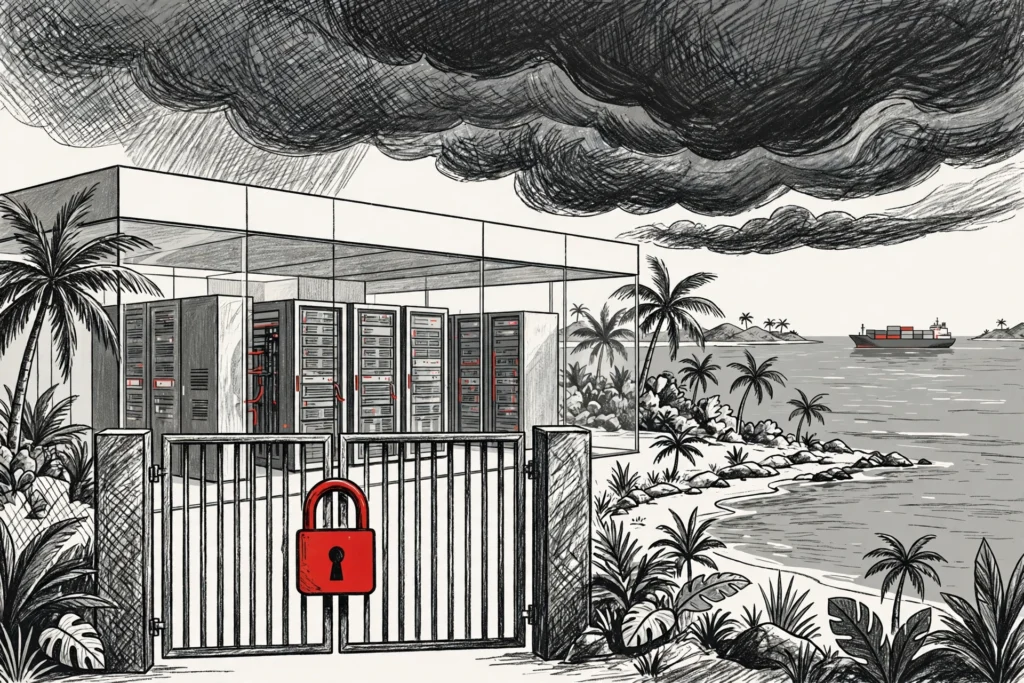
The deal would have given Moonshot access to a large cluster of Nvidia’s Blackwell Ultra B300 accelerators, among the most powerful AI chips in the world, through a cloud provider in Indonesia.
The hardware was due to come online in 2027. Instead, the contract is now cancelled, and Moonshot has frozen talks on other new deals while it works out what the new rules mean.
The cancellation was first reported by The Information, citing two people familiar with the matter. Moonshot declined to comment on the report. The company is still looking for other options, according to one report, including talks with data centre operators in Europe.
What makes the story remarkable is not just the size of the deal. It is the deposit. Moonshot had reportedly agreed to pay about 50 percent of the contract value in advance, far above the typical 15 percent for deals like this.
That is the behaviour of a company that knows compute is scarce and is willing to pay almost anything to lock it down.
The Rule That Closed the Loophole
The reason for the about-turn is a new set of export controls from the US Commerce Department. Its Bureau of Industry and Security announced the rules on November 16, and they took effect on November 19 after publication in the Federal Register. They close the workaround Chinese AI firms have relied on for years.
Until now, Washington’s controls focused mainly on the physical delivery of advanced chips. Chinese developers could not legally import Nvidia’s most powerful accelerators, so they rented them instead, paying by the hour in data centres across Malaysia, Indonesia, Thailand and Singapore. That route, until this week, fell outside US export law.
The new rule changes that. Data centres that provide significant computing power to customers from China, Macau and other restricted jurisdictions must now obtain a US government licence.
The location of the data centre itself no longer decides the question, and the rules also look through to where a customer’s ultimate parent company is based.
The threshold for needing a licence is a data centre supplying computing power above 12 million units of total processing performance. According to the law firm Sidley Austin, that works out to roughly 300 advanced AI chips.
Since Chinese AI companies usually seek thousands of chips per contract, almost every leasing deal of this kind would now need approval.
Data centres that already serve affected customers have 90 days from November 19 to apply for the necessary licences. Applications are reviewed individually, with exceptions for certain commercial recommendation systems.
The rule also adds separate licensing requirements for advanced computing equipment shipped to Indonesia, Malaysia, Singapore, Brazil and Thailand.
There are carve-outs. Chips can still go to US-headquartered customers in those five countries without a licence, provided the operator sends the government a monthly report. The rule also scraps the Biden administration’s AI Diffusion Rule, which ranked countries in tiers to decide who could buy advanced chips.
Why Renting Chips Became the Workaround
To understand why Moonshot was renting chips in Indonesia in the first place, it helps to look at the controls already in place. The direct sale of Nvidia’s top accelerators to China has been banned for years.
The Blackwell Ultra B300 sits squarely on that banned list. For a Chinese lab, the only legal way to touch that hardware was to use it somewhere else.
That is how a whole shadow market grew up. Cloud providers in Southeast Asia built data centres full of restricted chips and sold the computing power by the hour.
The chips never entered China, and the customers never owned them. On paper, nothing had been exported. In practice, Chinese AI firms got the compute they needed to train their models.
Washington has been studying how to close that gap since at least August, when enforcement officials reportedly began examining the rental route. The new rule, reportedly written at the request of the Treasury Department and the National Security Council, is the answer. It treats remote access to the chips much like owning them.
The timing is awkward for Nvidia, too. The chipmaker is already under intense scrutiny over where its hardware ends up. California’s attorney general subpoenaed Nvidia this week to explain whether its advanced chips or confidential information may have reached China, and whether the company misled investors about that risk.
It is the latest chapter in a long-running saga for the company. Records reviewed by Reuters recently showed a blacklisted Chinese university buying Nvidia H200 chips through intermediaries, despite export controls. Nvidia has insisted it complies with the law, but the political pressure keeps building.
Moonshot AI Nvidia Deal: Why This One Matters
The cancelled contract is the first major casualty of the new rule, and it may not be the last. The Information’s assessment is blunt: similar cancellations could follow for other projects that are still under construction, as Chinese firms and their cloud providers work out whether their deals can survive the licensing regime.
The stakes for Moonshot are high. The company is the developer of the Kimi family of AI models, which has become one of China’s most prominent challengers to OpenAI and Anthropic. The computing power at the centre of the cancelled deal was reportedly intended for its upcoming Kimi K4 model, the next step in that competition.
Losing access to a B300 cluster does not stop Moonshot from training models. It already has other sources of compute, including domestic Chinese chips. But the B300 is among the fastest accelerators available anywhere, and training a frontier model without the best hardware means slower progress, higher costs, or both.
The US government is not leaving the matter there. The Commerce Department’s Bureau of Industry and Security has opened a formal investigation into Moonshot’s access channels for advanced AI semiconductors. That puts the company’s entire supply chain, not just this one deal, under official scrutiny.
For the wider industry, the message is clear. The contest over AI is no longer only about who builds the smartest model. It is increasingly about who can get hold of the chips to train it, and the rules governing that access are being rewritten in real time.
What Happens Next
Three clocks are now running. Data centres serving Chinese customers have 90 days to seek licences. Moonshot has paused its other negotiations while it assesses the impact. And the Commerce Department’s investigation into the company’s chip access is only just beginning.
Whether licences will actually be granted is an open question. The rule gives officials wide discretion, and applications are judged case by case. If approvals are rare, Chinese AI firms will have to lean harder on domestic chips, on older hardware, or on data centres in countries outside the new rules’ reach.
Europe is one possible escape route. Moonshot is reportedly exploring talks with data centre operators there, though it is far from clear that European facilities would be any safer. The new rules follow the customer, not the building, so a European data centre serving a Chinese firm would face the same licensing question.
Nvidia, meanwhile, is caught in the middle. It sells the world’s most sought-after AI chips, and demand from Chinese firms is enormous. But every new control narrows the market it can legally serve, and the political scrutiny around its China business shows no sign of easing.
Its shares have already had a brutal month, and the headlines keep coming.
For now, the $150 million deal is dead, the deposit presumably unspent, and a question hangs over every similar contract in Southeast Asia. The loophole that let Chinese AI firms rent their way around American export controls has closed. What replaces it will shape the next phase of the AI race.


