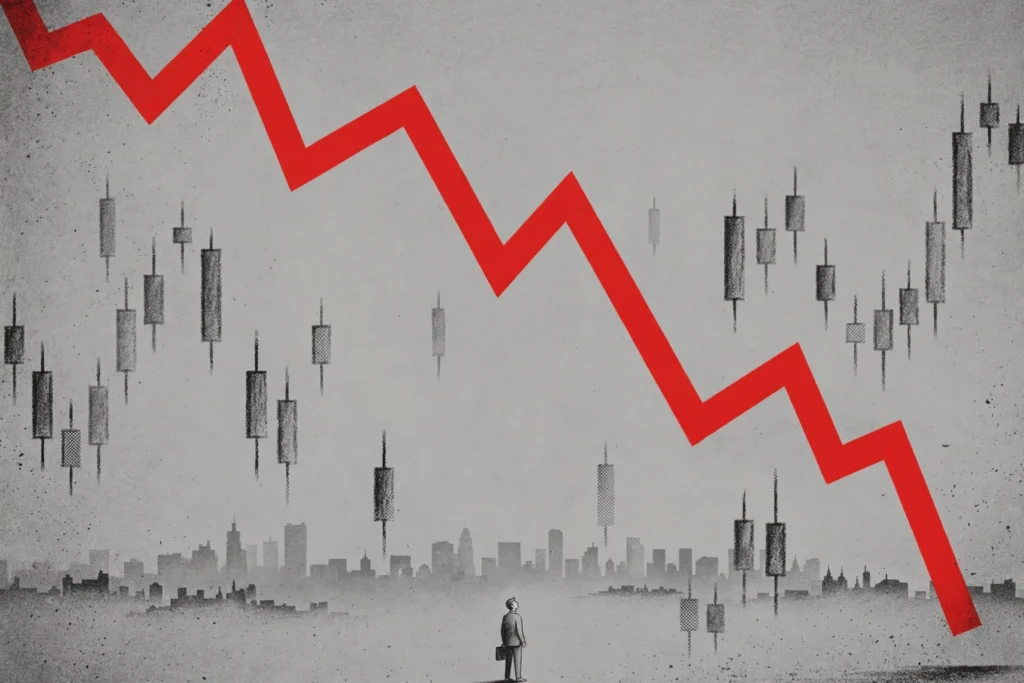
On Thursday morning, Anthropic shares looked like the trade of the decade. By Friday afternoon, the same shares were five cents away from wiping out the entire first-day gain. The Anthropic shares fall that nobody on Wall Street saw coming had arrived, and it took $109 billion of market value with it.
The maker of the Claude chatbot had just completed the biggest stock market debut in history. Less than 48 hours later, the celebration had turned into an argument about who got the shares, who was allowed to sell them, and whether the most famous IPO ever was priced too high in the first place.
Anthropic Shares Fall 8.5% on the Second Day
Anthropic shares closed at $88.91 on Friday, November 20, down 8.5 percent from the previous session. The drop erased roughly $109 billion in market value in a single day, according to reports carried by the Times of India and Korean business press.
The fall was even uglier during the session. At one point the stock plunged about 15 percent, touching $83.05 — just five cents above the $83 price at which the shares were sold to investors in the offering.
It was a brutal reversal. Anthropic had opened trading on Thursday at $112, more than 30 percent above its IPO price, before closing the debut day up 17 percent at $97.17. Friday gave back more than half of that gain in a few hours.
The timing made everything worse. The whole market was sliding at the same time, and Anthropic, the newest and most watched name on the Nasdaq, became the face of a sell-off that had been building for weeks.
A $4 Trillion Week for the Nasdaq
The Anthropic slide did not happen in isolation. The Nasdaq 100 tumbled 10 percent for the week, its worst performance since the Covid pandemic hit markets in March 2020, according to Bloomberg.
About $4 trillion in market value vanished from the Nasdaq over the same stretch. The Nasdaq 100 ended the week almost 20 percent below its October 6 peak, close to the definition of a bear market.
The S&P 500, meanwhile, had entered correction territory, falling 12 percent from its October record. Nvidia, the chipmaker at the centre of the AI boom, plunged 14 percent on Friday alone and lost 23 percent for the week.
Meta and Oracle fell sharply too. The mood was no longer about one company’s bad day. Investors were asking a bigger question: whether the enormous sums being poured into AI infrastructure will ever earn their money back.
The Wall Street Debate: Who Got the Shares?
According to The Wall Street Journal, reported on November 21, the finger-pointing on Wall Street began almost as soon as the stock started sliding. The first argument was about who received shares in the offering — and who did not.
More than half of the $81 billion in shares sold in the IPO went to investors who already owned a piece of Anthropic, including Altimeter Capital, Lightspeed Venture Partners and Menlo Ventures. People familiar with the matter estimated that about 60 percent of the firms that asked to buy at the IPO price received nothing.
That left many of the big institutions that wanted in buying on the open market on Thursday, pushing the price higher. When the buying stopped, there was little underneath to hold the price up.
Some on Wall Street argued the opening price was simply set too high. A first trade at $112 left the stock with a long way to fall, and once it started sliding, there was no obvious level where buyers would step back in.
Retail Traders Bought the Top
Ordinary investors were among the hardest hit. Retail traders bought Anthropic shares at a near-record pace after the IPO, according to the Daily Star, which cited LSEG data. Many of them paid Thursday’s inflated prices.
On Friday, the stock fell sharply to $85 by early afternoon, leaving those buyers facing losses within a day. Net retail buying was still below the records set by SpaceX’s IPO at $118 million and Coinbase at $92 million, but the pain was real.
Anthropic had set aside up to 20 percent of the offering for retail investors, an unusually large slice. Less than 20 percent of shares were allocated to retail in the end, the company said, but the enthusiasm was unmistakable.
The pattern was painfully familiar. A famous name, a huge first-day pop, and a crowd of small investors arriving just as the professionals were heading for the exit.
The Greenshoe Was Already Gone
One of the strangest details in the whole episode was the greenshoe. In most big IPOs, underwriters hold an over-allotment option — the right to sell 15 percent more shares than the original deal size and buy them back later.
If the stock falls below the IPO price, underwriters can buy shares on the open market to support it. It is the safety net that stops a bad debut from becoming a rout.
Anthropic announced on Friday morning that its greenshoe had already been exercised. The safety net was used up before it was needed, leaving the underwriters with limited means to defend the price if it slipped below $83.
The stock came within five cents of that line. From the underwriters’ point of view, the listing is still a success as long as the shares stay above the offering price. That line held — barely.
Employees Were Allowed to Sell Immediately
The second factor weighing on the price was supply. Anthropic took the unusual step of allowing some current and former employees to sell about 300 million shares immediately after the listing.
Those shares were worth roughly $26 billion at the IPO price. In a normal IPO, employees and early investors are locked in for months. Here, a flood of shares hit the market on day one.
The selling pressure may not be over. Around 300 million additional shares are scheduled to become available for trading on December 15, potentially adding further pressure just as the year ends.
Anthropic and its underwriters maintain that the listing was a success. They point out that the company raised more than $100 billion when the IPO is combined with a concurrent share sale, and that the stock still trades about 7 percent above its offering price despite one of the worst market sell-offs in history.
What the Anthropic Slump Means for OpenAI
The fallout reaches beyond Anthropic. Its main rival, OpenAI, wants to go public next year and is in the middle of another large fundraising round that values it at $1.25 trillion, according to the Journal.
A shaky Anthropic debut makes that path harder. If the market will not pay up for the first frontier AI lab to list, investors will ask tougher questions about the second one.
Anna Wong, an economist with Bloomberg Economics, wrote that the Anthropic deal could mark the end of the AI trade. The IPO was supposed to provide relief and change the mood. Instead, it raised more questions about the struggling sector.
The bigger issue, as one market report put it, is that the deal ushered in more selling rather than giving investors a reason to buy. The AI rally that carried markets for years may have run out of believers.
What Happens Next
The next test comes on December 15, when the next block of roughly 300 million shares becomes tradable. If selling picks up again, the $83 line — the price that held by five cents on Friday — will be tested once more.
Anthropic’s own business, meanwhile, continues to grow. The company reported third-quarter revenue of $17 billion, up from $1.4 billion a year earlier, though it also posted a large loss driven mostly by a non-cash charge.
For now, the record IPO stands as a strange kind of milestone: the biggest listing ever, and one of the fastest reversals ever. The shares are still above their offering price. The question is whether they stay there.
Wall Street will be watching December 15. So will the retail traders who bought at $112 and are still waiting for their money back.
Anthropic’s debut day ended with the stock up 17 percent, but the second day told a different story. The SEC’s reported accounting probe into Nvidia hit the same week, and SoftBank shares crashed 16 percent as investors used Anthropic’s public price to revalue the whole AI trade. Source: Times Now, reporting on The Wall Street Journal.


