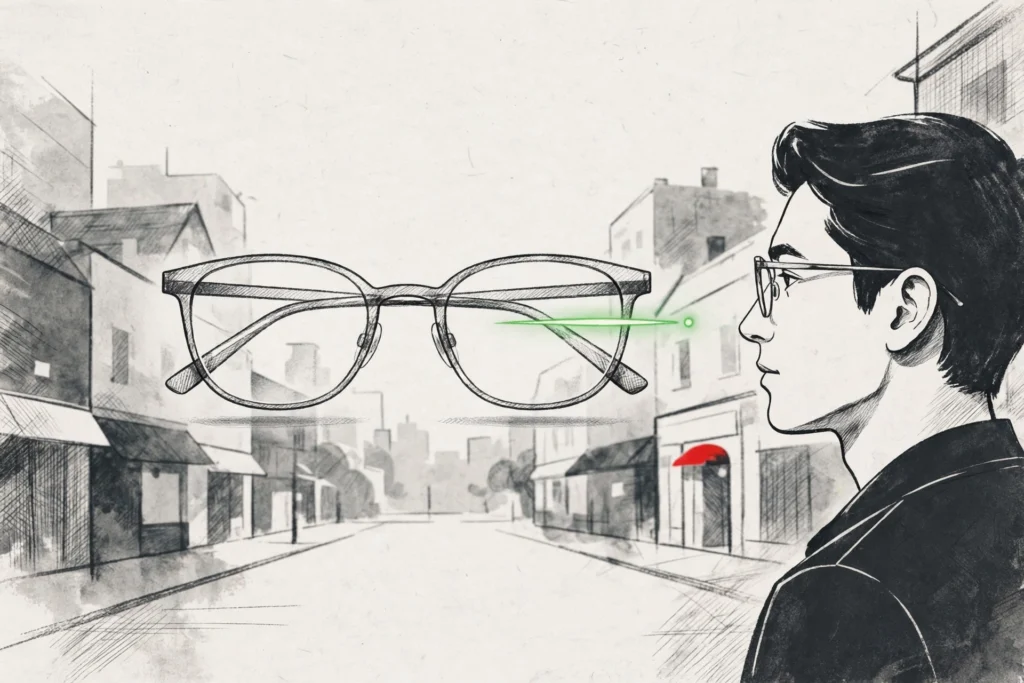
Picture this: you walk into a Warby Parker store in New York this week, try on a pair of frames that look completely ordinary, and then ask them a question out loud. The glasses answer.
They describe the street outside, translate the menu in the window across the road, and quietly read back the message you missed while you were browsing. That moment is no longer a concept video.
From today, November 12, 2026, you can actually pre-order Samsung’s first AI glasses — and the strangest part of the whole launch is the one thing nobody will tell you.
The price is still a secret.
Samsung Intelligent Eyewear Pre-Orders Open November 12
Warby Parker confirmed the date in its third-quarter earnings release, filed with the US Securities and Exchange Commission on November 5.
Co-CEO Dave Gilboa told investors pre-orders would begin “on November 12” and that the company looked forward “to delivering customer orders during the holiday season.”
Gentle Monster, the South Korean eyewear label designing the other half of the collection, carries the same date on its US website. Its banner reads “Pre-Order November 12” ahead of a December launch. According to The Korea Herald, Gentle Monster will run a public preview in New York from November 13 to 23, while Warby Parker plans in-store demos starting this week.
The timing has been building for months. Samsung and Google first showed these frames at Google I/O in May 2026, then named them at Galaxy Unpacked in London in July. By October, a Samsung official had confirmed a November launch.
Korean outlet ChosunBiz reported that sales would begin in mid-December in South Korea and the United States. Europe, China and Japan will have to wait until 2027, according to reports citing industry sources.
What Samsung’s AI Glasses Actually Do
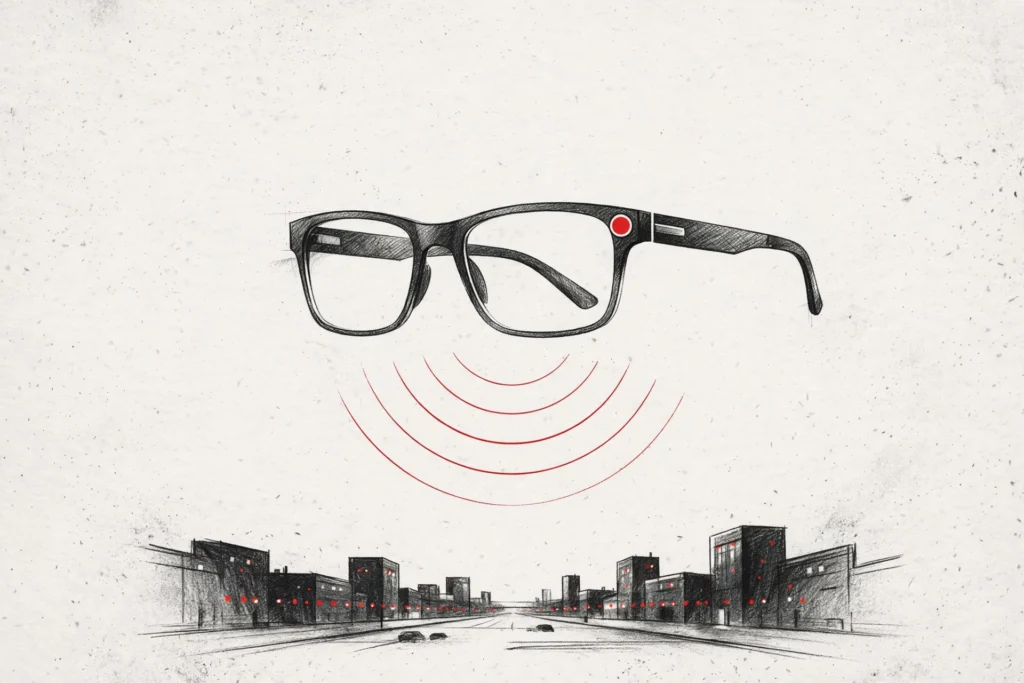
These are audio glasses, not display glasses. There is no screen floating in front of your eyes and no augmented-reality overlay. Instead, the glasses listen and talk back through private over-ear speakers, while a built-in camera lets Google’s Gemini assistant see what you see.
According to Google, you can ask Gemini about the scene in front of you, get walking directions, send a text, hear a summary of the messages you missed, play music, and take a photo — all without reaching for your phone.
Real-time translation of speech and written text is part of the pitch too, a feature that turns a foreign street sign into something you can actually read.
Gemini is having a busy month on Google hardware. The same assistant just arrived on Pixel 10 phones in the November Pixel Drop, and the glasses are the next place it is meant to live.
Samsung adds a few Galaxy-specific touches. Live visual sharing lets you show someone else what you are looking at in real time. You can capture a whiteboard or a meeting into Samsung Notes with a command. Gesture controls, however, will only work through a Galaxy Watch9.
Under the frames sits Qualcomm’s Snapdragon AR1 Gen 1, the same chip that powers Meta’s Ray-Ban glasses. Samsung promises up to nine hours of use on a single charge, plus up to seven full recharges from the charging case.
The glasses pair with both Android phones and iPhones, although some features will need a compatible Galaxy device. Android XR policy also requires a visible recording light, and recording stops if it is covered.
The Price Nobody Will Name
Here is the odd part of a launch that is otherwise unusually well documented. Nobody who will sell these glasses has named a price — not Samsung, not Google, not Warby Parker, and not Gentle Monster.
Figures floating around online, usually somewhere between $300 and $500, trace back to leaks and aggregator sites rather than to anyone actually selling the product. Warby Parker has said it will unveil the full collection, pricing included, on the day pre-orders open.
That means the number should finally appear today. Samsung has given exactly one hint. James Choi, the executive vice president who runs the team behind the glasses, told CNBC in July: “We want to position as premium. It doesn’t mean that it’s crazy expensive.”
An IDC analyst, Francisco Jeronimo, told the same outlet he “wouldn’t be surprised” by a price between $600 and $700 — but that is one analyst’s guess, well above the competition.
For comparison, Ray-Ban Meta Gen 3 costs $449, the camera-free Ray-Ban Meta Audio costs $349, and HTC’s Vive Eagle costs $499. The price question is more than curiosity. It decides whether Samsung’s glasses are a mainstream gadget or a designer accessory with a chip inside.
Samsung Intelligent Eyewear vs Ray-Ban Meta
On paper, Samsung’s glasses line up most closely with Ray-Ban Meta Gen 3: a camera, speakers, no display, an AI assistant, and the same nine-hour battery claim. The differences that will decide the contest are the price nobody has announced, the frames, and the assistant.
That last point is the real bet. Meta’s glasses run Meta AI; Samsung’s run Gemini on Android XR, Google’s platform for the whole category. If you already live in Google’s world — Gmail, Maps, Translate, Photos — Gemini inside your glasses is a very different proposition from a standalone assistant.
The frames are the other difference. Ray-Ban sells an iconic shape; Samsung is selling two distinct fashion identities at once — Warby Parker’s classic, understated collection and Gentle Monster’s bolder designs.
There is also the question of who these glasses are for. Ray-Ban Meta found its audience among people who wanted a camera they could wear. Samsung is aiming at people who want an assistant they can wear.
The Leak That Confirmed the Launch
Just hours before pre-orders opened, the glasses showed up somewhere Samsung never announced: inside its own Galaxy Wearable app. According to PhoneArena, the latest app update adds pairing support for the Intelligent Eyewear, complete with images of several frames from both brands.
The update also exposed model numbers — SM-xxxxJ for the Gentle Monster frames and SM-xxxxP for the Warby Parker ones — and pointed to 2GB of RAM and 64GB of storage alongside the Snapdragon AR1 Gen 1 chip. None of that has been officially confirmed.
But a leak inside Samsung’s own app is about as close to confirmation as leaks get. The whole story has been told in pieces: a mention at I/O, a reveal at Unpacked, an FCC filing in September, an earnings call, and a teaser film starring Joaquin Phoenix.
Today, finally, the pieces become something you can actually buy.
Why Glasses, and Why Now
Smart glasses are having a moment. Meta’s Ray-Ban glasses proved there is a real market for a camera and an assistant you wear on your face. AROTI’s featherweight R1 glasses showed a tiny startup can build a 27-gram pair with translation and meeting notes.
But Samsung’s entry is different in scale. This is the world’s biggest phone maker, Google’s closest Android partner, and two fashion eyewear brands joining forces on a single platform. If Android XR glasses work, they work for every Android phone owner, not just Galaxy buyers — and that is exactly the audience Google needs.
The timing is deliberate too. Pre-orders open a week before Black Friday season, with deliveries promised during the holidays. Warby Parker will run demos in 65 stores starting this week, expanding to more than 360 locations the following week.
Samsung wants these glasses under Christmas trees, not just in tech headlines.
What Happens Next
The first thing to watch today is the price. Once Warby Parker and Gentle Monster publish their pre-order pages, the speculation ends and the real comparison with Ray-Ban Meta begins. If the price lands near $449, Samsung is competing head-on.
If it lands near $700, the glasses become a premium fashion purchase with AI inside. The second thing to watch is the December launch itself. ChosunBiz reports sales starting in mid-December in the US and South Korea — any delay would push the glasses past the holiday window they were built for.
The third thing is the display version. Google has said display glasses — the kind with a screen in the lens — come later, with reports pointing to 2027. Today’s audio glasses are the first step, not the destination. If they sell, the screen version follows. If they flop, the whole category takes a hit.
For now, though, the simplest fact is the most striking one. You can walk into a store this week, put on a pair of ordinary-looking glasses, and ask them about the world around you. The only thing you cannot ask them is how much they cost — at least, not until today.
Source: VR.org