A Robot, a New Gripper, and No Retraining
Picture a warehouse robot that has spent weeks learning to pick boxes off a shelf. It knows the weight, the grip, the exact angle of every move.
Then one morning, a technician swaps its gripper for a different one. Longer fingers. A wider reach. A completely different grasp point.
Normally, that small change would break everything. The robot’s hard-won skill would collapse to near zero, and the team would face days of retraining.
But in a simulation study shared by Hedra this week, the robot recovered on its own. Task success climbed from near zero back to almost 100%, with no retraining at all.
That result is the calling card of the Hedra Model Factory, a new platform launched on November 10 that aims to do for physical AI what assembly lines once did for manufacturing: turn model-building into a repeatable, self-improving process.
What the Hedra Model Factory Actually Does
The Hedra Model Factory is an autonomous post-training and inference platform for building AI models for the real world, according to GlobeNewswire. It is built by Hedra, an a16z-backed research company focused on multimodal and physical AI.
Most AI platforms are built around text. Hedra’s bet is that the next frontier is messier: video, sensors, simulation, and robots that must obey the laws of physics.
“Recursive self-improvement is already changing how frontier models get built,” said Michael Lingelbach, founder and CEO of Hedra. “The next step is the real world, where the data is video, sensors and simulation.”
The platform is aimed at robotics, manufacturing, biology and defense teams — groups whose problems a general-purpose model cannot solve on its own.
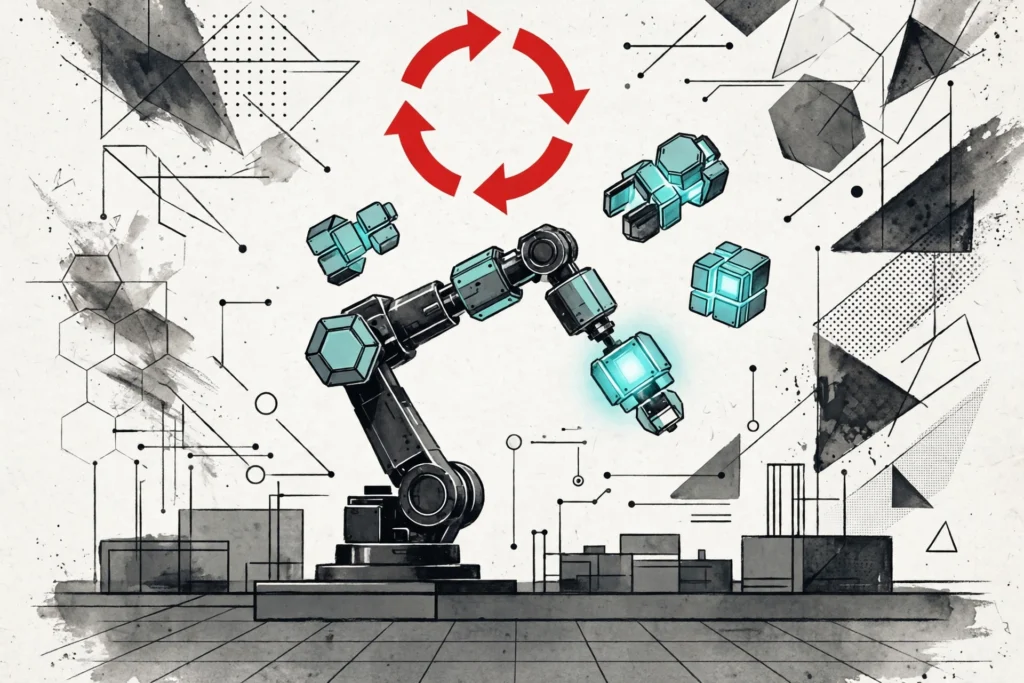
Rather than selling a single model, Hedra sells the loop that makes models: train, deploy, watch what happens, and feed the lessons back into the next version.
How the Hedra Model Factory Works
The platform is organised around four stages, and each one feeds the next.
First comes compute. Hedra GPU sandboxes give teams flexible capacity running on the company’s inference engine, so they can scale training up without locking into long-term GPU commitments.
Second is post-training. Teams bring their simulation engines and data, and Hedra helps build the reinforcement learning environments and datasets the job needs.
Hedra researchers work alongside each customer’s team, using tools such as vision-language models that caption and score data or give feedback during online reinforcement learning.
For companies without their own research lab, Hedra’s researchers also set up data capture, evaluations and the full training-to-serving loop.
Third is deployment. Models run on low-latency compute, on premises or at Hedra’s nearest partner data centre — from distilling world action models to run faster than real time without losing physical coherence, to fitting a vision-language-action model onto an edge device.
Teams can also bring an existing model and serve it on Hedra’s inference engine, rather than starting from scratch.
Fourth is the part Hedra cares about most: self-improvement. Once a model is deployed, Hedra researchers analyse its production performance, retrain it, and release only versions that pass the customer’s own evaluations.
The result, in Hedra’s framing, is a data flywheel. Every deployed model makes the next one better, and the factory gets faster with every model it produces.
The Results Hedra Is Pointing To
A launch announcement is only as good as its evidence, and Hedra shared three concrete results to back up the Hedra Model Factory.
The first is about physically consistent video. Hedra retrained its H3 video model for physical consistency, and the retrained model scored 34.9 on Google DeepMind’s Physics-IQ benchmark, compared with 30.3 for H3 Max, with comparable visual quality.
The second is about speed. Through distillation and inference optimisation, Hedra cut 2K image edits from about 22 seconds to 3.6 seconds on the same four AMD Instinct MI355X GPUs — roughly six times faster, in under a week.
An autonomously distilled version of the video model rendered a five-second clip in under three seconds on AMD MI355X hardware.
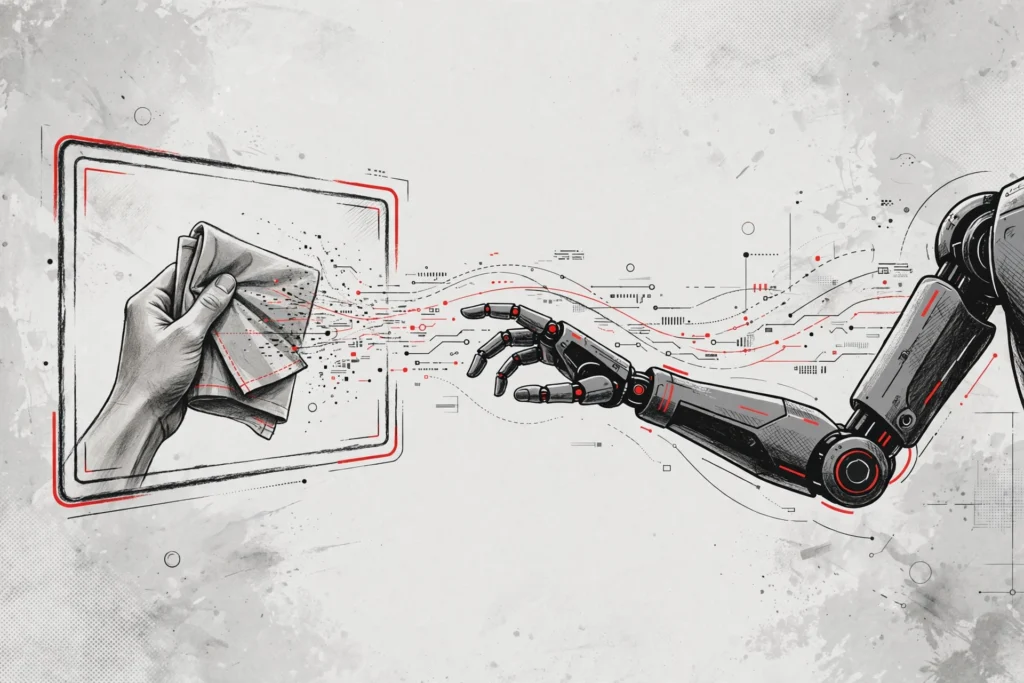
The third is the robot gripper study described above: a robot running a trained policy, fitted with a new gripper, restored task success from near zero to near 100% with no retraining, by matching the new gripper’s reach and grasp point in the wrist camera view.
None of these are consumer benchmarks. They are the kind of numbers that matter to a team deciding whether a model can survive contact with a real factory floor.
Why Physical AI Needs a Different Factory
The timing of the Hedra Model Factory launch is not an accident. The AI industry spent the last two years racing to build bigger general models, and the biggest launches of this week tell the same story.
Anthropic’s Claude Fable 5.2 pushed coding and science benchmarks higher, while NVIDIA’s GR00T 2 robot foundation model showed machines learning new skills by watching videos of humans.
But a general model, however capable, does not know your warehouse, your sensor layout, or your simulation. Closing that gap is post-training — and post-training for the physical world is far harder than for text.
The data is multimodal and orders of magnitude larger than text. Reinforcement learning environments and simulators often need GPU acceleration just to run at scale, as Lingelbach put it.
That is the gap Hedra is trying to fill: not a smarter chatbot, but the infrastructure that turns a general model into a specialist that works in one specific, physical place.
There is also a trust angle. Teams handing over their data and models to someone else’s servers have had a rough week, after the Fireworks AI breach widened to include customer datasets and model weights.
Hedra’s answer is partly architectural: models can run on premises, and only versions that pass a customer’s own evaluations are released.
Who the Hedra Model Factory Is For
The platform is not aimed at casual users. Its first customers are teams with a concrete physical problem and their own data and simulations.
A robotics company that needs a policy tuned to its own hardware fits. So does a manufacturer with a production line to optimise, or a biology lab working with sensor data a general model has never seen.
Defense teams are named explicitly, which is worth noting. Physical AI has obvious dual-use implications, and Hedra is not shying away from that market.
For smaller teams, the more accessible door may be the GPU sandboxes: flexible capacity without long-term commitments, or serving an existing model on Hedra’s inference engine.
Hedra says revenue grew 15 times over the past 12 months, and the platform opens the research and infrastructure behind that growth to teams that need custom models built on their own data.
Lingelbach has spent his career on reinforcement learning for visual and physical systems, first at Stanford and NVIDIA. Hedra’s research team draws talent from Stanford, Berkeley and UIUC, with experience at NVIDIA, Meta Superintelligence Labs, Fireworks AI and Salesforce, and has published research in generative video and embodied AI at NeurIPS, CVPR and ICLR.
What Happens Next
The Hedra Model Factory is available starting today at the new hedra.com, according to GlobeNewswire.
Teams can work with Hedra researchers to build and deploy a custom model, start with flexible GPU sandbox capacity, or serve an existing model on Hedra’s inference engine.
Watch for two things. First, whether customers beyond Hedra’s own research demos start publishing results — independent numbers will matter more than launch-day benchmarks.
Second, whether the self-improvement loop actually compounds. A factory that gets faster with every model it produces is a powerful claim, but it is only proven over time, in production, with other people’s data.
If it holds, the Hedra Model Factory could mark a quiet shift in the AI race: from who builds the biggest model, to who builds the best machine for turning models into working specialists.
And the next time a technician swaps a robot’s gripper, nobody may need to retrain anything at all.