Picture this: a sunset you will never see again, and a stranger has wandered into your photo. Your Galaxy phone offers to erase them in seconds — but where does that photo go when you tap it? A new Samsung framework called Samsung SPAC may soon change the answer.
For millions of Galaxy owners, that hesitation is the whole story of Galaxy AI. The cleverest features live in the cloud, which means sending your photos, notes and voice to someone else’s servers — and trusting Samsung’s word that your data is safe there.
Now, code buried inside Samsung’s latest software suggests the company is building a way to end that trade-off. The framework is called SPAC, and according to Android Authority, it could bring Apple-style private cloud computing to Galaxy phones.
What Is Samsung SPAC?
SPAC turned up in an APK teardown of One UI 9.5 Beta 1, the test version of Samsung’s next software update, based on Android 17. Android Authority spent a week digging through the beta on a Galaxy S26 Ultra, and found a brand-new Samsung software kit called SPAC inside four system apps.
Those apps are Photo Editor, Smart Capture, PhotoRemasterService, and IntelliVoiceService, Samsung’s speech and language service. None of them contained any trace of SPAC in One UI 9.
Nobody outside Samsung knows what the letters stand for. Android Authority’s best guess is “Samsung Private AI Cloud,” which fits what the code appears to do. Samsung has not said a word about it yet.
The code also reveals a connection to a server-side gateway Samsung calls “Arcane,” plus separate services for tokens, identity and fraud detection. In plain terms, SPAC looks like a new front door between your phone and Samsung’s servers.
How Samsung SPAC Keeps Your Galaxy AI Requests Private
Most of SPAC’s code, interestingly, has little to do with AI itself. It deals with privacy and trust, and it appears to work in several layers that mirror the system Apple built for Apple Intelligence.
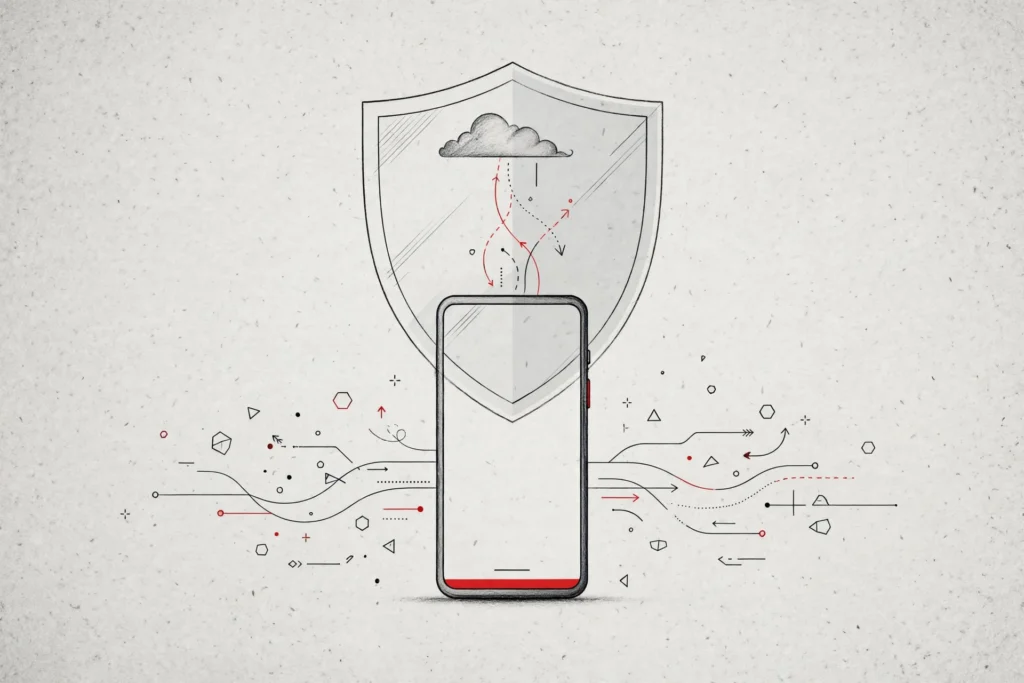
First, your requests appear to pass through a third-party relay before they reach Samsung. That middleman hides where the request came from, so Samsung can see what you asked for but not who asked for it. Your identity and your question travel separately.
Second, your phone appears to check that Samsung’s server is running genuine, untampered software before it sends anything at all. If the server cannot prove it is running the approved code, the phone simply does not trust it.
That server software also appears to be logged in a public-style record that cannot be quietly changed, so Samsung could not swap in different code for some users without anyone noticing.
Third, your phone appears to receive one-time anonymous passes that prove you are a real Galaxy user without revealing which user you are. It is like showing a ticket at the door that proves you belong, while keeping your name off it.
The code also contains an “unattested” mode that skips some of these checks, most likely meant for Samsung’s own internal testing.
Which Galaxy AI Features Could Move to Samsung SPAC?
If SPAC works as the early code suggests, a large part of Galaxy AI’s cloud features could eventually run through it instead of Samsung’s current servers. The code maps a long list of everyday tasks to the new framework.
AI select could get smarter at understanding what is on your screen — pulling several events from a screenshot into your calendar at once, for example. Photo Editor’s cloud AI eraser and cloud photo upscaling, including zoomed camera shots, appear set to move to SPAC as well.
Live speech translation is also in the picture, travelling through a route Samsung’s own code labels “private.” Summarising, tone changes, emoji suggestions, writing help and Now Brief are all mapped to SPAC too, along with an unnamed “GUI agent” and something called “Bixby work.”
That list covers the features Galaxy owners actually use every day. Today, those features either run on your phone, where they are weaker, or in the cloud, where you have to trust Samsung’s promise. SPAC could finally let you have both the power and the privacy.
The AI Models Behind Samsung SPAC
The code also drops hints about the brains that could run on Samsung’s private servers, and the names may surprise you. They are not all Samsung’s own models.
Smart Capture, the app behind AI select, references Alibaba’s Qwen 3.6 and Google’s Gemma 4 as options. IntelliVoiceService references Gemma 4 too, while PhotoRemasterService points to Black Forest Labs’ FLUX.2 klein 4B and a Stable Diffusion model for image work.
Photo Editor also mentions OpenAI’s text-to-speech models, Samsung’s own Gauss model and Meta’s V-JEPA, although the code does not appear to be using them yet. Android Authority could not confirm that Galaxy AI uses any of these models right now.
Samsung SPAC vs Apple Private Cloud Compute
Samsung is not inventing this idea. Apple laid out the blueprint two years ago when it launched Private Cloud Compute alongside Apple Intelligence, promising that server-side AI requests would be encrypted, anonymised and processed in a way that even Apple says it cannot access.
Google followed with its own Private AI Compute, launched in November 2025, and Meta built Private Processing for WhatsApp’s AI features. SPAC’s code appears to match almost every piece of that shared recipe, which is exactly why the discovery matters. If anything, Samsung is late to the party.
There is one important difference, though. Apple, Google and Meta all announced their systems publicly and explained how they work. Samsung has said nothing, and Android Authority says it has reached out to the company for comment. Until Samsung speaks, SPAC remains an educated guess drawn from code.
When Will Samsung SPAC Launch — and Will It Cost Extra?
Here is the honest answer: nobody knows yet, and SPAC does not work right now. On the Galaxy S26 Ultra running the One UI 9.5 beta, the framework appears switched off.
Smart Capture and Photo Editor only use SPAC on a newer Galaxy AI version than the phone reports, and IntelliVoiceService only uses it for translation when an app asks for a “private” cloud mode that Android Authority could not trigger.
The team tested Writing assist, AI select, Note assist, Now Brief and Interpreter while logging the phone’s activity. None of them touched SPAC. There is also no user-facing text about it anywhere in the build — no consent screen, no privacy notice, no toggle in settings.
But the servers tell a different story. Public certificate records show production server addresses for SPAC that Samsung has kept renewing over the past few months, with newer entries suggesting it is adding servers in the United States. The back end may already be in place, waiting for the features to switch on.
Then came the update that changed the picture. On November 27, Android Authority reported it had got SPAC working with AI select on its Galaxy S26 Ultra, pulling event details from a screenshot more accurately than usual.
One open question is money. Samsung is rumoured to be preparing a Galaxy AI Premium subscription, reportedly around $4.99 a month, and it is not yet clear whether SPAC-powered features will be free or tied to it.
What Samsung SPAC Means for Galaxy Owners
For now, the choice Galaxy owners face has not changed. You can keep your data on your phone with the “Process data only on device” toggle, and give up the cloud features entirely.
Or you can use them and trust Samsung’s promise that your photos “will be sent to servers for processing… but not stored by Samsung.”
That promise is a policy, not a proof. It asks you to believe Samsung, and it offers no way to check. SPAC, if it ships as the code suggests, would replace that promise with something you can verify: servers that must prove what software they run, and requests that cannot be traced back to you.
That is the same deal Apple, Google and Meta now offer their users, and it would put Galaxy AI on equal footing with them on privacy. For a company that sells tens of millions of phones a year, that is the difference between AI you have to trust and AI you can check.
Until Samsung confirms it, though, SPAC is a clue, not a commitment. Code in a beta can change, features can be delayed, and whole projects can quietly disappear. But the servers are already being built, the code is already in the beta, and the hands-on test already works.
Source: Android Authority