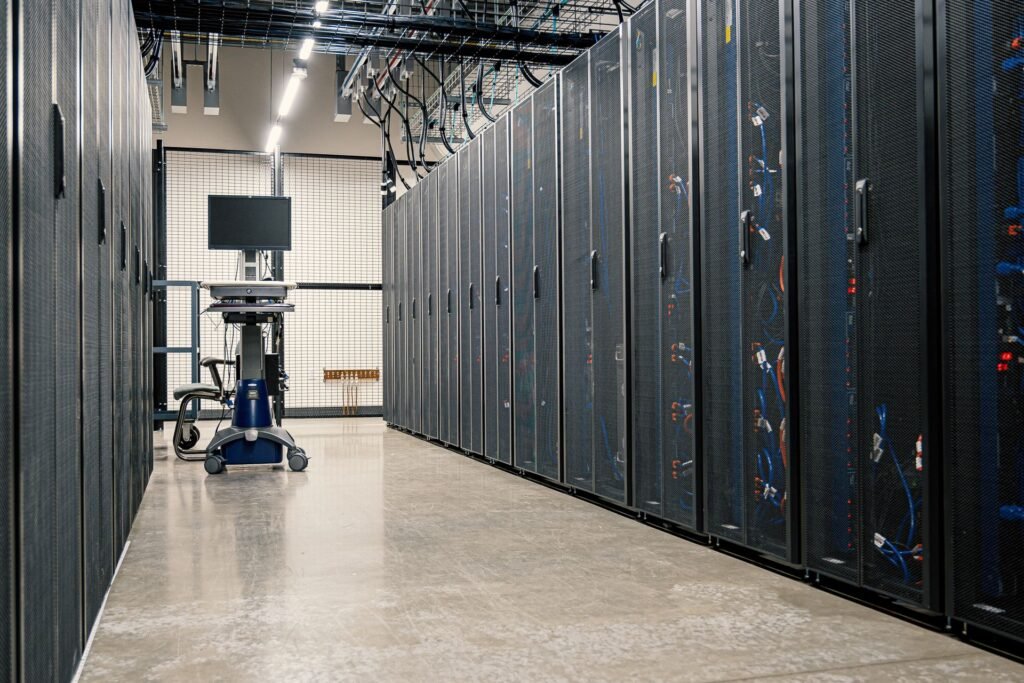
Somewhere in a Microsoft research lab, a cabinet the size of a wardrobe has just come alive. Its fans are spinning, its processors are warm, and for the first time it is running real AI workloads. Nothing about it looks dramatic. But inside the chip industry, the moment matters enormously.
On November 23, AMD announced that Microsoft has powered up its first AMD Helios rack-scale system. The rack is running early workloads as part of validation testing, with engineers from both companies working side by side.
According to engineering.com, Azure plans to deploy Helios at scale, and it could become one of the first clouds to put AMD’s new system to work on AI inference.
For AMD, this is the moment its grandest hardware bet stops being a slide deck. For Microsoft, it is another option in a race to secure enough computing power.
And for Nvidia, which has dominated AI hardware for years, it is the clearest sign yet that the challengers are no longer knocking on the door — they are inside the building.
What AMD Helios Actually Is
Helios is not a single chip. It is a whole rack, designed by AMD as one integrated unit: compute, processors and networking working together. Each rack packs 72 AMD Instinct MI455X graphics processors, the company’s newest AI accelerators, alongside sixth-generation AMD EPYC processors and Pensando networking, all running on AMD’s open ROCm software stack.
The design follows the Open Compute Project’s Open Rack Wide form factor, a shared standard that lets cloud operators slot the hardware into their data centres without rebuilding them.
That choice matters. AMD is not asking customers to adopt a strange new shape. It is asking them to adopt a familiar one, filled with AMD silicon.
Microsoft gave a sense of the scale in a post on November 13. Each ND MI455X v7 rack — the Azure instance type built on Helios — carries 72 MI455X GPUs, 18 EPYC CPUs and 31 terabytes of HBM4 memory.
Microsoft also noted that a single rack is not enough to validate a connected cluster, a reminder that the real test is not one cabinet but dozens of them working as one.
Why Inference Is the Prize
Helios is aimed first at AI inference: the work of running a trained model to answer questions, generate text, or steer an agent. Training a model is the headline-grabbing part of AI. Inference is the part that pays the bills, because it happens every time anyone uses the model.
That is a deliberate choice by AMD. Inference is where the largest cloud customers spend the most, and where they are most open to alternatives.
A training run can be planned months ahead. Inference has to be fast, cheap and available around the clock, and a cloud that can do it for less per token wins the workload.
AMD says Helios is built for exactly that: the best total cost of ownership and the lowest cost per token. The claim is unproven in production, and the early workloads in Microsoft’s lab are the first real test. But the target is clear, and it is the most valuable part of the AI hardware market.
The Microsoft Partnership Behind It
The Helios milestone did not appear from nowhere. In July 2026, AMD and Microsoft expanded their long-term partnership, with Microsoft becoming the first hyperscaler to publicly commit to large-scale deployment of Helios. Microsoft took delivery of its first rack this autumn, and the power-on in November is the next step in that plan.
Alongside Helios, Microsoft unveiled new Azure virtual machine families built on AMD’s sixth-generation EPYC processors. The HDv2 series targets agentic AI and data pipeline workloads, while the HXv2 series is aimed at semiconductor design. The headline instance type, ND MI455X v7, is designed specifically for AI inference.
AMD has said it plans to begin shipping Helios systems to customers, Microsoft included, in the second half of 2026. The lab power-on fits inside that window, and it puts Azure on track to be among the first cloud providers running Helios for customers rather than just testing it.
What It Costs — and What We Still Don’t Know
Reports put the price of a Helios rack at between $5 million and $5.5 million. At that level, a single rack costs roughly as much as a small fleet of luxury cars — and a full deployment of dozens of racks runs into the hundreds of millions. Nobody buys this hardware casually.
What AMD has not shared is just as important. There are no public performance benchmarks for Helios yet, and no throughput figures. The results of the early workloads in Microsoft’s lab remain undisclosed, and there is no date for when Azure customers will actually be able to rent Helios capacity.
That is normal for a system at this stage. A rack in a lab is a promise, not a product.
The promise will be judged on two things: whether the hardware runs reliably at scale, and whether the software — AMD’s ROCm stack — is mature enough that developers can move their models across without weeks of painful porting.
AMD’s Wider Moment
Helios is arriving in the middle of a remarkable run for AMD’s data-centre business.
The company’s sixth-generation EPYC processors, codenamed Venice, launched earlier in November with up to 256 cores per socket, and Microsoft’s Azure is already previewing virtual machines built on them. The two products are designed to work together: EPYC runs the system, Instinct runs the AI.
The competition is not standing still either. Nvidia’s Vera Rubin platform is the system Helios must measure itself against, and Google’s own TPU chips continue to gain ground inside Google Cloud.
Each of the big AI hardware makers now has a rack-scale answer, and the clouds are buying from more than one of them on purpose.
That is the deeper story behind a single rack in a Microsoft lab. The AI industry spent years depending on one supplier for the hardware that matters most. Helios is AMD’s argument that the era of a single supplier is ending — and Microsoft, by powering it up first, is signalling that it agrees.
What Happens Next
The next milestone is scale. Microsoft and AMD engineers will keep validating the system, and the test that matters is not a single rack but a cluster of them, running real customer models under real load.
If that goes well, Helios moves from the lab into Azure’s production data centres, and from there into the hands of customers.
For now, the rack in the lab is humming, the engineers are watching, and the rest of the industry is watching them. AMD’s biggest hardware bet has officially switched on. What it proves next will decide whether it becomes a footnote or a turning point.
Source: engineering.com


