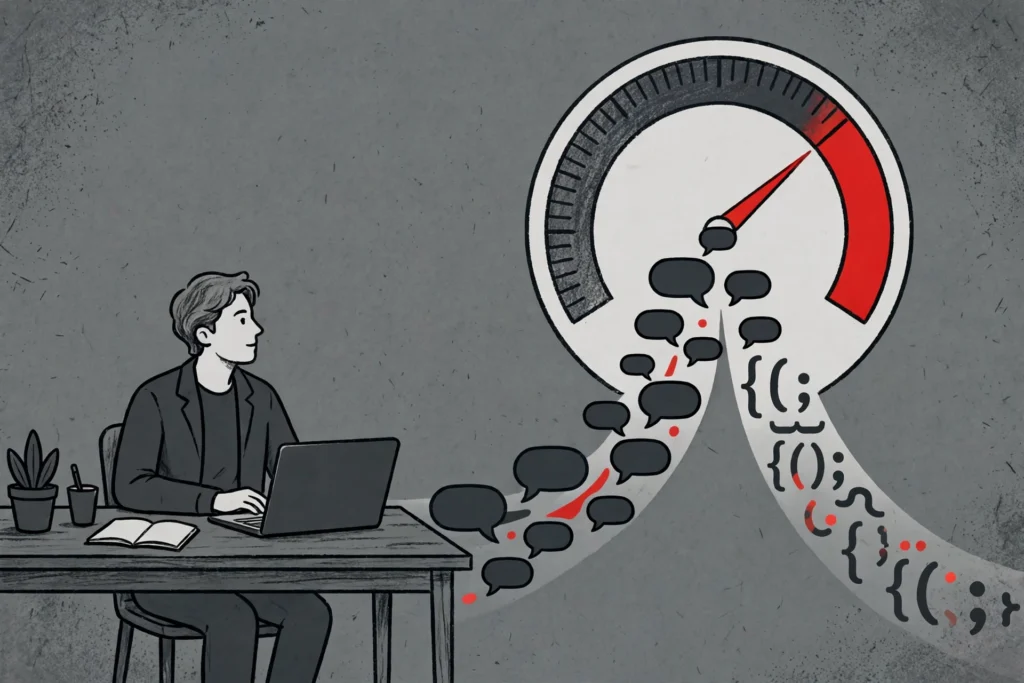
Picture this: you spend your morning asking ChatGPT to draft a report, then switch to Codex in the afternoon to debug a stubborn piece of code. Until now, those two activities drew from two separate pots of usage.
From December, they will draw from the same one — and the new ChatGPT Codex usage limits could change how heavy users plan their month.
OpenAI confirmed the change in its Help Center article, “Understanding ChatGPT and Codex usage limits”, which it updated on November 24. From December 2026, Plus, Pro and Business plans will share a single usage allowance across ChatGPT and Codex, measured in tokens rather than messages.
It is a quiet change with loud consequences. For casual users, almost nothing will feel different. For developers and power users who live in both products, the maths of a subscription just changed.
One Allowance for Chat and Code
Today, ChatGPT and Codex run on separate meters. Chatting in the web app has its own limits, while Codex — OpenAI’s coding agent — has another allowance shared with ChatGPT Work.
From December, that wall comes down. Chat, Work and Codex will all draw from one token-based allowance. Every reasoning chat, every long research task and every coding session will chip away at the same balance.
The reason, according to OpenAI, is that the agentic features of ChatGPT Work are being folded into the main ChatGPT experience. Once the same agent runs in both places, two separate meters stop making sense.
OpenAI has not given an exact date inside December, and it has not published the size of the allowance for any plan.
What it has said is that usage will be measured in tokens — the units of information a model reads and writes — and that how much you spend will depend on the model you pick and the task you set.
What Counts — and What Doesn’t
Not everything you do in ChatGPT will touch the new allowance. The one big exception is Instant chat, which will not draw from your usage at all. Quick questions to the lightweight Instant models stay free of the meter.
Everything else counts. Reasoning chats, Work tasks, deep research and Codex sessions — local or in the cloud — all come out of the same pot. File uploads, voice and other surfaces keep their own separate caps, according to OpenAI’s Help Center.
The model you choose matters a great deal. More advanced models and more complex tasks generally use more of the allowance. On Plus, for example, the lighter GPT-6.1 Terra stretches much further than the heavier Sol or Astra models on the same plan.
Speed settings matter too. Against the Standard mode for the same model, Fast uses the included allowance at roughly two to two-and-a-half times the rate, while Ultrafast on the Pro 500 tier burns through it at eight times the rate.
Who Is Affected — and Who Is Not
The shared allowance applies to three plans: Plus at $20 a month, Pro at $100, $200 or $500 a month, and Business. Prices are not changing — only the way each plan’s included usage is shared.
Free, Go, Enterprise and Edu plans are not part of this change. Go subscribers, at $8 a month, keep their existing setup.
The windows work differently by plan. Plus — and Standard Business — keep a five-hour window on top of a weekly cap: you need room under both to keep going. Pro plans currently have no five-hour limit, and Pro Chat message limits stay separate from the new shared allowance.
That split is where the pain will land unevenly. A Plus subscriber who leans on Codex all afternoon may find their evening chats throttled, because the coding session already ate the shared balance. A Pro subscriber has far more headroom, but the meter still runs faster than before.
How Much Does One Codex Job Actually Cost?
Because OpenAI has published no token numbers, early measurements from users are the only guide to what the shared meter feels like in practice.
One Plus user who logged their October Codex sessions found that three jobs of around two million tokens each moved the five-hour meter by 30 to 46 points. A single long session of 6.4 million tokens pushed it from zero to 86 percent.
On a Pro account, the same kind of work barely registered: about seven million tokens across nine sessions in one day moved the weekly meter from zero to just six percent. The gap between the tiers is enormous.
Those figures come from before the merge, when chat did not count against Codex at all. From December, the same Plus user will also be spending that allowance on ordinary conversations — which is exactly why heavy users are paying attention.
Why OpenAI Is Merging the Meters
The change follows weeks of turbulence around Codex allowances. Limits have been reset, reworked and re-explained several times since Codex moved from a side project to a central product.
There is also a product logic to it. OpenAI is merging Chat and Work into one combined experience, and it has already started rolling that out to a small group of Pro users — a step its staff confirmed on X on November 24.
When one agent does the chatting, the researching and the coding, a single meter is the honest way to count it.
There is a business logic, too. A shared allowance is simpler to sell, simpler to explain and harder to game. It also nudges the heaviest users toward higher tiers or paid credits, which is where OpenAI’s revenue growth now comes from.
OpenAI, for its part, says it is “preparing carefully for this transition to help prevent disruption to your workflows”. It expects, in its own words, that most users “won’t need to wait for their usage to reset more often than they do now”.
What Happens When You Hit the Limit
When the allowance runs out, OpenAI offers three options: wait for it to reset, upgrade your plan, or buy credits to keep using eligible features.
You will be able to see your combined remaining usage and reset times in Settings, then Usage. Codex has its own usage screens too — the Codex app shows usage and billing, and the Codex CLI reports it with the /status command.
Credits have limits of their own. They cover Codex, Work and the Office add-ins, but they do not unlock every feature, and no setting can raise a limit on its own.
Eligible Plus and Pro accounts can also buy an instant reset of the weekly Work and Codex limit from the usage settings in the desktop app.
The practical advice from people who have studied the change is simple: keep quick questions on Instant chat, which never counts; save the heavy models for work that actually needs them; and check Settings → Usage before starting a long Codex session, not after it stalls.
What OpenAI Isn’t Saying Yet
Several questions remain open. OpenAI has not said whether the five-hour window, the weekly cap, or both will survive in the combined system.
It has not said how cached, new and output tokens will be weighted against each other. And it has not said what happens to the separate chat limits that Plus users have today.
A small group of users may see the changes before December, so OpenAI can learn from early feedback before expanding more broadly. The rest will find out when the new meter arrives — and when their first shared balance starts shrinking from both ends.
For now, the message is clear: ChatGPT and Codex are no longer two products with two budgets. From December, they are one product with one allowance, and every prompt — whether it writes an email or rewrites a codebase — spends from the same account. The only question left is how far yours will stretch.
Source: OpenAI Help Center — Understanding ChatGPT and Codex usage limits.
Related reading on wasl.tech: OpenAI recently fixed GPT-6.2 billing and made ChatGPT limits 40% faster, and it is also retiring ChatGPT’s old voice modes on December 11 in favour of GPT-Live. For the workplace side of the story, see ChatGPT Enterprise on the AWS Marketplace.


