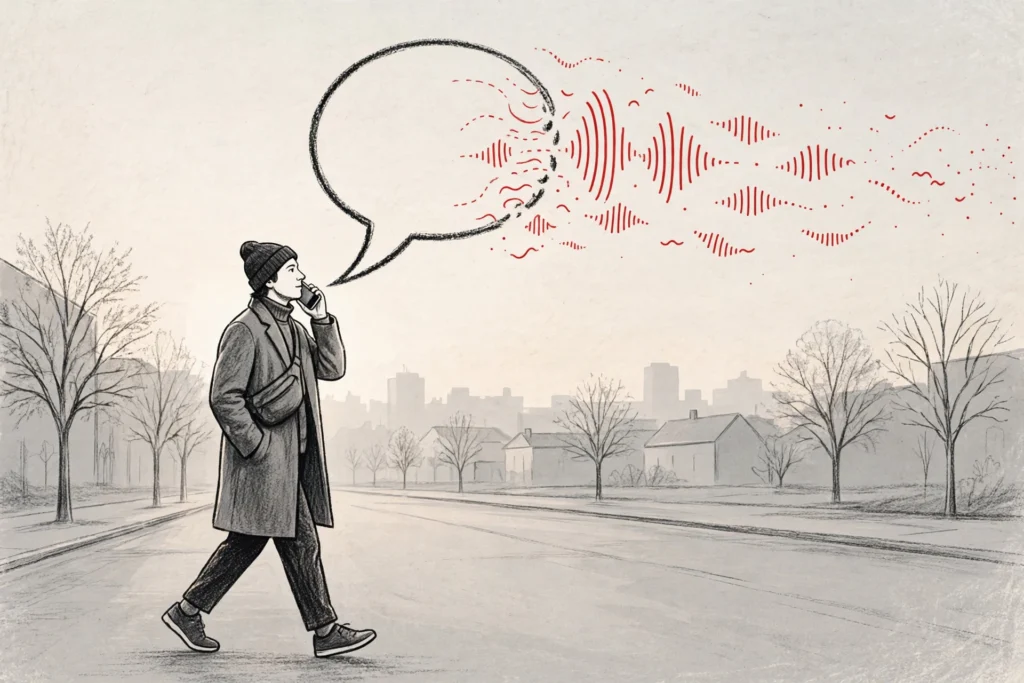
She is halfway through her morning walk when she asks ChatGPT to summarise the news. The voice that answers is the one she has talked to for two years — warm, unhurried, familiar enough that she has stopped thinking of it as software at all.
In a month, that voice will be gone. Not changed, not upgraded in place, but removed entirely. It will be replaced by something newer that sounds a little different and interrupts a little more.
OpenAI announced on November 10 that ChatGPT voice is about to lose two of its three modes. Advanced Voice and Standard Voice will be retired on December 11, 2026. Everyone who uses them will be moved to GPT-Live, the real-time voice model OpenAI introduced in July.
The company gave users 31 days’ notice. For most people, the change will happen quietly in the background. One day the setting will simply not be there any more.
But for the millions who talk to ChatGPT every day — on walks, in cars, while cooking — it marks the end of the voice experience that made the chatbot feel human in the first place.
The ChatGPT Voice Modes Going Away on December 11
The retirement covers both of ChatGPT’s older voice modes, according to Gadgets 360. Advanced Voice, the expressive mode that launched in 2024 and could laugh, pause and change its tone mid-sentence, will be removed from the app.
Standard Voice, the simpler mode that came before it, goes at the same time. After December 11, neither mode will appear under Settings > Voice. Users who had selected either one will be switched automatically to Live Voice, which runs on the newer GPT-Live model.
OpenAI announced the change on X on November 10, and users started receiving notifications about the transition the same week. There is a grace period, of sorts. Until the deadline, both older modes remain available.
OpenAI’s help centre says users can keep choosing them while they get used to the new voice. The company is framing the month as a chance to try GPT-Live before the old options disappear.
Past conversations are not affected. Anything you have already said to ChatGPT in voice mode stays in your chat history. Nothing about the text chat experience changes either.
GPT-Live Takes Over: What Changes for ChatGPT Voice Users
GPT-Live is a different kind of voice model. OpenAI describes it as a real-time, full-duplex system, which means it can listen and speak at the same time, much like a person in a real conversation.
It was introduced on July 8, 2026, as the next generation of voice interaction for ChatGPT. The company says the switch is already effectively complete. Voice usage in ChatGPT has nearly doubled since GPT-Live arrived in July.
According to OpenAI, virtually all people who use voice in the app now use GPT-Live. The older modes, in other words, were already losing their audience before the retirement was announced.
For users, the practical difference is the feel of the conversation. GPT-Live is designed to handle interruptions more naturally, to pick up when you cut in mid-sentence, and to keep the exchange moving without the awkward pauses of the older turn-taking system.
Reports collected by TechRadar describe people complaining that GPT-Live interrupts too often. It fills silences with small filler words such as “yeah” and “anyway”, and it simply does not sound like the voice they had grown attached to.
What Stays the Same: Video, Screen Sharing and Old Chats
The retirement comes with two important exceptions, and they matter for anyone who uses voice in more advanced ways. Live video and screen sharing will continue to run on Advanced Voice after December 11.
That is because GPT-Live does not yet support those features. OpenAI has not said when it will. That means the old voice will live on, quietly, in the background of video calls with ChatGPT.
It will stay there at least until the company finishes building the missing capability into GPT-Live. There is no published timetable, and OpenAI has not promised a date.
The second exception involves custom GPTs. Voice used with custom GPTs will also keep running on Advanced Voice until December 11, when those custom GPTs are themselves scheduled for retirement. After that date, the exception closes with them.
It is worth being clear about one thing the announcement is not. This is not an API deprecation. Developers who build with OpenAI’s voice models through the API are not affected by the December 11 change.
Why OpenAI Is Making the Switch Now
The timing tells its own story. OpenAI has spent the last few months consolidating its products around a smaller number of newer models, and the voice change fits that pattern.
The company recently introduced GPT-6 Cyber, a specialised security model, while expanding ChatGPT Ads to 44 countries and reporting quarterly revenue of around $10 billion. Keeping three voice modes alive in the app costs engineering effort the company would rather spend on one.
There is also a simpler explanation. Maintaining two generations of voice technology side by side means maintaining two sets of infrastructure, two sets of quality checks and two sets of bugs. When virtually all users have already moved to the new model, the old ones become dead weight.
A single voice model also makes new features easier to ship. OpenAI recently integrated ChatGPT Voice into its ChatGPT Finances tool, letting people talk through money questions instead of typing them — and every new feature only has to be built once, instead of being adapted across three different systems.
Not Everyone Is Happy About Losing the Old Voices
For all the logic of the consolidation, the reaction has been mixed. Voice is personal in a way text is not. People choose a voice the way they choose a radio station, and they notice when it changes, even when the words are the same.
Some users have said GPT-Live’s habit of jumping in feels rude rather than natural. Others dislike the filler words it uses to hold the floor, the small “yeah” and “anyway” sounds that mark it as a different kind of speaker.
A few have said they simply preferred the sound of Advanced Voice, and no amount of technical improvement changes that. OpenAI has not published a detailed response to those complaints.
The complaints highlight a tension that will keep coming up as AI products mature. The features people love most are often the ones that feel most human — and the hardest to replace without someone noticing.
What You Should Do Before December 11
If you use ChatGPT voice regularly, the sensible move is to spend some time with GPT-Live before the deadline arrives. Open your settings, switch to Live Voice, and have a few real conversations with it — not a test, but the kind of chat you would normally have.
Pay attention to how it handles interruptions, because that is where the difference is most obvious. If you tend to talk over the chatbot, or if you pause mid-thought while you work something out, you will notice the change immediately.
Some people will find it smoother. Others will find it pushy. Better to learn which camp you are in now than on December 11, when the choice disappears.
If you rely on live video or screen sharing with ChatGPT, nothing changes for you on the deadline — at least not yet. Your sessions will keep running on Advanced Voice in the background, and you do not need to do anything, though OpenAI has not said when that support will move to GPT-Live.
And if you use voice with custom GPTs, check whether those GPTs are among the ones scheduled for retirement on December 11. The voice change and the custom GPT retirement share the same date, and both will affect you at once.
What Happens Next for ChatGPT Voice
December 11 is not the end of the story; it is a checkpoint. The obvious question is when GPT-Live will gain the video and screen-sharing support that still depends on Advanced Voice, and OpenAI has given no answer.
Until that happens, the company is effectively running two voice systems anyway, just with one hidden from the settings menu.
The complaints about interruptions and filler words are fixable, and OpenAI has a track record of tuning its models after launch. A quieter, more patient version of GPT-Live would go a long way towards winning over the holdouts.
As AI companies consolidate their products around fewer, more powerful models, the quirks and personalities that early users fell in love with tend to disappear first. The trade is always the same: more capability, less character.
For now, the advice is simple. Try the new voice while you still have a choice, and notice what you miss about the old one. On December 11, the choice goes away — and the voice that answers your morning walk will be GPT-Live, whether you are ready or not.