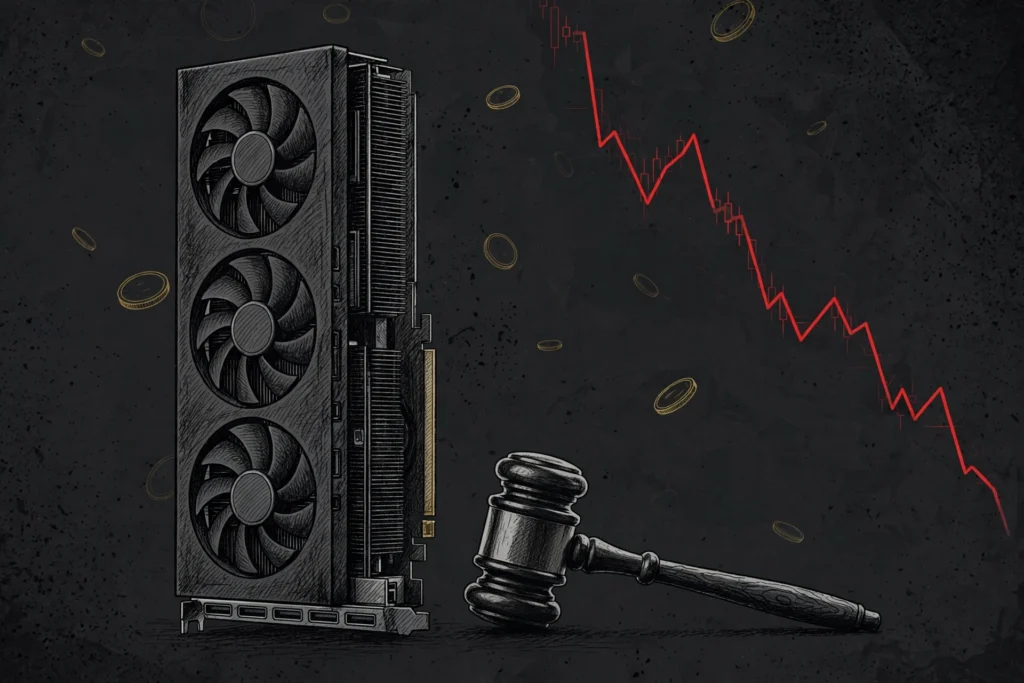
It started with a graphics card, a crypto boom and a question that took eight years to answer. The Nvidia $290 million settlement, filed in a California court on Tuesday, November 24, finally answers it — the company will pay to close the investor lawsuit that has followed it since 2018.
The case is about what Nvidia told shareholders during the cryptocurrency rush of 2017 and 2018. Investors said the company hid how much of its booming gaming business was really crypto miners buying graphics cards. Nvidia denies any wrongdoing, but after eight years of litigation, it has decided to pay.
What the Nvidia $290 Million Settlement Covers
Nvidia has agreed to pay $290 million to settle a long-running securities class action, according to Reuters. The deal was filed on Tuesday, November 24, in the US District Court for the Northern District of California. It still needs a judge’s approval before any money changes hands.
The settlement covers investors who bought Nvidia common stock between August 10, 2017, and November 15, 2018, and suffered qualifying losses. That window covers the height of the crypto boom and the crash that followed it.
Nvidia itself will not be paying most of the bill. The company said its insurers are funding the majority of the $290 million. In a statement, Nvidia said it “appreciates the contributions of its insurers in helping wrap up this legacy matter.”
The plaintiffs’ lawyers are asking for up to $62 million in legal fees from the fund. That is roughly 21 percent of the total settlement, leaving the rest to be shared among eligible investors.
The Crypto Boom Behind the Lawsuit
To understand the case, you have to go back to 2017. Cryptocurrencies were surging, and mining them needed serious computing power. Miners bought Nvidia’s GeForce graphics cards by the truckload to mint coins, and those sales were booked as gaming revenue.
The lawsuit says Nvidia misled investors about how much of that gaming revenue really came from miners. The company, the plaintiffs argued, understated crypto miners’ contribution to its sales. It also failed to warn investors about the risk if mining demand collapsed.
That collapse came in late 2018. Ethereum mining slumped, demand for graphics cards fell off a cliff, and Nvidia’s stock dropped 28.5 percent over two trading sessions in November 2018. Investors who had bought in during the boom said they had been misled about what was really driving the numbers.
The original complaint was filed in December 2018 by a fund affiliated with a US ironworkers’ union. Swedish asset manager Öhman Fonder and Dutch pension fund PGB later became the lead plaintiffs in the case.
The boom had a side effect gamers still remember. Miners bought cards faster than Nvidia could make them, shelves emptied, and prices for a GeForce card doubled or tripled on resale markets. Gamers who just wanted to play found themselves competing with mining farms for the same hardware.
Eight Years in Court
The lawsuit, formally titled In re: Nvidia Corporation Securities Litigation, has wound through the courts for nearly eight years. It climbed all the way to the US Supreme Court, which heard arguments and then dismissed its review in December 2024 without ruling on the merits.
The case took a decisive turn in March 2026, when the district court certified it as a class action. That meant the claims of thousands of investors could be tried together, raising the stakes sharply for Nvidia.
Both sides then went to mediation, led by former federal judge Layn Phillips. In September 2026, Phillips recommended a $290 million settlement, and both sides accepted it. The filing on November 24 put the terms before the court.
The plaintiffs’ damages expert had estimated that the class could have won as much as $2.06 billion at trial. The $290 million settlement is about 14 percent of that figure, a recovery the plaintiffs’ lawyers say compares favourably with typical securities cases.
Who Gets the Money
If the judge grants preliminary approval, notices will go out to investors who bought Nvidia shares during the class period. A final settlement hearing would follow about 130 days later, where the court decides whether the deal is fair.
A hearing on preliminary approval is scheduled for February 4, 2027. Until then, nothing is final. The settlement remains subject to court approval, and the judge will also decide how much of the fund goes to the plaintiffs’ lawyers.
For the investors, the payout will be modest. Spread across everyone who bought Nvidia stock in a 15-month window eight years ago, $290 million minus legal fees does not go far per person. The real value of the case was always the precedent, not the payout.
The class period matters because it defines who can claim. Anyone who bought Nvidia shares between August 2017 and November 2018 and lost money when the stock fell may be eligible. Investors who bought later, or held through the crash without selling, may not qualify under the settlement’s terms.
Why Nvidia Settled Now
The timing is hard to ignore. Nvidia is already fighting a second, separate wave of shareholder litigation tied to chief executive Jensen Huang. That case concerns his undisclosed relationship with a Megaspeed executive and the chip firm’s alleged role in moving Nvidia hardware into China.
The crypto settlement predates that scandal, but it lands in the middle of it. Huang was reinstated as chief executive on November 23, just a day before the settlement filing, after an 11-day absence. He has since apologised to staff for what he called terrible mistakes.
The company’s shares have also been under pressure. Nvidia shares fell below $150 on Wednesday, November 26, dropping about 5 percent to $147.13, a day after the settlement terms became public. The stock had already lost roughly a third of its value in the two weeks before that.
Settling the oldest case on the books removes one source of uncertainty. With insurers covering most of the cost, Nvidia can close a chapter from nearly a decade ago and focus on the legal fights still ahead.
What Happens Next
The next milestone is February 4, 2027, when the court holds its preliminary approval hearing. If the judge signs off, eligible investors will be notified and given a chance to claim their share or object to the deal.
A final hearing would follow roughly four months later. Only then will the settlement become binding, and only then will the money be distributed.
For Nvidia, the case is a reminder of how long the past can linger. The crypto boom of 2017 made the company a fortune and turned its graphics cards into a symbol of a new gold rush.
Eight years later, the bill for how that boom was described to investors has finally arrived. At $290 million, it is a price the company is now willing to pay.
The case also leaves a marker for the rest of the chip industry. When a new technology drives sudden demand, companies must say so plainly. Investors, regulators and courts now have an eight-year example of what happens when the real driver of sales stays hidden.


