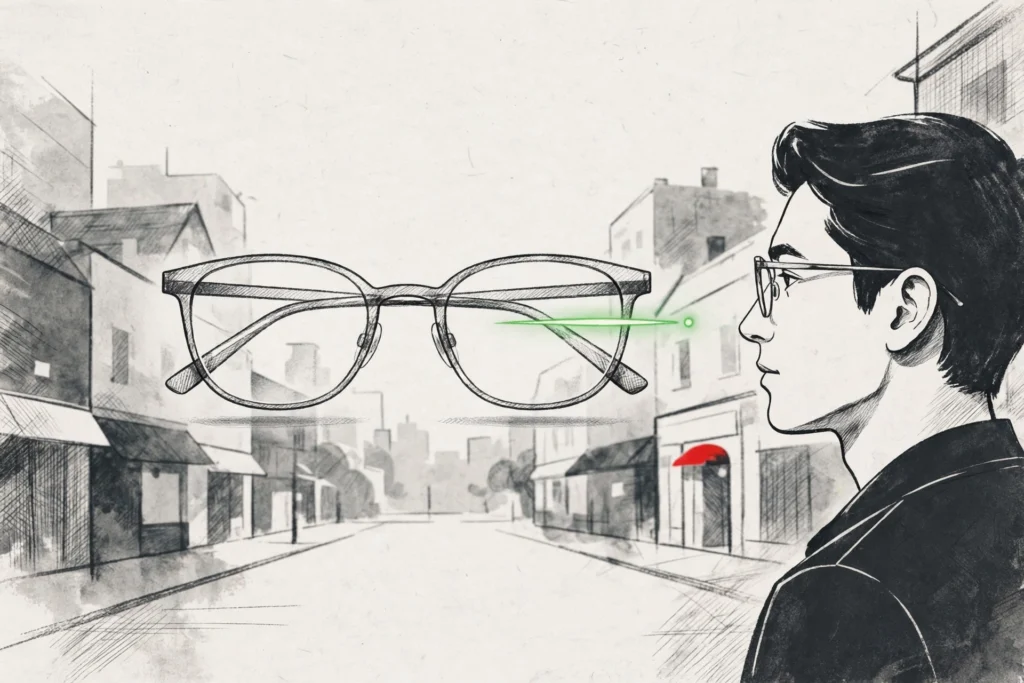
Picture a busy street in New York. A woman wearing ordinary-looking glasses pauses in front of a mural she cannot quite place. She does not reach for her phone. She does not tap anything. She simply says “Hey Gemini”, and her glasses answer.
For the first time, those two words work on a Google device.
Google has introduced a new wake word for its Android XR smart glasses, according to a report from 9to5Google, covered by Gadgets 360 on Friday. Owners of the new Intelligent Eyewear can summon the Gemini Live assistant by saying “Hey Gemini” — a phrase that has never before woken up a Google product.
On the surface, it is a small change. Two words swapped for two others. But a wake word is the front door to an assistant, and Google has just quietly changed the sign above its own door.
What “Hey Gemini” Does on the Glasses
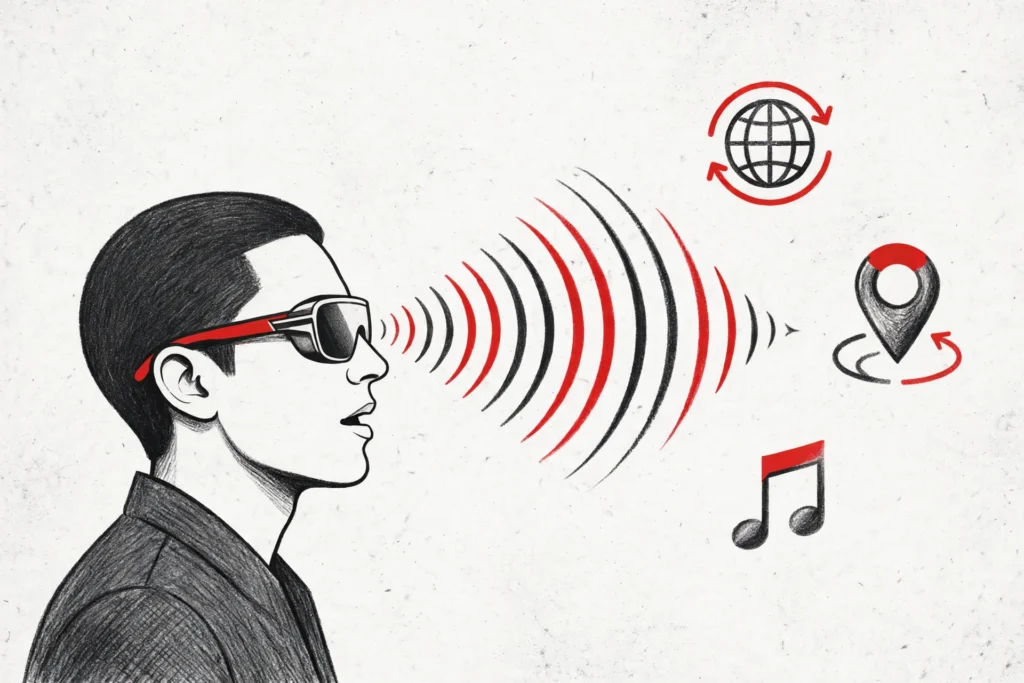
Say the words and Gemini Live starts listening. From there, the glasses become a hands-free companion. You can ask about the building in front of you, add something you just saw to a grocery list, or get turn-by-turn directions read into your ear.
The assistant can also translate speech in real time, with automatic language detection, and read out notifications and messages. Music, reminders and quick questions all work the same way — speak, and the answer arrives without a screen in sight.
For people who cannot see well, the glasses offer Guided Vision, a feature that describes what is in front of the wearer. It is one of the reasons Google has leaned so hard into voice on this device: the glasses are meant to be used while looking at the world, not at a display.
There is, after all, no display at all. These are audio glasses, not the augmented-reality visors of science fiction. The intelligence lives in the voice, which makes the wake word the single most important control on the whole product.
Why Two Small Words Matter So Much
“Hey Google” has been the summons for Google’s assistant for the better part of a decade. It has woken up phones, speakers, televisions and watches. It is one of the most spoken phrases in consumer technology.
Replacing it, even on one device, is a statement. Google is telling users that the assistant they are talking to is no longer the old Google Assistant. It is Gemini, the company’s flagship AI, and it now has a name you can call it by.
The change also clears up a confusion that has been building for two years. Google has been moving everything — its app, its search results, its coding tools — under the Gemini name.
Yet every time you wanted to talk to it, you still had to say “Google”. The name on the box and the name you spoke did not match.
On the glasses, they finally do. Say “Hey Gemini” and the thing that answers is Gemini, by name, in the open. It is the most direct piece of branding Google has ever put into a voice command.
The Glasses Behind the Wake Word
The wake word arrives with Google’s first Android XR smart glasses, built with Samsung and sold in frames from Warby Parker and Gentle Monster. Pre-orders opened on November 12, with general sales starting on December 10 in the United States and South Korea.
The Warby Parker collection starts at $395, while the Gentle Monster range runs from $449 to $489. Together they offer 30 designs across the two brands, from everyday frames to bolder fashion styles.
Inside, the glasses run on Qualcomm’s Snapdragon AR1 Gen 1 chip, with a 12-megapixel camera, open-ear speakers and a battery rated for up to nine hours. They weigh around 41 grams and pair with Pixel 7 and newer phones, recent Samsung Galaxy devices and iPhones.
Tapping the frame also summons Gemini, for moments when speaking aloud is not polite. But the wake word is the feature Google is putting front and centre. It is the first thing a new owner learns, and the thing they will use most.
Phones Still Say “Hey Google” — For Now
Here is the catch: the new wake word works only on the glasses. On Android phones, the Gemini app and Google Search still answer to “Hey Google”, as they always have. Smart speakers and displays are unchanged too.
Google has not said whether “Hey Gemini” will come to phones, and it has not given a date. For now, the glasses are the only place the phrase works, which makes them a kind of public experiment.
That is a familiar Google pattern. The company often tests a change on one device before deciding whether it belongs everywhere. The November Pixel Drop brought Gemini Intelligence to Pixel 10 phones, but it did not bring the new wake word with it.
There is also a practical reason to start small. A wake word has to work in noisy streets, crowded trains and windy parks. The glasses, with their four microphones, are a controlled place to prove it. If “Hey Gemini” holds up there, phones are the obvious next step.
A Change Two Years in the Making
The idea of a “Hey Gemini” wake word is not new. Reports and code sightings have pointed to it for nearly two years, and Google’s own launch material for the glasses has shown the phrase in use.
What is new is that it is finally real, on a product you can buy. The glasses are the first Android devices to ship with the new hotword, and the first to drop “Hey Google” entirely.
That history matters because it shows how deliberate the move is. This is not a last-minute rename. Google has been preparing the ground for a Gemini-first assistant for years, and the glasses are where the plan becomes visible.
It also fits a wider shift across the industry. As assistants become the product, rather than a feature inside one, companies want them to have names people actually use. “Hey Gemini” is Google’s answer to that shift, spoken out loud.
What Happens Next
The immediate test is the public one. A New York exhibition runs from November 13 to 23, where anyone can try the glasses and, presumably, say the words for themselves. General sales follow on December 10.
Early buyers will quickly find out how well the wake word works in the real world. Does it trigger by accident? Does it hear you on a busy street? Does it feel natural after a week, or do people drift back to tapping the frame?
The bigger question is what Google does next. If “Hey Gemini” succeeds on the glasses, the pressure to bring it to phones will grow fast. Pixel owners already live inside Gemini; many will wonder why their phone still answers to a different name.
For now, though, the change belongs to the glasses. Two words, spoken to a pair of frames, and a decade-old habit quietly retired — on one device, at least, Google’s assistant finally answers to its own name.
Google has not said when, or whether, the wake word will reach other devices. But the direction is clear. The assistant is Gemini now, and the glasses are the first place you can call it that. Gadgets 360 reported the new hotword on Friday, citing 9to5Google.