The CrowdStrike Zscaler deal moved from rumour to reality in a single weekend. On Friday, reports said the two cybersecurity giants were in talks. On Monday morning, CrowdStrike announced a definitive agreement to buy Zscaler in a $43.9 billion all-stock transaction — the largest cybersecurity acquisition ever announced.
For the chief information security officers watching from the sidelines, the message was hard to miss. Two of the biggest names in digital defence are about to become one company. And the deal is built around a single bet: that in the age of AI agents, the endpoint and the network can no longer be protected separately.
The Deal in Numbers
The headline figure is $43.9 billion, and not a dollar of it is cash. Zscaler shareholders will receive 1.135 shares of CrowdStrike for every Zscaler share they own.
Based on CrowdStrike’s closing price on Friday, November 20, that exchange values Zscaler at about $260.41 a share. That is a premium of roughly 34 percent over where Zscaler stock closed the week, according to Reuters.
When the deal closes, today’s CrowdStrike shareholders will own about 84.1 percent of the combined company. Zscaler investors will hold the remaining 15.9 percent.
The agreement was unanimously approved by the boards of both companies, according to the joint announcement. Jay Chaudhry, Zscaler’s founder, chief executive and chairman, has signed a voting agreement covering the roughly 34 percent of Zscaler shares held by him and his affiliates.
There is also a $1.4 billion breakup fee. Zscaler would owe it if it walks away from the deal under certain conditions, including to accept a rival offer.
Closing is not expected soon. The companies say the deal should complete in the second half of CrowdStrike’s fiscal year 2028, subject to approval by Zscaler shareholders and regulators. Until then, both companies will keep operating independently.
Why CrowdStrike Wants Zscaler
CrowdStrike built its name on the Falcon platform, which watches over endpoints — the laptops, servers and cloud workloads where work actually happens. Zscaler built its name on the network in between.
Its Zero Trust Exchange sits inline between every user, agent and application, checking each connection before it is allowed through. The platform processes more than 750 billion transactions a day across more than 200 service locations.
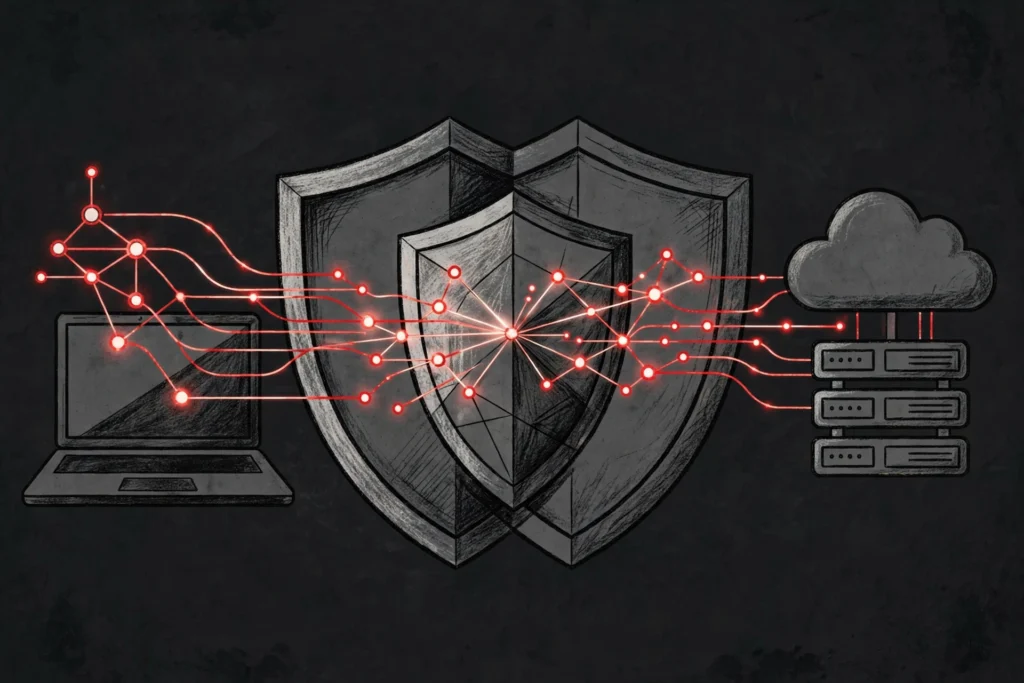
That combination is the heart of the deal. CrowdStrike secures the device where an AI agent runs. Zscaler secures the connections that agent travels across. Put together, the two companies can watch an attack from end to end.
George Kurtz, CrowdStrike’s chief executive and founder, framed it as a change in what security is for. “Security used to be about keeping the adversary out,” he said in the announcement. “Today, safety is required to let AI in.”
Kurtz added that the network used to connect people to places, and now connects agents to data. His goal, he said, is to build “cybersecurity’s operating system” and become the largest AI safety and security company the world has seen.
Chaudhry struck a similar note. He said Zscaler was built on a zero-trust architecture, and that in the AI era zero-trust security has become non-negotiable. AI agents, he warned, are rapidly becoming the new weakest link.
What the CrowdStrike Zscaler Deal Means for Customers
The combined company will start life with more than $10 billion in annual recurring revenue, according to CrowdStrike. Zscaler alone reported $3.9 billion of annual recurring revenue in its most recent quarter.
CrowdStrike expects the deal to add about $1 billion in annual revenue synergies within 30 months of closing. It also expects about $500 million in annual cost savings within 18 to 24 months, mostly from data centres, vendors and operations.
The cross-selling opportunity is large. Roughly 8,000 Zscaler customers do not yet buy anything from CrowdStrike. The two companies already share more than 2,000 customers and 16 product integrations.
After closing, customers of either company will be able to add the other’s products on a single Falcon Flex contract. CrowdStrike promises one platform, one data layer and one contract.
The deal also expands CrowdStrike’s addressable market by more than $185 billion by calendar year 2029, the company estimates. Network security is cybersecurity’s largest single market segment.
The Market’s Verdict
Investors did not cheer the announcement. Zscaler shares jumped more than 13 percent in premarket trading and finished the day up about 18 percent. CrowdStrike shares fell 5 percent before the open and closed down about 9 percent.
The reaction is familiar for big all-stock deals. Buying shareholders often worry about the price paid and the work of integration. Selling shareholders, meanwhile, pocket the premium.
Both companies announced strong quarterly results on the same day as the deal. CrowdStrike reported its fiscal third-quarter 2027 results, while Zscaler reported its fiscal first-quarter 2027 numbers.
The timing also says something about the pace of consolidation. According to Barron’s, this is the eighth acquisition CrowdStrike has announced since August of last year, and the third this month alone.
On any other Monday, the deal would have dominated Wall Street. Instead, it shared the spotlight with an even bigger story: Jensen Huang’s return as Nvidia’s chief executive, announced the same morning.
The Biggest Cybersecurity Deal Ever — and the Risks Ahead
At $43.9 billion, the acquisition is set to be the largest cybersecurity deal of all time. It eclipses Alphabet’s $32 billion purchase of Wiz, completed in 2025.
That record comes with scrutiny. A deal of this size will draw a long look from regulators in the United States and abroad. The long closing timeline — more than a year away — gives rivals time to pitch worried customers.
Integration is the other risk. CrowdStrike and Zscaler are both cloud-native companies with overlapping enterprise customers, which should help. But merging two large engineering organisations, two sales teams and two product roadmaps is never simple.
There is also the question of price. Because the deal is all stock, its final value depends on CrowdStrike’s share price. If the stock falls further before closing, Zscaler shareholders get less than the $260.41 a share implied on Friday.
The backdrop is a threat landscape that keeps getting stranger, from AI-built hacking tools to breaches at AI infrastructure firms. Enterprise customers are tired of juggling dozens of security vendors. They want fewer suppliers that can do more.
Still, the logic behind the deal fits a wider pattern. CrowdStrike is betting that the company which can protect both the device and the network will win that argument.
What Happens Next
The next steps are procedural but important. Zscaler shareholders must approve the deal, and regulators must clear it. The companies will file the formal paperwork with the US Securities and Exchange Commission in the coming weeks.
Chaudhry will continue to lead the Zscaler business after closing, and he will join CrowdStrike’s board of directors. The two companies say they will keep operating independently until the deal completes.
For the rest of the industry, the message is clear. The race to build a single security platform — one that covers devices, identities, data and now the network — has entered a new phase. Rivals such as Palo Alto Networks and Microsoft will be watching closely.
And for customers, the practical question is simpler. Fewer vendors, one contract, one data layer. If CrowdStrike delivers on that promise, the $44 billion price tag will look like a bargain. If it does not, the market’s sceptical first verdict will be remembered as the warning it was.


