Picture a stretch of farmland in rural Louisiana, where cranes tower over a construction site the size of a small city. This is Hyperion, Meta’s newest data centre, and it is not even switched on yet. Even so, the power it will one day draw has already helped kill one of the biggest climate promises in tech.
Meta has quietly dropped its goal of reaching net-zero emissions by 2030. The decision is buried in the company’s 2026 sustainability report, released on November 19, where two senior executives say the deadline is being “re-evaluated” — corporate language for a promise that will not be kept. No replacement date has been offered.
The Meta net-zero goal was once a point of pride. Now it is a casualty of the artificial intelligence race, and the fallout may reach far beyond one company.
What Meta Actually Said in Its Sustainability Report
The wording sits in the introduction to the report, signed by Rachel Peterson, Meta’s vice president of data centers, and Blair Swedeen, its global head of net-zero and sustainability. They write that Meta is “re-evaluating our timelines, sequencing, and interim milestones — including the 2030 timeframe for our net zero emissions goal and our near-term intensity targets — so our approach reflects current operating realities while keeping progress transparent year over year.”
That is a long sentence carrying a short message. The 2030 deadline is gone, and the interim targets that were supposed to keep Meta on course are gone with it.
A Meta spokesperson told TechCrunch that the company remains committed to net zero in principle. “We remain committed to net zero, but are re-evaluating the 2030 timeline and interim milestone,” the spokesperson said. “We’ll continue investing in emissions reductions and reporting our progress annually.”
What the company has not said is when, if ever, it now expects to get there. A pledge without a date is not a plan. It is a hope, and the market for corporate climate hopes has just become a lot more sceptical.
Why the Meta Net-Zero Goal Collapsed
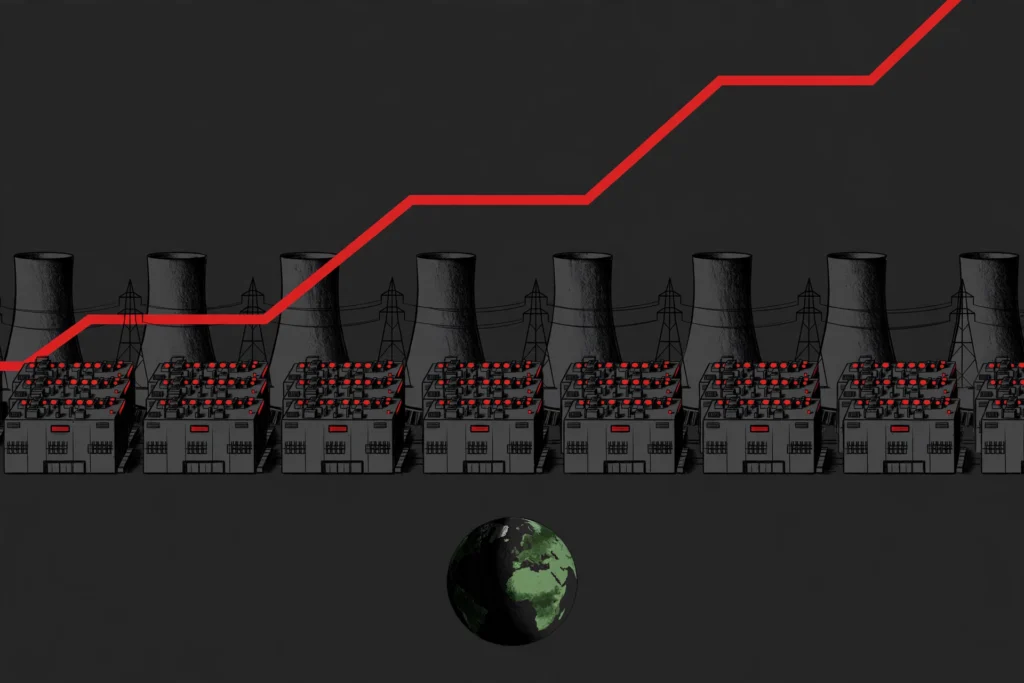
The numbers in the report explain the retreat better than the words do. Meta’s net emissions rose 45 percent in 2025, climbing from more than 8.1 million metric tons of carbon dioxide equivalent to roughly 11.8 million metric tons. Its total emissions, before offsets and renewable energy credits, jumped from about 15.6 million tonnes in 2024 to more than 21.7 million tonnes in 2025.
The driver is not hard to find. Data-centre emissions alone rose more than twelvefold between 2024 and 2025, according to reports on the filing, as Meta raced to build the computing power its AI ambitions demand. And the largest of those facilities, the Hyperion campus in Louisiana, is not even online yet.
Meta set its net-zero target in 2020, when the AI boom was still a distant prospect. The pledge covered the company’s entire value chain — its own operations, the electricity it buys, and the emissions of its suppliers — and it was aligned with the Paris Agreement’s aim of holding long-term warming to 1.5 degrees Celsius.
Back then, the path looked manageable. Efficiency gains and renewable energy purchases were steadily shrinking the footprint of a business built on social media. Then came the AI buildout, and with it a demand for computing power that arrived, as the report’s framing suggests, on a timeline measured in quarters rather than decades.
Training and running large AI models consumes enormous amounts of electricity. Building the data centres to house them consumes steel, concrete and land. Meta is not the only company facing this arithmetic, but it is the first of the big American tech firms to say the numbers no longer add up to its 2030 promise.
A Decade of Climate Promises, Unravelling
Meta’s retreat did not arrive out of nowhere. In July 2026, the company quietly left RE100, the corporate renewable-energy initiative it had belonged to for a decade, after the group began requiring more rigorous reporting on renewable-energy targets. At the time, the move drew little attention. In hindsight, it looks like the first public sign that the 2030 goal was in trouble.
The company had also promised to become water positive by 2030, returning more water than it consumes. That pledge sits alongside the net-zero goal in the sustainability report, and its future is now uncertain too.
Meta is part of a broader corporate retreat from climate targets, as companies across industries quietly revise or abandon goals set in a different era. But Meta’s case is distinctive because of the reason it gives: not a change of heart about the climate, but a deliberate choice to prioritise AI infrastructure over emissions.
The scale of that choice is staggering. Meta is pouring tens of billions of dollars a year into data centres, chips and power, in a race against Google, Microsoft and Amazon to build the most capable AI systems. Each new facility adds to the emissions ledger, and the ledger is growing faster than any amount of renewable energy purchasing can offset.
For a decade, Meta used its climate record to distinguish itself from older, dirtier industries. It presented itself as a clean company with a clean conscience. That positioning is now hard to sustain, and the damage may not stop at Meta’s own reputation.
What Happens Next for Big Tech Climate Goals
The sharpest reaction has come from observers who worry about what Meta’s retreat means for everyone else. TechCrunch, which first highlighted the buried announcement, argued that Meta’s decision risks provoking the kind of backlash that leads to regulations with real teeth. If the world’s biggest tech companies abandon their voluntary climate pledges whenever they become inconvenient, the argument goes, governments will stop trusting voluntary pledges altogether.
That matters because the rest of the industry is watching the same numbers. Google, Microsoft and Amazon have all set their own net-zero or carbon-negative targets for 2030 or 2040, and all of them are building AI data centres at a similar pace. If Meta could not hold the line, investors and campaigners will ask, who can?
There is also a competitive angle. Companies that kept their climate promises, spending money on renewable energy and carbon removal while rivals spent it on chips, may now feel they were punished for their discipline. Meta’s move could make it harder for any of them to justify the cost of staying the course.
For now, Meta says it will keep reporting its emissions every year and keep investing in reductions. That is a thinner promise than the one it made in 2020, but it is not nothing. The next sustainability report will show whether the company’s emissions keep climbing as Hyperion and other campuses come online, or whether the buildout eventually levels off.
The deeper question is whether the AI industry can grow its way out of its own carbon problem. Meta is betting that it can — that more efficient chips, cleaner grids and smarter cooling will eventually bend the curve. Its own report suggests that day is not close.
Until it arrives, the lesson of Meta’s abandoned deadline is simple. In the race between artificial intelligence and the climate, the world’s most valuable companies are choosing AI. The rest of us will have to live with the consequences of that choice, and decide whether to accept it.
Source: TechCrunch


