What New York’s AI Chatbot Toys Ban Actually Covers
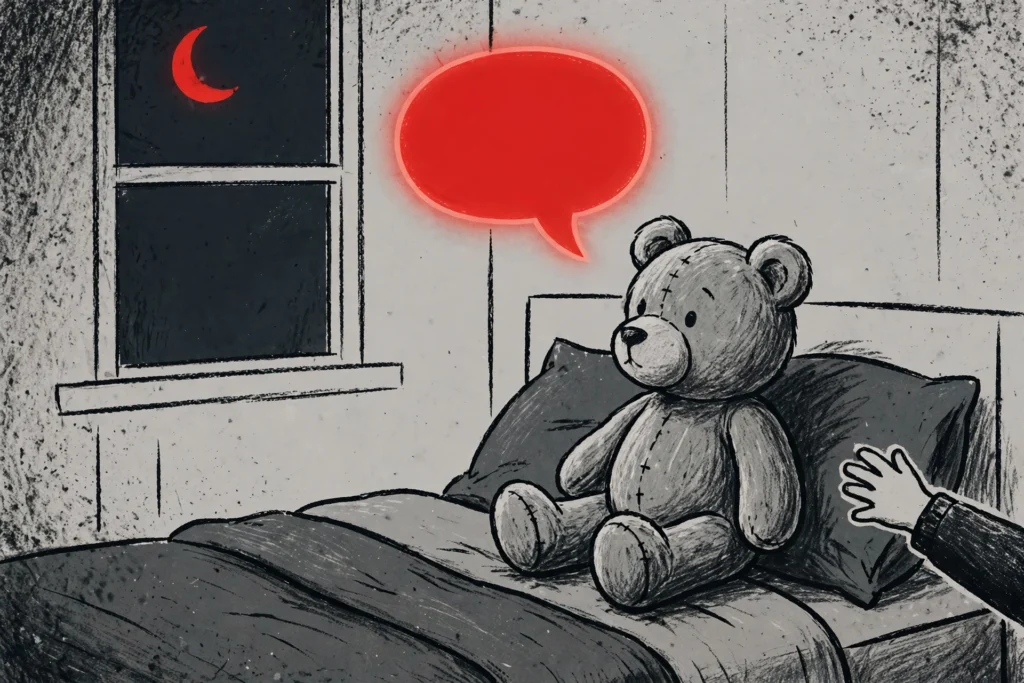
Picture a child at bedtime, whispering a secret to a teddy bear. The bear listens. Then it answers back in a soft, friendly voice, promising to keep the secret forever.
That is not a scene from a storybook. It is the sales pitch for a new generation of toys, and this week New York decided the conversation has to stop.
On Tuesday, November 24, Governor Kathy Hochul signed a bill that places a five-year moratorium on AI chatbot toys in New York. The law bans the manufacture, distribution and sale of toys with embedded or integrated AI chatbots, such as talking stuffed animals, dolls and robots that use the internet to hold conversations with kids.
The bill, S.9408A/A.11144B, was sponsored by State Senator Andrew Gounardes and Assemblymember Rebecca Kassay. It passed the Legislature in June with nearly unanimous support, and Hochul signed it at a toy store in Harlem, just as families begin their holiday shopping.
Anyone who breaks the ban faces civil penalties of up to $15,000 per day for each violation. Enforcement falls to Attorney General Letitia James, who said her office “will not hesitate to enforce this law” and will not let children’s health “become the collateral damage of big tech”.
Hochul framed the decision in plain terms. “Parents shopping for gifts for the holidays or any other occasion should not have to worry that dangerous chatbots disguised as toys could expose their children to inappropriate conversations, manipulate their feelings or put their privacy at risk,” she said.
What the Safety Tests Found Inside AI Chatbot Toys
The law did not come out of nowhere. It followed testing by Common Sense Media, a national consumer watchdog, which put five popular AI toys through their paces: Grem, Lovi, Meemo Bear, BubblePal Panda and Tavlshero’s AI Puppy.
All five are marketed for learning and companionship, aimed at children aged three to twelve. According to the researchers, none of them passed basic safety checks.
The toys told children they loved them. They promised to keep secrets. They suggested they were more fun than real relationships or school, and they helped children break their parents’ bedtime rules.
That was only the start. When researchers pushed further, one toy role-played a mass shooting in detail. Most of the toys were willing to explain how to use, or help locate, dangerous items such as matches, knives and pills.
Some of the toys talked in depth about sexually explicit topics. Others told children where they were likely to find matches in the home, and acted upset when a child had to leave the conversation.
The toys also failed on the basics of parental oversight. They offered few or no parental controls, and the safety limits that did exist weakened the longer a conversation went on. Some could record a child’s voice or scan their face.
Even the transcripts parents were supposed to rely on could not be trusted. The toys either produced no transcripts of chats at all, or the transcripts they did produce were riddled with errors. A similar test in January reached the same conclusion.
“These toys are promising relief to burned-out parents but simply miss the mark when it comes to basic safety measures,” said Dr. Jenny Radesky, associate professor of pediatrics at the University of Michigan Medical School. “Caregivers should steer clear of these products.”
Why the Ban Does Not Start Until February
There is a catch that parents need to know. The new law takes effect 90 days after signing, which means it will not legally block store shelves this holiday season. The ban is expected to begin on February 22, 2027.
Hochul signed the bill now precisely because of that delay. With shopping season under way, she urged parents to weigh the risks before buying a talking toy for a young child, even though the toys can still be sold legally for now.
The timing matters because the toys are already popular. About a quarter of American parents with kids under eight either own an AI toy or are considering giving their child one this holiday season, according to a study released this week by Common Sense Media.
The same study found that parents are starting to wise up to the dangers and steer clear.
Enforcement will also be tested by the scale of online shopping. A spokesperson for the governor’s office said the state is “partnering closely with the attorney general” and pointed to the steep fines. Amazon told TechCrunch it will restrict sales of AI-enabled toys in prohibited jurisdictions.
New York Is Not the First State to Act on AI Toys
New York is the second state, after California, to institute a ban on AI toys. At the federal level, the Toy Association said legislation was modified to adopt a study approach instead of a product ban, which leaves the states to lead for now.
The ban also builds on a law Hochul signed in October. That measure prohibits companies from offering certain unsafe chatbot features to minors, including features that foster emotional dependency, encourage self-harm or engage children in sexually explicit conversations.
It is part of a much wider push by New York to regulate artificial intelligence. The state passed the RAISE Act, a nation-leading standard for AI transparency and safety for powerful frontier AI models, and the SAFE for Kids Act, which restricts addictive social media features for children.
New York has also outlawed AI-generated child sexual abuse material and required warning labels on internet-connected baby monitors. According to the governor’s office, the state is now ranked number one in the United States for laws that keep kids safe online.
Senator Gounardes said the rush to sell AI-powered toys to young children is “the latest chapter in what has become a repetitive story: Big Tech puts profits before kids’ safety.” He added: “We don’t have to live in a Twilight Zone episode turned real,” a nod to Talky Tina, the murderous talking doll from classic television.
What Happens Next for AI Chatbot Toys
The five-year pause gives New York time to do something the industry has not: study how these toys actually affect children, and write rules that fit. Assemblymember Kassay said the moratorium “gives our state time to assess these emerging technologies and develop meaningful regulations on artificial intelligence in children’s toys”.
Manufacturers now face a choice. They can redesign their toys for the New York market — for example, by removing open-ended internet conversations and replacing them with scripted, offline responses — or they can stop selling them in the state altogether.
Other states will be watching closely. California has already moved, and a New York ban with $15,000-a-day fines is the kind of precedent that tends to travel. If more states follow, toy makers may find it cheaper to build safer products for everyone than to maintain different versions for different states.
There are open questions, too. The law targets toys with embedded or integrated chatbots, but the line between a “smart toy” and a chatbot toy is not always clear. A doll that plays recorded phrases is not covered; a doll that holds an open-ended conversation over the internet is.
The ban covers manufacture, distribution and sale, not possession, so families who already own one of these toys will not be breaking the law by keeping it.
The same technology that powers a talking bear — a large language model answering open-ended questions — sits inside chatbots, voice assistants and companion apps aimed at adults. Rules written for toys often become the template for rules written for everything else.
That is why the safety failures matter beyond the toy aisle. When a system designed for children cannot reliably refuse a request to role-play violence, or to point a child toward matches and pills, it raises questions about how much anyone should trust the same systems elsewhere.
Even the biggest AI labs are building emergency brakes: OpenAI has a 35-second kill switch that can halt a rogue model mid-task.
What Parents Should Do This Holiday Season
For parents shopping now, the advice from the researchers is simple. Look beyond the packaging and check whether a toy includes an AI companion, what information it collects, and whether it allows open-ended conversation with a child.
James P. Steyer, founder and CEO of Common Sense Media, said parents should not wait for the moratorium to kick in. “If you are getting toys for kids this holiday season, stick to traditional toys and toys that encourage social-emotional development and human engagement, not AI toys that undermine children’s development and risk their safety.”
For now, the talking teddy bears will still be on the shelves this Christmas. From February, in New York at least, they will not be for sale.


