What the VMware vCenter zero-day actually does
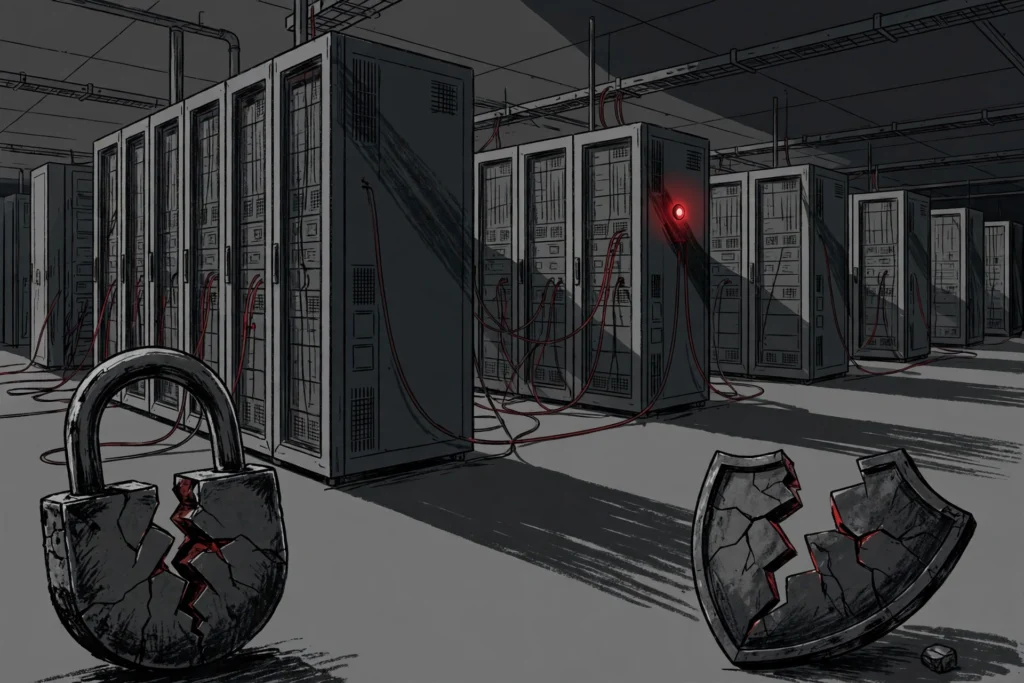
Picture the server room at the heart of a company. Rows of machines hum behind locked doors, and every one of them answers to a single console.
Now imagine learning that for more than two months, a stranger had a key to that console — a key nobody issued, and nobody noticed. That is the story Broadcom confirmed on November 19.
The company rushed out an emergency patch for a critical flaw in VMware vCenter Server, the software that manages virtual machines across countless data centres.
The flaw, tracked as CVE-2026-123890, carries a near-maximum severity score of 9.8 out of 10. Worse, researchers at Google’s Mandiant say it was already being exploited in the wild since early September — two months before the fix existed.
vCenter is the control panel for VMware’s virtualised world. From one console, administrators create, move and shut down virtual machines, manage storage and control who can do what. If you own vCenter, you own everything beneath it.
The flaw sits in the VMware Directory Service, the component that checks who is allowed in. According to Broadcom, an attacker with network access to a vulnerable server could bypass authentication entirely — no username, no password, no stolen credentials needed.
Mandiant explains what happens next. A successful attack creates an authenticated session as administrator@vsphere.local, the built-in super-admin account. From there, the attacker can run arbitrary commands and pull files, including the directory database that holds further credentials.
The technical root, according to Google’s threat intelligence team, is an unauthenticated Secure Remote Password session key disclosure over DCE/RPC. In plain terms: the lock’s own handshake leaks the information needed to open it.
Armory Castle: the hackers behind the VMware vCenter zero-day
Mandiant attributes the attacks to a suspected Chinese state-backed espionage group it calls Armory Castle, previously tracked as UNC5221. The group has a long record of hunting zero-day flaws in the boxes that guard corporate networks.
Its past targets include Citrix NetScaler and Ivanti Connect Secure appliances — the same kind of edge devices companies trust to keep attackers out. Armory Castle turns those defences into doorways.
This is the second zero-day the group has exploited this year alone, according to researchers. And the vCenter flaw is the second critical authentication bug found in VMware’s Directory Service this year, which raises uncomfortable questions about how thoroughly that code has been reviewed.
How the attack unfolded, step by step
The vCenter break-in was not the first move. It was the second act of a campaign that began somewhere else entirely.
Mandiant says the attackers first compromised BeyondTrust Remote Support appliances using a separate zero-day, CVE-2026-102764, which has been exploited since late August. That gave them a foothold inside the target’s network.
From there, they moved sideways into internal Linux systems, planted web shells known as SLIMSAVAGE to keep access, and escalated their privileges to root. Then they scanned the network, looking for VMware systems.
When they found a vCenter server, they deployed a custom tool written in Go and named BONESAW. It exploited the new flaw, created a vCenter Single Sign-On administrator account and stole the server’s directory database — a haul that can be mined for more credentials.
BONESAW can also extract SAML signing keys, the cryptographic material that lets a system vouch for a user’s identity. With those keys, attackers can forge authentication tokens at will.
A second tool, SAWSNAKE, then enabled what researchers call Golden SAML attacks: forging tokens, bypassing multi-factor authentication and impersonating legitimate users. More backdoors followed — CAGEMATCH, BEARBONES and LAZYBONES — to run commands, move files and stay hidden.
The endgame was access to the ESXi hosts underneath vCenter and the virtual machines running on them. Mandiant says the attackers extracted sensitive data from VMs, including Windows Active Directory database files — the keys to an entire corporate network.
Which VMware versions are affected — and which are fixed
Broadcom says anyone running a version older than the fixed builds is affected. That covers vCenter Server 8.0, 9.0 and 9.1, plus the vCenter builds shipped inside VMware Cloud Foundation, VMware vSphere Foundation, VMware Telco Cloud Platform and Telco Cloud Infrastructure.
The fixed versions are vCenter 8.0 Update 3m, 9.0.2.0200 and 9.1.1.0200. The advisory, VMSA-2026-0009, also fixes four other vulnerabilities affecting VMware SDDC Manager and VMware Tools for Windows.
Older releases are not safe either. vSphere 7.0 is confirmed affected, and Broadcom says customers should presume that the unsupported vSphere 6.5 and 6.7 releases are affected too.
There is no workaround. Broadcom calls this an emergency update and urges organisations to patch as soon as possible. Network restrictions and firewall rules can reduce exposure, but they do not close the hole.
One caution for administrators planning the upgrade: installing vCenter 8.0 U3m or 9.0.2.0200 blocks a later upgrade to VMware Cloud Foundation 9.1.1. The safer path is to upgrade vCenter to 9.1.1 first and apply the security update there, or wait briefly for VCF 9.1.2.
It does not matter whether Enhanced Linked Mode is switched on. The flaw affects vCenter either way.
Patching is not enough: check whether you were already hit
Here is the part that should worry administrators most. The flaw was exploited for more than two months before the patch existed. Installing the update closes the door — but it does nothing about an intruder who already walked through it.
Mandiant’s advice is to treat the patch as step one, not the whole job. Look for rogue administrator accounts in vCenter, especially any created in September or later. Review SAML signing keys and consider them compromised if the server was exposed. Hunt for the tools Mandiant named: BONESAW, SAWSNAKE, SLIMSAVAGE, CAGEMATCH, BEARBONES and LAZYBONES.
Check logs for unusual administrator sessions and for access to the directory database. And remember that this campaign started with a different zero-day — if your BeyondTrust appliances were exposed in August or September, they deserve the same scrutiny.
Mandiant’s chief technology officer, Charles Carmakal, noted that the BONESAW tool was first discovered back in July — a reminder that the attackers had their weapon ready weeks before they used it.
Why this VMware vCenter zero-day matters so much
Not every vulnerability is equal, and this one sits near the top of the scale for a simple reason: vCenter is the keys to the kingdom. A single compromised server can hand an attacker every virtual machine, every host and every credential a company runs.
The timing makes it worse. The same week, Microsoft’s November Patch Tuesday fixed more than a thousand flaws, including an Outlook zero-day already under attack. The security industry is having a very bad month for zero-days.
The pattern is familiar from other recent incidents. The Fireworks AI breach showed how one flaw in shared infrastructure can expose customer data at scale. Each time, the lesson is the same: the systems that manage everything else are the most valuable targets of all.
Google’s threat intelligence team warned this month that fully autonomous AI-driven cyberattacks could arrive within three months. The vCenter campaign needed no AI — just patience, two zero-days and a custom toolkit. The human attackers are already fast enough.
What happens next
Broadcom’s patches are out, and the clock is now running for every organisation that uses vCenter. Attackers know the flaw is public, and the details in Mandiant’s report give every other group a head start on building their own version of BONESAW.
Expect follow-up reports in the coming days as security firms scan the internet for exposed vCenter servers and as victims discover whether they were hit. Broadcom has not confirmed the exploitation itself — Mandiant’s researchers documented it — but the patch’s emergency status speaks for itself.
For anyone running VMware infrastructure, the message is blunt: patch now, then investigate. The two months this flaw spent in the wild are the reason the second step matters as much as the first. Full details of the patch are in the BleepingComputer report on the disclosure.


