On Monday morning, millions of people did something completely ordinary. They opened the BBC to check the news, clicked into Zoom for a meeting, or scrolled through CNN for the latest headlines. Nothing looked wrong.
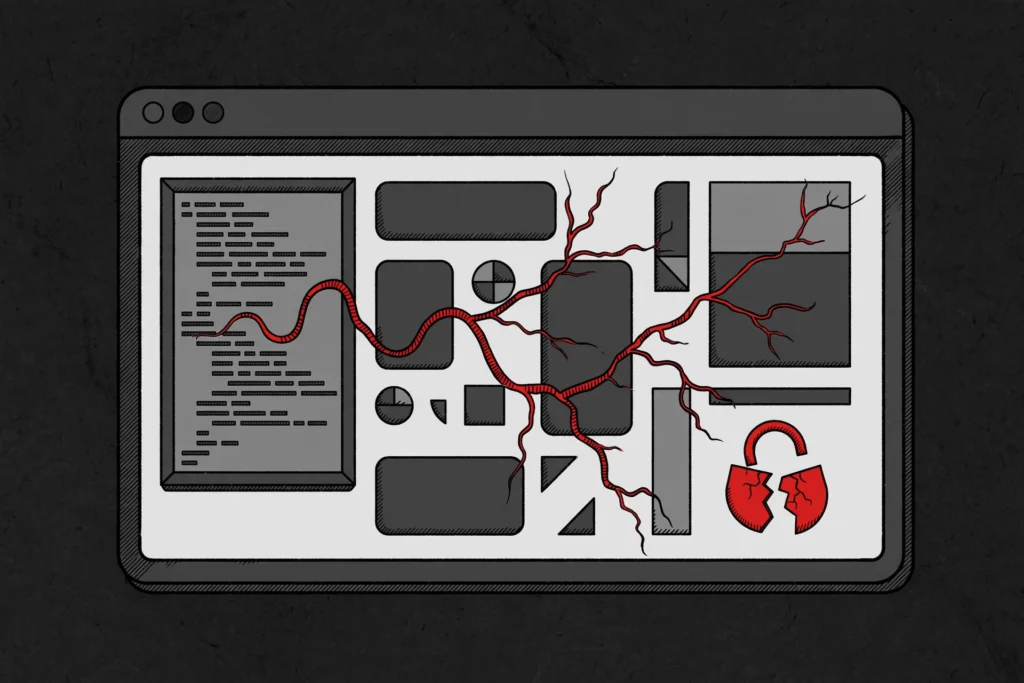
The pages loaded normally, the logos were in place, and every link led where it should. But tucked inside a small piece of code those sites trusted, a thief had already moved in.
The Optimizely script hijack turned some of the most visited websites on the internet into delivery vehicles for malware on 16 November 2026. According to security researchers at Report URI, malicious JavaScript reached visitors of 178 organisations through Optimizely Web, the A/B testing platform those sites load on almost every page.
Nobody hacked the BBC. Nobody hacked CNN, or Zoom, or any of the other 175 organisations. The attacker did not need to. Instead, the intruder slipped poison into a script the sites already trusted — and every visitor’s browser ran it without a second thought.
What the Optimizely script hijack looked like
The first sign of trouble came from Scott Helme, the researcher behind Report URI. His team swept 1,611 Optimizely snippets — the small files of code customer websites load from Optimizely’s servers — and found malicious code in 188 of them.
Those 188 snippets belonged to 178 organisations, and the names read like a roll call of the internet’s biggest brands: Zoom, the BBC and CNN, along with Salesforce, GitLab, IKEA, HSBC, Equifax, Air France-KLM, the crypto wallet maker Ledger and Peacock.
Even Optimizely’s own website was not spared: its main site and its login page carried the injected code too.
Report URI warned the real number may be higher, since it could only check the snippets it found in time.
How the attack got inside 178 websites
Optimizely Web is the tool big websites use to run A/B tests — showing one version of a page to some visitors and a different version to others, then keeping whichever performs better.
That only works because every page on a customer site loads a snippet of JavaScript from Optimizely’s content delivery network, cdn.optimizely.com. The snippet carries the experiments, the page variations, and an optional field called Project JavaScript, where customers can add their own code.
The attacker found a way into that field. Optimizely told BleepingComputer that an unauthorised party exploited a vulnerability in the sign-up flow for its Experimentation product, and used it to write a small loader into customer projects.
Optimizely’s CDN was never hacked. The attacker simply wrote code into a field customers are allowed to edit, and the CDN served it faithfully, from Optimizely’s own domain, with a valid certificate.
Every site that trusted that script ran the attacker’s code. Browsers had no reason to object, and neither did the security tools that allowlist trusted vendors.
What the injected code actually did
The loader was a plain script tag in most snippets, pointing at a domain called 1688360.cc. The main payload, named track.js, was a multi-purpose theft kit, rebuilt 26 times during the day.
First, it swapped cryptocurrency wallet addresses. When a visitor copied an address to send payment, the code quietly replaced it with one controlled by the attacker, so the money went to the wrong wallet.
Second, it skimmed payment cards. Anything a visitor typed into a payment form on an infected page could be harvested and sent back to the attacker’s servers.
Third, it stole cookies and took screenshots of the visitor’s browser, the raw material for hijacking logged-in sessions and impersonating victims elsewhere.
On iPhones and iPads, the payload went further still. It routed visitors to known iOS exploit kits — Coruna for iOS 13 to 17, and DarkSword for iOS 18 — in an attempt to break into the phone itself.
The theft was already paying off within hours. By 19:25 UTC on 16 November, researchers had counted about $7,040 in the attacker’s crypto wallets, all of it collected in roughly nine hours.
The timeline of a very long Monday
The last clean capture of the BBC’s Optimizely snippet was at 02:21 UTC on Monday. Two hours later, at 04:21 UTC, the first injection appeared in that same snippet.
Between 19:24 and 19:59 UTC, Report URI’s sweep found 186 of the 1,611 snippets infected. By 21:52 UTC, only one of the 188 still carried the code.
Optimizely posted on its status page at 01:02 UTC on Tuesday 17 November, and on X at 01:21 UTC, saying it had “identified and contained a security incident affecting some Optimizely Web Experimentation customers”. The company said “the vulnerable path is blocked, the injected code was removed, and customers have been contacted directly.”
It also said it had ended active sessions, revoked tokens and notified affected customers. What it has not said, publicly at least, is how many customers were hit, or when the attacker first got in.
No threat actor has been publicly named. Independent researcher Amirul Cyber has dubbed the campaign OPTIMJACK, according to Cyber Kendra.
Optimizely’s response — and the questions it left open
Optimizely moved quickly once the incident was public, and by Tuesday morning the injected code was gone from almost every snippet. But its own account leaves a gap that matters.
The flaw was in the sign-up flow — the front door, not some deep internal system. That raises an obvious question: how long had the attacker been inside before the first injection appeared on Monday morning?
There is also an earlier wave to explain. From 13 to 16 November, the same infrastructure injected a loader through other third-party scripts — Kissmetrics, StorifyMe and Minute Media. Optimizely was one channel, not the only one.
And this is not Optimizely’s first security incident of the year. In February 2026, a voice-phishing attack exposed business contact information from its internal systems, as reported by BleepingComputer.
Why trusted scripts are so hard to defend
The Optimizely incident belongs to a family of attacks that keeps growing, because the web runs on borrowed code. Modern websites load scripts from dozens of outside vendors — analytics, advertising, chat widgets, testing tools — and each one is a door into every visitor’s browser.
wasl.tech has covered this pattern before: the Fireworks AI breach, where attackers slipped into an AI platform and reached customer data; the Grok Build leak, which exposed tens of thousands of apps through share links; and the Railway breach, where stolen credentials racked up hundreds of thousands of dollars in fraudulent charges.
What makes the Optimizely case different is the delivery mechanism. The malware came from the trusted vendor itself, served from the vendor’s own domain with a valid certificate. Content Security Policies that allowlist cdn.optimizely.com did nothing, because the code arrived exactly where it was supposed to come from.
Only sites with tight script-src and connect-src policies — rules that limit what even a trusted script is allowed to do — had a real chance of blocking it. Most sites do not run policies that strict, because they break the very tools the site depends on.
What happens next for visitors and website owners
If you visited one of the affected sites on Monday, the practical advice is unglamorous but worth following. Check any crypto transactions you made that day, and look for payment card activity you do not recognise.
If you typed card details into a site that later turned out to be affected, consider asking your bank for a replacement card.
iPhone and iPad users should make sure their software is up to date. The kits targeted iOS 13 through 18, and the newest software closes the holes they tried to use.
For website owners, the lesson is harder to swallow. Trusting a vendor’s domain is not the same as trusting the code it serves. Any service that can push JavaScript into your pages is part of your production system, whether you think of it that way or not.
That means auditing third-party scripts, limiting what they can do with strict content security policies, and watching them the way you would watch your own code — because on Monday, for 178 organisations, somebody else’s code was your code.
Optimizely says the vulnerable path is blocked and the injected code is gone. The question it leaves behind — how much should any website trust a script it does not control — is not going away, according to Security Affairs.


