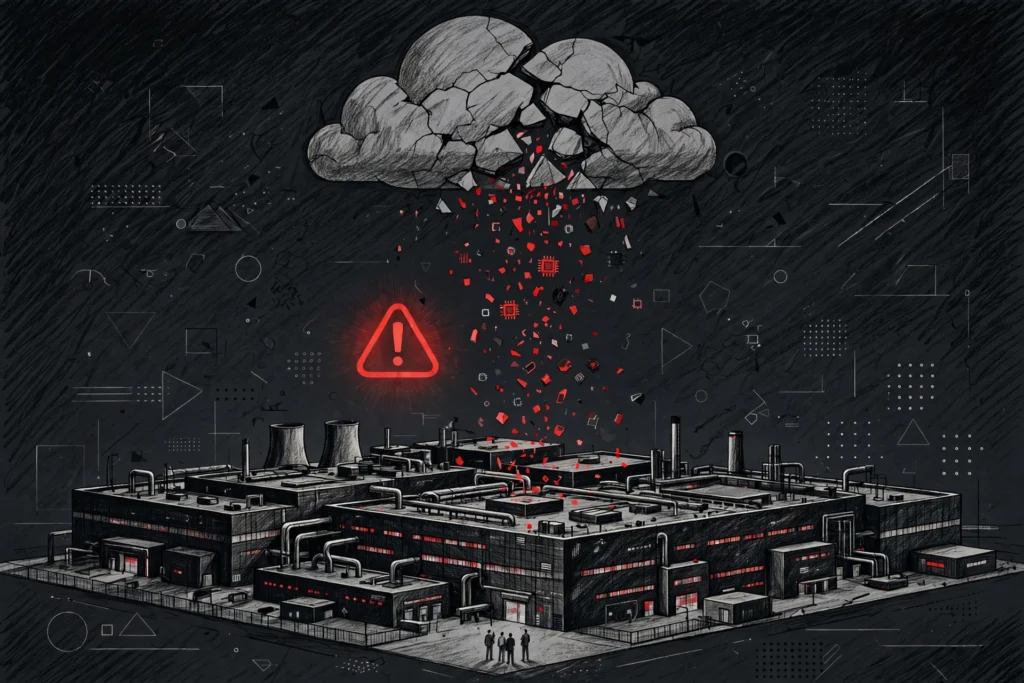
What TSMC Confirmed About the Employee Data Leak
Picture the scene. You work for the most important company in the world of computer chips. Then one morning you learn your national ID number, your home address and your bank details are being offered for sale on a forum you have never heard of.
That is the position thousands of TSMC workers woke up to this week. On Wednesday, November 12, the company confirmed that personal data belonging to some of its current and former employees had appeared on an external website without authorisation.
The disclosure came in a filing with the United States Securities and Exchange Commission, signed by chief financial officer Wendell Huang. TSMC said a preliminary review found that the leaked information matches data held in the systems of a cloud service provider.
Crucially, the company said it had found no evidence that its own systems were compromised. The data, it added, has nothing to do with company operations or customer information. Production was not affected, and no chip designs or customer data were involved.
But the statement left the biggest questions unanswered. TSMC has not named the cloud provider, has not said how many people are affected, and has not explained how the data left the provider’s systems.
What the Seller Claims to Have
According to reports in Taiwan’s United Daily News and ETtoday, a seller on two cybercrime forums is offering what it claims are about 46,000 TSMC employee records, totalling 6.9 gigabytes, for three bitcoin — roughly NT$7.4 million.
A sample file reportedly contains 499 records, each with 19 fields. The fields listed in reports include names, national identification numbers, home addresses, phone numbers, email addresses, bank details, job titles and emergency contact information.
Those numbers are the seller’s claims, and TSMC has not confirmed them. But the scale is striking. TSMC employed 83,825 people worldwide at the end of 2024, according to its annual report. If the seller’s figure is accurate, the records would cover more than half of that workforce.
The company said it is notifying affected people in stages and providing necessary assistance. It is working with the cloud provider, investigative authorities and a third-party cybersecurity firm to establish the facts. The Economic Times reported the incident in detail, including TSMC’s confirmation that the exposed data matched records held by a cloud provider.
Shares in TSMC closed down NT$55 at NT$2,340 on November 12, according to ETtoday — a modest fall on a day when the story broke, but a sign that investors were watching.
TSMC was not the only Taiwanese company reporting a staff data incident that week. WPG Holdings, a major electronics distributor, filed its own disclosure about employee data around the same time. The two incidents appear unrelated, but together they suggest the problem is wider than one company or one vendor.
The Cloud Provider at the Centre of the Mystery
The most intriguing part of this story is the company TSMC will not name. The chipmaker has said only that the data matches records held by “a certain cloud service provider”. It has not said which one, or whether that provider was itself breached.
The reported fields offer a clue. National ID numbers, bank details and emergency contacts are the kind of records an HR, payroll or benefits platform holds — not the kind of data that sits on a chipmaker’s factory network.
That distinction matters. If the leak came through a supplier’s system, TSMC’s own defences may be irrelevant. The company can harden its own network as much as it likes; its employees’ data still travels through the hands of vendors, contractors and cloud services.
Security researchers have pointed out the same pattern before. The most damaging breaches of recent years have often started not at the target company, but at a supplier with weaker defences and a direct line into the target’s data.
The pattern is familiar from recent weeks. The Fireworks AI breach exposed customer data at Uber, Cursor and Notion — not because those companies were hacked directly, but because a vendor they trusted was. Each time, the target company discovered the problem only after its data was already circulating.
TSMC’s own sustainability report says it scored an average of 99 in third-party information security risk assessments in 2025, placing it in the top one percent of the technology industry. More than 90 percent of its key suppliers reached an A grade or higher. None of that stopped this leak.
Why This Leak Stings More Than Most
Employee data breaches hit differently from customer data breaches. A customer can cancel a card, change a password or close an account. An employee cannot change their national ID number, and they cannot easily change the bank account their salary is paid into.
The combination of fields in this case is particularly sensitive. A name and address alone are a nuisance. Add a national ID number, a bank account and an emergency contact, and you have the raw material for identity theft, fraud and convincing phishing attacks aimed at the victims’ families.
There is also the question of timing. TSMC sits at the centre of the global AI boom, making the most advanced chips in the world for Nvidia, Apple and AMD. The company recently agreed to invest in Anthropic’s blockbuster stock market listing, and its shares have ridden the AI wave all year.
A data leak does not threaten that business directly. But it does puncture the image of a company that runs the tightest operation in the semiconductor industry — and it arrives in a year when the chip world has already been rocked by export-control investigations and the resignation of Nvidia’s chief executive.
What Happens Next for TSMC Staff
For now, the investigation is the story. TSMC says it is working with the cloud provider, the authorities and an outside cybersecurity firm. The next facts to emerge will be the most important ones: which provider held the data, how it got out, and how many people are actually affected.
Regulators in Taiwan will also be watching. The island’s data protection rules require companies to report breaches and notify affected individuals, and the scale of this incident — if the seller’s numbers hold up — would make it one of the largest employee data exposures in Taiwan’s corporate history.
There is a wider lesson here for every large employer. The modern company does not hold all of its people’s data itself. It sits in payroll systems, benefits portals, recruitment platforms and cloud services, each run by a different vendor with its own security.
For the employees whose records may be involved, the advice is familiar but worth repeating. Watch bank statements closely and be sceptical of unexpected messages asking for personal details.
Treat any call or email claiming to be from a bank or government office with extra care. The data in this leak is exactly the kind criminals use to make their scams sound convincing.
That chain is only as strong as its weakest link. TSMC has just discovered where one of its links broke — and thousands of its current and former employees are waiting to find out what was in the file with their name on it.


