What the Atom Computing CHIPS Award Will Fund
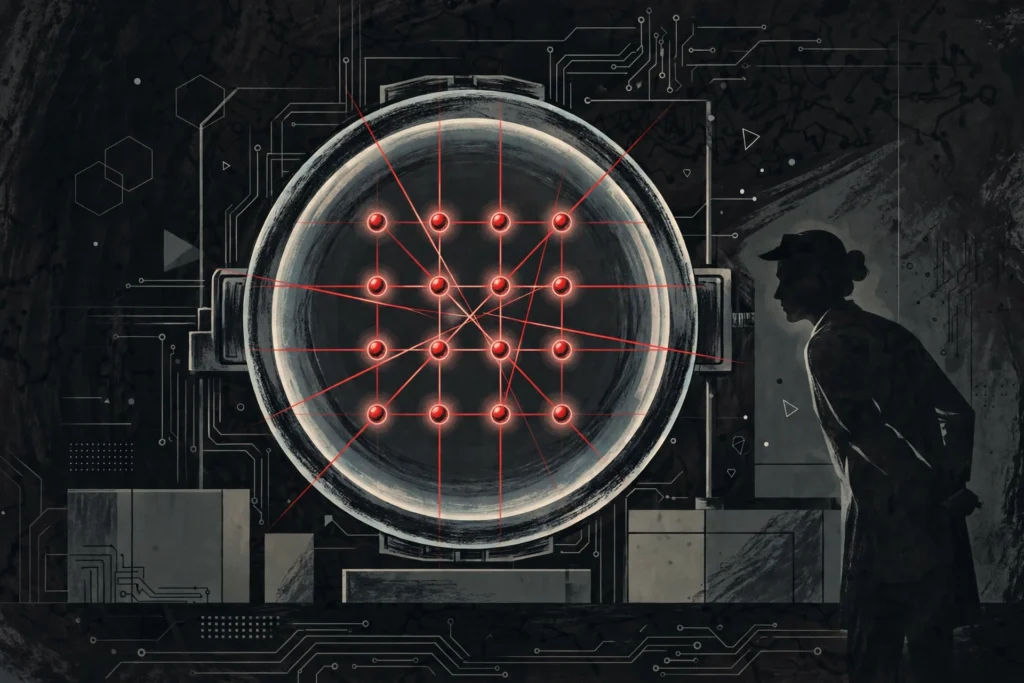
Picture a dark room in Boulder, Colorado, where thousands of individual atoms float in a vacuum, each one pinned in place by a beam of light. Nothing moves unless a laser tells it to. Nothing is visible to the naked eye.
Yet inside that silent chamber sits one of the most ambitious machines ever built — a quantum computer that the United States government now believes is worth $100 million of its money.
On November 13, the U.S. Department of Commerce signed a final research and development award of up to $100 million for Atom Computing, a company building quantum computers from neutral atoms. The announcement came through the department’s CHIPS Research and Development Office, under the CHIPS and Science Act.
It follows a letter of intent the two sides agreed earlier this year. The money is not a prize for work already done. It is a bet on work still to come: turning laboratory breakthroughs into machines that companies and government agencies can actually use.
According to the Commerce Department, the funding will accelerate the hardware development and systems integration needed to manipulate, control and address tens of thousands of qubits — and to prove they work as intended.
Atom Computing says the award will speed up three things. First, developing critical technologies in-house, so the company controls more of its supply chain and improves system performance and reliability.
Second, expanding parallel engineering and testbed infrastructure, so new ideas can be validated faster instead of waiting in line for a single machine. Third, working more closely with supply-chain partners to prepare for manufacturing at scale.
“Quantum computing is reaching a critical inflection point where scientific breakthroughs must rapidly translate into commercial reality,” said Dr. Ben Bloom, Atom Computing’s chief executive and founder.
He called the contract a way to “aggressively scale the engineering required to bring fault-tolerant quantum computing to market and ensure the United States leads the transition into the utility-scale era.”
How Neutral-Atom Quantum Computers Work
To understand why Washington is backing this particular company, it helps to know what makes its machines different. Most quantum computers trap charged particles or cool superconducting circuits to temperatures colder than deep space.
Atom Computing takes another path. It uses neutral atoms — ordinary atoms with no electric charge — held in place by finely controlled laser beams known as optical tweezers.
Each atom becomes a qubit, the basic unit of quantum information, stored in the nuclear spin state of the atom. Lasers arrange the atoms into grids inside a vacuum chamber, move them around, and make them interact.
The catch, as with every quantum computer, is errors. Qubits are fragile. They lose their quantum state quickly, and every operation risks introducing mistakes.
A machine with thousands of noisy qubits is impressive, but it cannot run the long, complex calculations that would make quantum computing genuinely useful. That is why the word “fault-tolerant” appears in almost every sentence of this announcement.
Fault tolerance means building reliable logical qubits out of many imperfect physical ones, using error correction to catch and fix mistakes faster than they appear. It is the difference between a spectacular physics experiment and a computer a bank, a drug company or a defence agency could trust.
From 1,180 Qubits to Tens of Thousands
Atom Computing, founded in 2018 by Ben Bloom and Jonathan King, has spent eight years climbing toward that goal, and its record explains why the government is paying attention.
In 2023, the company unveiled a machine holding more than 1,100 qubits in a single array — the first gate-based quantum computer of any kind to cross the thousand-qubit line. Its AC1000 system reached 1,180 qubits.
The following year, Atom Computing teamed up with Microsoft and created and entangled 24 logical qubits, a record at the time for the number of error-corrected qubits demonstrated together.
Then in 2025, the company made what it describes as the industry’s first commercial sale of a logical-qubit quantum computer, selling an on-premises system to QuNorth, a Nordic quantum initiative funded by EIFO and the Novo Nordisk Foundation.
In 2026, Atom Computing reported another first — a full demonstration of quantum error correction using a technique called a toric code, showing that errors fell as the encoded system grew larger.
That behaviour, known as sub-threshold performance, is exactly what fault tolerance requires. The $100 million award is meant to turn that kind of result into a repeatable, manufacturable product.
DARPA’s $300 Million Test Comes First
The Commerce Department award is not the only government vote of confidence Atom Computing has collected this autumn. On October 7, the company advanced to Stage C, the final phase of the Defense Advanced Research Projects Agency’s Quantum Benchmarking Initiative.
The programme tests whether practical, industrial-scale quantum computers can be built sooner than conventional industry projections suggest. Stage C carries potential funding of up to $300 million, separate from the Commerce Department award.
More importantly, it puts Atom Computing’s hardware in front of an independent government verification and validation team, which will test whether the company’s proposed utility-scale machine can actually be built and operated as designed.
Microsoft has agreed to provide algorithmic support and error-correction codes for the effort. Atom Computing is the only neutral-atom company in Stage C.
It joins Diraq, IBM and IonQ, which advanced alongside it, plus Microsoft and PsiQuantum, the programme’s earlier participants. Each company is testing a different qubit design.
DARPA’s goal is to find out which approaches can reach utility scale — the point where a quantum computer’s output is worth more than it costs to build and run — by 2033.
That independent testing matters because quantum computing has a long history of bold claims. Government evaluators physically testing the hardware, rather than reading a company’s own benchmarks, is the closest thing the field has to an outside referee.
Why Washington Is Betting on Quantum
The Commerce Department framed the award in the language of national competition: the funding supports technologies “critical to U.S. economic competitiveness, scientific leadership, and national security.”
Quantum computing sits at the centre of that argument because of what it could eventually do — simulate new materials and medicines, optimise vast logistics networks, and break the encryption that protects today’s communications.
The award also fits a wider pattern. Earlier this year, the Commerce Department proposed a $2 billion CHIPS investment spread across nine quantum hardware and foundry developers.
The message is clear: the government sees quantum manufacturing — not just quantum research — as something worth funding directly. Atom Computing’s $100 million is one of the first pieces of that plan to be finalised.
The same logic is driving private money into the hardware that powers artificial intelligence. Google’s new TPU chips and AMD’s 256-core EPYC Venice server processors show how fiercely companies are competing over the silicon underneath the AI boom.
Quantum is a longer bet, but the prize — a fundamentally new kind of computer — is larger. Investors are watching the same trend: TSMC’s billion-dollar bet on Anthropic and OpenAI showed that even the world’s biggest chipmaker now treats AI companies as customers worth owning a slice of.
What Happens Next
For now, the award’s fine print is sparse. The Commerce Department has not said how much of the $100 million will actually be paid out, on what schedule, or which milestones Atom Computing must hit to unlock it. The figure is a ceiling, not a cheque.
What is clear is the direction of travel. Atom Computing will spend the funding in Boulder, expanding its engineering and test capacity and deepening work with the suppliers it needs to build machines with tens of thousands of qubits.
If that scale-up works, the next milestone will be a system that can run error-corrected calculations long enough to solve a real problem better than any classical computer — the moment the whole field has been chasing for decades.
DARPA’s Stage C testing will run in parallel, and its verdict will carry weight far beyond Atom Computing. If independent evaluators confirm that a neutral-atom machine can be built and operated at utility scale, the technology moves from promising to proven.
They are funding the factories, the supply chains and the engineering to make the machines real. Atom Computing’s $100 million award, announced by the Commerce Department on November 13 and reported by Business Wire, is the latest sign that the race has moved from the laboratory to the production line.