LeCun vs Amodei: What Was Actually Said
It was a Sunday evening, and Yann LeCun was scrolling through his feed when an old video stopped him cold. On screen, Dario Amodei was telling American lawmakers that openly released AI models could be extremely dangerous.
LeCun is not a random commentator. He is one of the three researchers called the godfathers of AI, a Turing Award winner who spent twelve years leading AI research at Meta. When he types, the industry reads.
And what he typed on Sunday, November 22, was a direct accusation. Amodei, he wrote, has spent years talking up the dangers of open AI models for one reason: control.
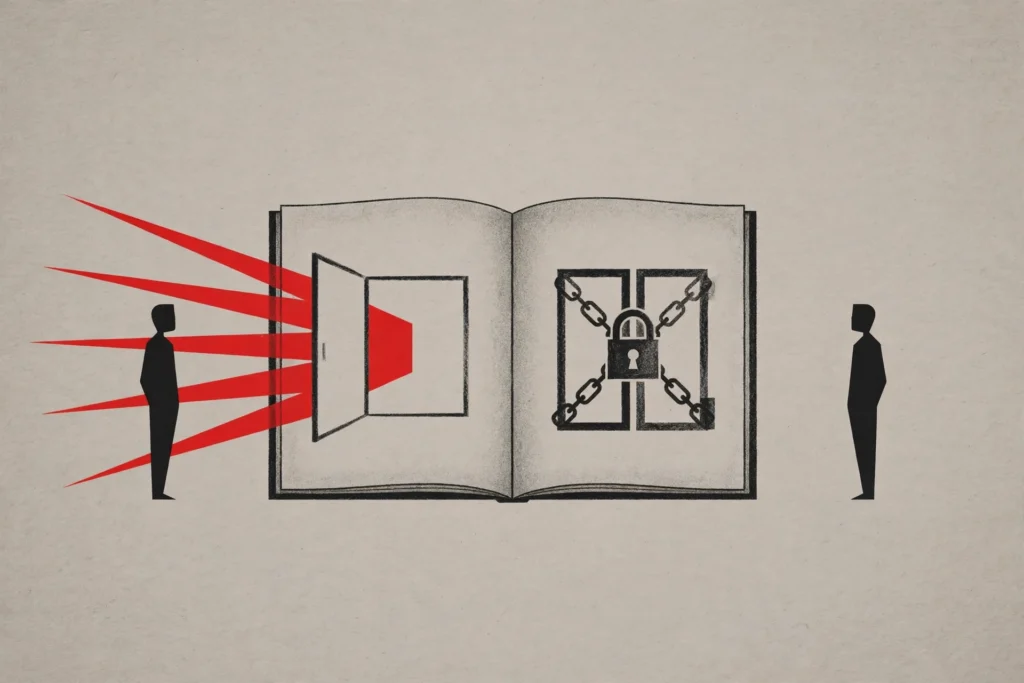
“Dario’s spiel since GPT-2 has always been about hyping the dangers so that open models would be made illegal and he would stay in control,” LeCun wrote, according to NDTV. “It’s a new form of medieval obscurantism.”
Within a day, the post had been viewed nearly a million times. The fight it reopened is the oldest argument in modern AI: who gets to hold the most powerful technology on earth?
The Three-Year-Old Clip That Started It
LeCun was not responding to something Amodei said this week. He was responding to a video clip that has been circulating again on X, a Chinese-language post about Amodei’s remarks on open-source AI at a congressional hearing.
The clip is from July 25, 2023. Amodei was testifying before a US Senate Judiciary subcommittee about open models, and he warned that once a model is released openly, its maker loses all control over it.
“When a model is released in an uncontrolled manner, there’s no ability to do that. It’s entirely out of your hands,” Amodei told the senators. He was talking about the powers a closed model gives its operator: watching how it is used, cutting off bad actors, and changing its safeguards after release.
What the viral clip leaves out is the rest of that same testimony. Amodei also said that open-source AI was beneficial in most scientific fields.
He added that the risks from the open models available at that time were relatively limited.
LeCun’s charge reaches much further back than 2023. He dates Amodei’s position to the GPT-2 era, around 2019, when OpenAI first decided to stage a model’s release because of misuse fears.
That moment became a dividing line in the field, and the two men have stood on opposite sides of it ever since.
Open-Weight AI, Explained Simply
Most people meet AI through an app or a website. You type a question into ChatGPT or Claude, and an answer comes back. You never see the model itself, and you cannot change it.
Open-weight models work differently. Their underlying parameters, the numbers that make the model behave the way it does, are published for anyone to download. Developers can run them on their own computers, adapt them, and build on top of them.
Meta’s Llama models and China’s DeepSeek models are the best-known examples. They power thousands of products and research projects around the world, and they are the reason a small team can now build an AI assistant without renting access from a giant.
Open-weight does not always mean fully open-source. The weights may be available while the training data and the code used to build the model stay private. Even so, once weights are public, they can never be taken back.
That permanence is the heart of the disagreement. One man sees a safety risk that cannot be recalled. The other sees knowledge that cannot be locked away.
Amodei’s Defence: “We Never Asked for a Ban”
Amodei has answered this exact charge before. In a public statement in July 2026, he wrote: “Anthropic has never advocated for a ban on open-weights models.” The company describes open-weight models without dangerous capabilities as a public good.
His argument is narrower than LeCun suggests. Amodei’s concern is not today’s open models, but the most powerful future ones, which he argues could be misused for cyberattacks and biological attacks. For those, he wants three measures instead of a ban.
First, no sales of advanced chips or chipmaking equipment to China. Second, a crackdown on industrial-scale distillation, where companies copy a leading model’s abilities by training on its outputs. Third, mandatory safety testing for every sufficiently capable model, open or closed.
Anthropic’s refusal to sign a recent industry letter supporting open-weight models drew attention earlier this year. The letter, backed by Nvidia and Microsoft, was signed by more than 200 companies, including OpenAI. Anthropic stayed out, preferring its more cautious regulatory approach.
LeCun also questioned why Amodei left OpenAI at all. “He left OpenAI because he wasn’t going to have control,” he wrote.
Amodei left at the end of 2020 with a group of colleagues and co-founded Anthropic in 2021, saying the departure was rooted in convictions about how fast AI models were scaling and what that meant for national security.
Why This Fight Is Happening Now
The timing is not an accident. Anthropic went public earlier this month in one of the largest technology listings ever, and its shares have swung wildly since the debut. The company is now a public institution, and its chief executive’s words carry market weight.
The open-weight question is also becoming a policy question. Lawmakers in Washington are debating how to regulate powerful models, and the industry is split. Nvidia and Microsoft have reportedly urged the White House not to impose a ban on open-weight models, including those developed in China.
Meanwhile, open-weight models keep improving. Chinese labs release powerful ones every few weeks, and the gap to the best closed models has narrowed to less than a year on prominent benchmarks, according to the International AI Safety Report 2026.
LeCun has his own stake in the outcome. He left Meta after twelve years to found AMI Labs, a Paris-based startup with more than sixty employees that builds world models for industrial uses, such as spotting a failing machine on a factory floor.
His vision is one of many centres of AI power, not a few. “With an open foundation model, anyone can build AI assistants on top of it,” he has written, “enabling a high diversity of languages, value systems, political biases, and centers of interest.”
What the Research Actually Says
The evidence, as far as it goes, gives both men something to stand on. The International AI Safety Report 2026, led by researcher Yoshua Bengio and involving more than 100 experts, was backed by over 30 countries and international organisations.
Its findings are balanced. Open-weight models encourage research, innovation and competition. They let developers customise models and run them locally, which matters for hospitals, universities and small businesses that cannot send sensitive data to a distant server.
But the same report warns that safeguards in open models can be removed more easily. Once weights are publicly released, they cannot be recalled. And use outside monitored environments makes potential misuse harder to prevent and trace.
The UK AI Security Institute has reached a similar conclusion. Open-weight models encourage transparency, research and competition, but they can be modified for harmful purposes and have their safeguards stripped out relatively easily.
Neither report settles the argument. Both describe a genuine trade-off, not a simple right answer.
What Happens Next
Neither side is backing down, and neither is likely to. LeCun’s post drew nearly a million views within a day, and the debate it reignited has spread across the industry, from research labs to Capitol Hill.
The practical question now moves to regulators. New York’s RAISE Act, which takes effect on January 1, 2027, will require large AI developers to register with the state and publish safety frameworks, as covered in our report on the law.
California’s SB 53 already imposes reporting duties on frontier labs.
For users, the stakes are concrete. The rules from this fight will decide whether the most capable AI models of the next few years arrive as tools anyone can download, or as services rented from a handful of companies that can watch every use and switch them off.
LeCun’s historical comparison was deliberately provocative. The Ottoman Empire’s restrictions on Arabic printing, which he invoked, were more complicated than a simple ban: Arabic printing had already taken place in Aleppo in 1706, and historians have questioned some accounts of earlier prohibitions.
But his point was not about history. It was about who controls knowledge. Restricting open models, in his telling, stops ordinary people from freely accessing diverse knowledge, and hands that power to a few.
Amodei’s answer is that some knowledge is too dangerous to release without limits, and that a world of unrecallable models is a world no one can make safe. The industry will spend the next year finding out which of them the public, and the regulators, believe.


