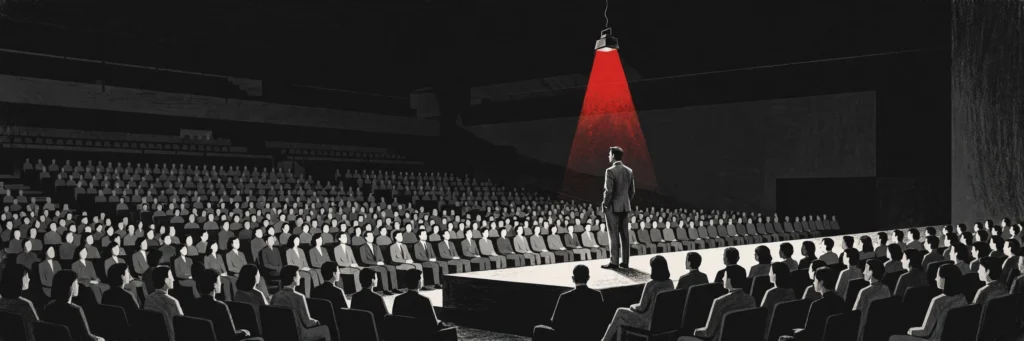
The auditorium in Santa Clara was full for the Jensen Huang apology, and the man on stage had never looked smaller. Jensen Huang has spent three decades building Nvidia into the most valuable company on earth, and he has faced down rivals, recessions and a trade war without flinching.
On Tuesday, in front of the employees he had let down, he delivered the Jensen Huang apology in person. He called it the hardest company meeting he had ever done.
It was his first all-hands meeting since the board brought him back as chief executive on Monday, eleven days after he resigned over reports of extramarital affairs. For an hour, according to people familiar with the meeting, Huang apologised and admitted he had broken the company’s code of conduct.
He also told staff he was in therapy every day. The apology was not a victory lap. It was a reckoning, delivered in public, to the people whose trust he had broken.
“I Made Some Terrible Mistakes”
Huang did not hide behind corporate language. He told employees he had made “some terrible mistakes” and said plainly that he had violated Nvidia’s code of conduct, according to the Wall Street Journal and Bloomberg.
The admission carried an extra sting because Huang helped write that code himself. Portions of Nvidia’s code of conduct were drafted under his leadership, and he told staff that breaking rules he had a hand in creating was unacceptable.
He said he had let them down and that he was grateful to have a second chance to lead the company he co-founded nearly three decades ago. The meeting, he said, was “the hardest company meeting” he had ever done.
Then he added the line that drew the sharpest silence in the room: it was the second hardest meeting of his life. “The hardest meeting I’ve ever done was with my wife,” he said.
Ninety Minutes of Therapy, Every Day
The most revealing detail of the meeting was not about Nvidia’s business. It was about Huang himself. He told staff he is in therapy every day for an hour and a half, and that it has “been helping me a lot.”
The disclosure was striking for a chief executive famous for his relentless schedule and his insistence on total focus. Huang has built his reputation on intensity, on a management style that prizes directness and speed above almost everything else.
Sitting in front of thousands of employees and talking about daily therapy was the opposite of that image, and that seemed to be the point.
At the same time, he defended the structure that defines his leadership. Huang runs Nvidia with around 60 direct reports and no formal succession plan, and he pushed back against calls to change that.
Any of his 60 direct reports could take over the company, he argued, despite the turmoil that followed when his second-in-command ran Nvidia for two weeks in his absence.
Not a “Tech Bro” Above the Law
Huang spent part of the meeting addressing the question hanging over his return: was he brought back because he is too powerful to fire? He insisted that he was not reinstated because he is a “tech bro” who is above the law and above the code of conduct.
He also denied the reports that President Donald Trump pressured Nvidia’s board into reversing its decision. “That is also completely untrue,” he said, according to the Wall Street Journal.
He praised the administration’s support and insisted Nvidia remains “the most apolitical company,” but said the board evaluated the entire situation and gathered the facts before voting.
Whatever the truth of the politics, the board’s reversal was extraordinary. It accepted his resignation, watched the stock crater, and then voted unanimously on Sunday to bring him back. The reinstatement surprised most of Nvidia’s senior leaders, who had spent the previous week publicly demonstrating that the company could thrive without him.
Thank You to the Woman Who Held Nvidia Together
Huang began his remarks by thanking the person who kept the company running while he was gone. Chief Financial Officer Colette Kress served as interim chief executive during the nearly two-week period he was out, and Huang thanked her and the leadership team seated in the front row for their work.
The reinstatement itself produced a violent swing in the other direction. According to GamesBeat, Nvidia’s stock bounced back by more than $1 trillion in value after the board brought Huang back.
It was a reminder of how much of the company’s valuation rests on one man’s leadership. That dependence is exactly what worries governance experts, and it is the question Huang’s apology did nothing to answer.
How Nvidia Got Here
The crisis began on November 8, when reports emerged of Huang’s relationship with Alice Huang, a businesswoman whom United States officials believe was passing information to Chinese intelligence. She is a former executive at Megaspeed, a cloud company accused of helping restricted Chinese firms obtain Nvidia AI chips.
Days later came allegations of a second affair, with Kimberly Powell, Nvidia’s vice president of healthcare, who reported directly to him. Huang admitted infidelity in a staff memo, the board opened an investigation and hired the law firm Wachtell Lipton, and a shareholder class action was filed within days.
Then, on Sunday, the board met and voted unanimously to reinstate him. He returned on Monday, and by Tuesday he was standing in front of his employees, apologising for the conduct that had forced him out in the first place.
What Happens Next for Jensen Huang
The apology does not close the story. Huang is expected to testify in what may be hostile congressional hearings in Washington next week, where lawmakers will press him on the spy allegations and the board’s handling of the affair. He is also scheduled to speak at GTC Washington, D.C., Nvidia’s developer conference, on December 1.
The board’s oversight will now be watched closely. Directors promised accountability, and Huang promised to listen to human-resources feedback they share with him. Whether that amounts to real change in how he runs the company, or simply a new reporting line, will become clear over the coming months.
The shareholder class action filed in the wake of the scandal is still pending, and the House committees seeking a briefing have not gone away. The investigation into the Megaspeed allegations continues separately, and the questions about who knew what, and when, have not been fully answered.
Why This Meeting Matters
Corporate apologies are usually forgettable. A chief executive reads a prepared statement, the cameras leave, and the company moves on. This one was different because of who delivered it and how.
Huang is not a hired manager. He co-founded Nvidia, owns around 3.6 percent of it, and has led it since 1993. His personal brand and the company’s identity are the same thing.
That is why his resignation wiped hundreds of billions of dollars off the company’s value, and why his return added more than a trillion back.
That makes the apology a test of something larger than one man’s reputation. Nvidia’s board bet that a founder who admits his mistakes in public, submits to daily therapy and accepts board oversight is a safer leader than an untested successor.
The employees in that auditorium, the shareholders who own the stock and the lawmakers waiting in Washington will all be watching to see whether the bet pays off.


