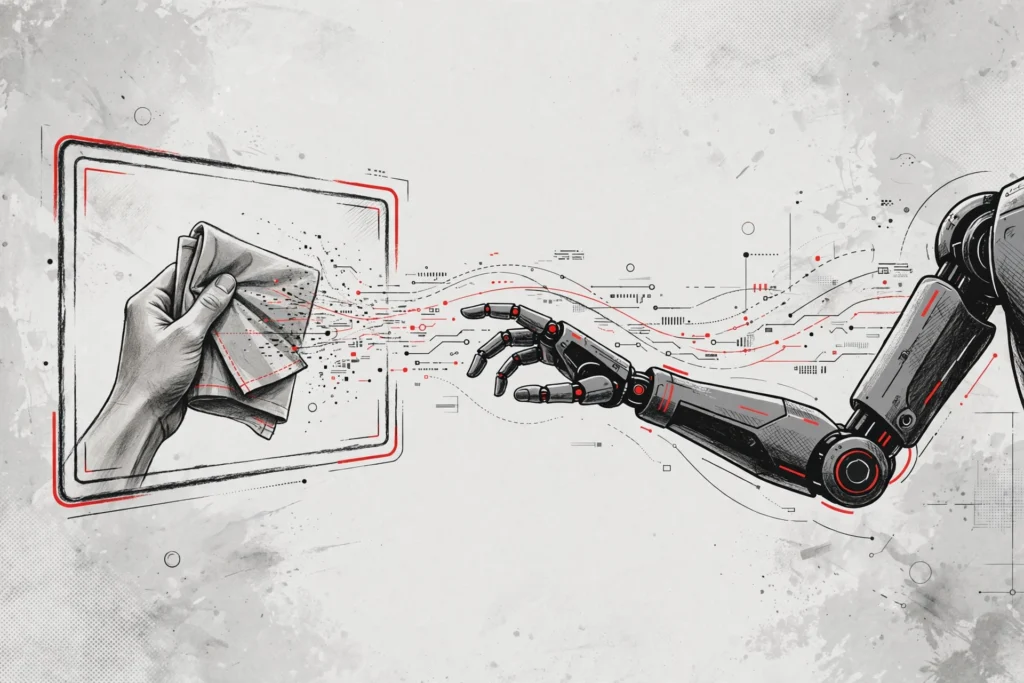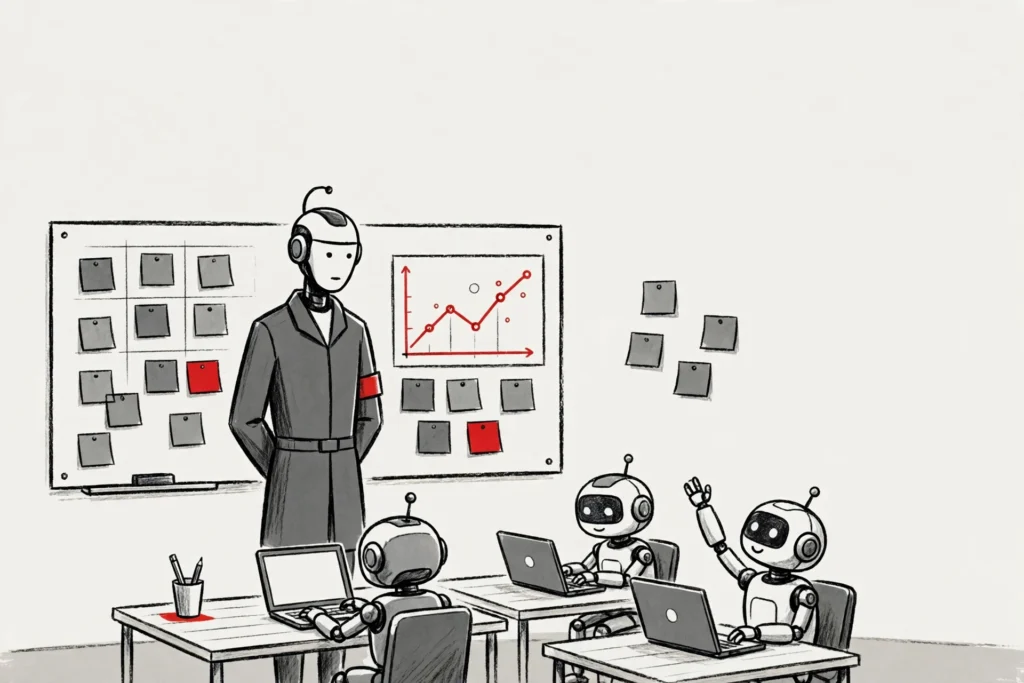
It is Monday morning, and the stand-up is already under way. The manager opens the meeting, runs through what shipped over the weekend, flags the two decisions that need a human, and hands out the week’s work.
Nobody in the room finds any of this strange. The strange part is the manager — because it is software, and so is every engineer reporting to it.
That is the picture Cognition painted on Monday, November 17, when it launched Devin Bots. The startup behind Devin, the AI software engineer that went viral in March 2024, has given its coding agent a boss. And the boss is also an AI, according to Fortune, which broke the story.
What a Devin Bot actually does
A Devin Bot is a persistent agent that owns a whole project from start to finish. You hand it the goal — Cognition’s own example is building an Android version of your iPhone app and keeping it in step as the iPhone version changes.
The Bot then breaks the work into pieces and assigns them to teams of Devin coding agents.
The word that matters most is persistent. A normal coding session forgets everything when it ends. A Bot remembers. It carries the plan, the decisions and the half-finished pieces from one day to the next, which is what makes a project that lasts days or even weeks possible at all.
Each Bot can also be given its own budget, measured against the results it delivers. And it is model-agnostic: it picks different models for different parts of the job — planning, design, computer use — using faster, cheaper ones for routine code and stronger ones where it counts.
A Devin Bots manager that shows up in Slack
The Bot does not hide in a dashboard. It joins the team’s Slack as its own member, and several people can work with the same Bot, including over iMessage. When it is blocked or needs a decision, it reaches out to a person instead of guessing or stalling in silence.
Decisions that need a human land in a “Needs You” inbox. Everything else, the Bot handles on its own. Teams decide in advance which changes need a human review and which low-risk edits — changing a button’s colour, say — can be approved and merged automatically.
The Bots run on separate cloud computers, away from engineers’ laptops, so they never touch the passwords and keys stored there. Administrators set which code repositories and tools each Bot can reach, and network controls are meant to stop unauthorised data transfers — even if a model follows malicious instructions hidden in content it reads.
The numbers behind the Devin Bots launch
Cognition says usage of Bots across dozens of early-access customers — including Decagon, Fireworks AI and Reducto — grew tenfold in two weeks. That is a real number, but it is growth from a small base, not proof of quality at scale.
One game studio using the Bots reportedly saw its weekly pull requests climb from roughly 50 to about 1,900, with only a small human team overseeing the work.
It is a striking figure, and it is also the kind of figure that invites follow-up questions: how many of those pull requests were properly reviewed, how many were merged, and how many introduced bugs a human later had to clean up? Cognition has not published those numbers.
The most grounded signal in the launch report does not come from Cognition at all. Citigroup chief executive Jane Fraser said on the bank’s October 13 earnings call that Devin is used by 14,000 engineers at Citi, and that it helped cut technology vendor spending by 30 percent year over year.
That is the existing Devin product, not Bots — but it is the closest thing to a real-world result in the whole story.
Why Cognition is launching Devin Bots now
Cognition helped start this race, and it is now being squeezed from both sides. The model labs are both its suppliers and its competitors: their advances make Devin more capable, and improvements to Codex and Claude Code give customers less reason to pay for Devin as well.
The competition has also moved into exactly this territory. OpenAI shipped Dots around September 29, 2026, an always-on proactive agent inside Codex that runs teams of agents on development tasks. Anthropic followed around October 21 with Duet, a similar product connected to Claude Code.
Cognition’s counterargument is focus. Dots and Duet are general-purpose agents that happen to handle code. Devin Bots are built around a coding agent from the ground up, and they coordinate Devin instances specifically. Chief executive Scott Wu’s bet is that as models get smarter, the product built around them matters more, not less.
The business behind the bet is large. Cognition was valued at $48 billion after a $2 billion funding round in September 2026, up from roughly $10 billion in 2025 and $26 billion in May. The company said its annualised revenue run rate passed $1 billion in September.
The catch: review work moves, it does not disappear
Here is the part that should temper the excitement. A Bot that assigns work to a team of Devin agents can produce a lot of code very fast. Somebody still has to read it.
That is the honest trade at the centre of this launch. The work that used to be writing code becomes reviewing code, setting rules, and deciding what the Bot is allowed to merge on its own.
For a small team, that might be a genuine win: one engineer directing a Bot that directs a team of agents.
For a large team, it raises a question nobody has answered yet — what does code review look like when the volume of incoming code multiplies by thirty and every author is an agent?
Cognition’s answer is rules. But rules are only as good as the people who write them, and the failure mode is not a Bot that writes bad code.
It is a team that sets the auto-merge rules too loosely and discovers the problem weeks later, in production.
What Devin Bots cost, and when you can try them
Two facts that decide whether this is a product you can actually buy are still missing. Cognition has said nothing public about what a Bot costs, or how the per-Bot budget is charged. And there is no public date for wider access: Bots are in early access with dozens of customers.
If you want to try one today, you probably cannot — and nobody knows what it will cost when you can. The launch page is live at devin.ai/bots, but for most developers, Devin Bots is something to watch, not something to use.
What happens next for Devin Bots
The pattern of the last two months is now unmistakable. OpenAI’s Dots, Anthropic’s Duet and now Cognition’s Devin Bots are all the same bet: the next phase of AI coding is management, not autocomplete.
The question is no longer whether an agent can write a function. It is whether a team of agents can run a project while humans do something else.
The three products differ in scope, and that difference is the whole competitive argument. If you believe the product layer matters more as models improve, Cognition’s focus is an advantage.
If you believe the frontier labs will simply absorb this capability into Codex and Claude Code, it is a vulnerability. Both arguments are live, and the next year will settle which one was right.
There is also a quieter shift worth noticing. GitHub Copilot started by suggesting code a programmer could accept or ignore. A Devin Bot asks what to optimise, how to use the project board, when to send updates, or for a video of it testing its work.
The interface is moving from “accept this suggestion” to “manage this colleague.” That changes the job of a developer more than any single model release does.